Image

Archive for Recipe – Page 27

CSA Newsletter: Week 4- June, 4 2007 (composed by Shannon)

Posted by csa on
 June 4, 2007

This Weeks Share:

  • Braising Mix
  • Broccoli
  • Garlic Scapes
  • Lettuce
  • Mizuna
  • Onions
  • Turnips or Radishes

Braising Mix – More delicious spring greens are in your share this week. Look for a tender mix of leaves such as kale and mustard to gently wilt down to top a juicy hamburger or jazz up rice. These leafy greens are a powerhouse of calcium, vitamin A and B6, and anti-oxidants, but shh don’t tell the kids. Just mince them up fine and hide them in lasagna or enchiladas!

Broccoli – The goldilocks of the vegetable world, broccoli is unrepentantly sensitive to the heat and bolts (begins to go to flower) early if it heats up to fast and grows too slow if it is too cold and rots if it is too wet. It is making an unpredictable and welcome appearance and may appear in your share this week or next.

Garlic Scapes – Bolting into action this week is our garlic! When garlic ‘bolts’ it is sending up a pungent flower stalk to do what all of nature does in the spring. Sadly for the garlic and happily for us, we literally nip it in the bud, plucking off this spring treat to flavor stir frys and sauces. Picking the bolting flower bud lets the garlic know this is no time for hanky panky and it should send its energy down into the bulb for a heavier harvest in July. Some folks prefer roses, but I’ll take a bouquet of garlic scapes for my grill any day.

Lettuce – Darkland, Oscarde, Rouge d’ Grenoblouse, Ermosa, Salad Bowl, Nevada, Mascara, Four Seasons…This is a small sampling of the many varieties of head lettuce we plant at SIO. Different varieties are grown for their seasonality, flavor, appearance, ability to hold in the field, and dependability. I hope you are enjoying the varied textures and colors as much as I enjoy the succulent sound my harvest knife makes when I harvest them early in the morning for you all.

Mizuna – Back again this week. Mizuna is in the Brassica family that also includes Arugula, Broccoli, and Brussels sprouts. It Japan, where it has been cultivated for thousands of years, its name means ‘water vegetable’ and is eaten fresh as much as it is thrown into soups and stir fry. I enjoy it in the wilted salad recipe below.

Onions – Also bolting are our early Walla Walla sweet onions. As these onions bolt, their growth slows, making it worthwhile to remove the flower and harvest the bulb for an early allium treat. These are a sweet onion and can be eaten raw in salad. So sweet that I once had them cut up with apples and sugar and baked in a pie! You will be seeing these for the next few weeks so experiment with their unique flavor and let us know your favorite preparation.

Turnips or Radishes – Some of you had Cherrybelle Radishes in your share last week and others got deliciously sweet Hakurei Turnips. This week, you’ll get the opposite of what you had last week. Both are a simple and quick snack when smeared with butter and layered on some good bread. Add a dash of salt to a radish sandwich or a pinch of sugar to you Hakurei sandwich.

Recipes For Your Plate

Spring feels just about to burst into summer fattening up the peas, hurrying along the baby carrots and teasing the tomatoes to put on buds. The kitchen feels like it has relaxed from early spring stiffness; cooking is a pleasant moment again instead of a head scratching moment.

Japanese Mizuna Salad

  • 1 Bunch Mizuna
  • 2 cups assorted Asian mushrooms such as Enoki, Shitake, Oyster, King
  • A handful of minced garlic scapes
  • Butter or canola oil for sautéing
  • Soy Sauce
  • Rice vinegar
  • 1 Tbs sugar

Saute garlic scapes and mushrooms in oil or butter until soft. Add a few dashes of soy sauce and rice vinegar. Stir in sugar until dissolved. Remove from heat and toss while warm with mizuna. Serve immediately.

Classic Grilled Toppings

  • Thick slices of Walla Walla Sweet Onions
  • Whole Garlic Scapes
  • Olive Oil
  • Salt and Pepper

Toss garlic scapes in olive oil and salt and place onto the grill. Brush Onions with olive oil and sprinkle with salt and place onto the grill. Cook until desired softness

An Introduction

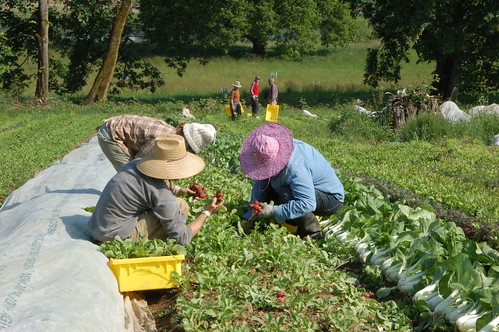
Hello, my name is Shannon and I am the new Crew Leader this year. I was an apprentice here in 2000 and am very excited to be back again at this beautiful farm. When I arrived here in January from the east coast a few carrots and leeks were still being harvested for restaurants and the greenhouse was cold and weedy. Now those carrots and leeks have long been tilled into the soil and new ones 6 inches high are fresh in the ground. The greenhouse has burst with seedlings, emptied out and filled up again as the wave of transplants ebbs and flows.

We have a great crew this season whom you will all meet as the season rolls on. It has been remarkable to see second-year apprentices, Becky and Vanessa, step up into additional responsibilities in the greenhouse, on the tractor and in the irrigation schedule. The new apprentices have dug right in and without hesitation have become indispensably adept as transplanting, weeding, and harvesting ramps up.

There are innumerable details to learn here from the masterful farm managers, second year apprentices, field crows and ladybugs. One vastly important detail to master in farming is counting. It sounds simple but, when you are learning to keep track of 200 rubber bands, 64 beds to transplant, 25 beds to weed, 8 crops to harvest, 6 different drop sites, 4 kinds of labels and 2 greenhouses, counting can become a highly skilled challenge.

Splitting a Share

An important detail for returning members and new members to know is that we meticulously count how many bunches, pounds, heads and so on each share member gets each week and exactly pack those specific amounts into the bins we bring into town each week. Many members split shares and the amount each split share is not pre-measured. Whole shares are counted out. It is up to you to split your share in two. If the tag at drop says 4 oz. each, that is for one share and you should grab an extra bag to divide it into 2 oz portions. It is terribly distressing when the count is off and a member is shorted her/his arugula. The same goes for all bunched crops such as Hakurei turnips and mizuna. You get one bunch and shared shares must split that one bunch. Drops have a ‘free’ bin if you want to leave those radishes for someone else. Enjoy!

Egg Cartons

KooKoolan Farms will take ONLY Kookoolan Farms egg cartons back. Lets hear it for re-use! Bring them back to us and we will bring them back to them. Thanks.

Categories : CSA Newsletter, Recipe

CSA Newsletter: Week 2, May 21 2007 (composed by Tanya)

Posted by csa on
 May 21, 2007

This Week’s Share:

  • Green Garlic
  • Hakurei Turnips
  • Lettuce
  • Mizuna
  • Spinach
  • Cherry Tomato Plant

Green Garlic – Many of you asked about the green garlic at pick-up last week. Here are a few ways I like to use green garlic…. in an omelette or frittata, in risotto, diced into salads and salad dressing, or cooked in a stir fry. Remember you can use the whole thing!

Hakurei Turnips – I love these fresh spring turnips. You can roast them or boil them, but I strongly encourage you to try them raw. They are sweet with a little spice.

Lettuce – This week you’ll likely see Summer Crisp variety called Nevada in the share. Summer Crisps are also known as Batavian lettuce. They have the crunch of an iceberg lettuce in a leaf lettuce form.

Mizuna – You might recognize mizuna as a regular ingredient in our salad share. This week we are harvesting a good sized bunch of mizuna. Try it on it’s own in a salad, mix it with lettuces, use it in a stir fry or as a bed for fish or meat.

Spinach – The spinach this week is just a small taste of what’s coming. We seeded an unplanned planting of spinach where an early pea planting had not germinated. Where the peas didn’t make it, the spinach here flourished. It’s not as sweet as winter spinach, but these tender leaves beg to be eaten in salad. And don’t worry, the next pea planting is perfectly plentiful.

Cherry Tomato Plant – We love cherry tomatoes here at SIO, however they are very labor intensive to harvest on a large scale. We concentrate on growing several varieties of slicing tomatoes and delicious sauce tomatoes and raise cherry tomato plants for you to plant in your garden. When you go to plant yours – chose a sunny spot in your garden. Bury the plant so that only a little stem and the newest leaves are showing. Water it deeply, about five gallons per plant weekly, once the plant is established. Watering at the base of the plant keeps the foliage dry and prevents disease. If you can provide a trellis for your tomato to climb, it will be easier to pick. If you don’t have a garden space to plant in, a five gallon bucket with a drain hole will work. Depending on your location, you should expect to start picking and eating these delicious little fruits by August. Let us know how you like them.

Recipes…

After a long winter of potatoes, winter squash and carrots, I am delighted to be facing an abundance of greens. I looked and thought about recipes to give you this week, but really much of what is in your share is perfect for eating raw with a simple dressing. Most of these vegetables go well together, so combine them in any way you like. Here are a few dressing recipes to toss them with…

Green Garlic Vinaigrette:

adapted from Lorna Sass’ Herb Vinaigrette in Lorna Sass’ Complete Vegetarian Kitchen

  • 1/4 cup minced green garlic – green and white part
  • 3/4 cup olive oil
  • 1/4 cup white wine vinager
  • 1 teaspoon salt

You can mince the green garlic by hand and combine all ingredients in a jar and shake. I like using a food processor to blend salad dressings. If you do this, add the green garlic first. Once the green garlic is minced, add the other ingredients and blend. Makes about 1 cup.

Sesame Ginger Vinaigrette:

adapted from Anne Somerville’s Field of Greens

  • 1 teaspoon minced tangerine or orange zest
  • 2 tablespoons fresh tangerine or orange juice
  • 2 teaspoons grated fresh ginger
  • 2 1/2 tablespoons rice wine vinegar
  • 2 tablespoons light olive oil
  • 1 tablespoon dark sesame oil
  • 1 teaspoon soy sauce or tamari
  • 1/4 teaspoon salt

Combine all the ingredients except for the zest in a blender and blend. Then whisk in the zest. Makes about 1/2 cup.

Vegan Caesar Dressing:

adapted from The Millenium Cookbook by Eric Tucker and John Westerdahl

  • 1 cup lemon juice
  • 2 cloves of garlic, minced or substitute 1 stalk of green garlic minced
  • 2 teaspoons capers, drained
  • 1 tablespoon dijon mustard
  • 2 teaspoons nutritional yeast
  • 1/2 teaspoon ground pepper
  • 1/2 cup olive oil
  • 1 cup canola oil or light olive oil
  • salt to taste

Combine all the ingredients except the oil and salt in a blender. Blend until smooth. While the blender is running add the oil in a thin stream until incorporated. Add the salt. Makes about 1 3/4 cups.


From the fields….


After a few quiet January weeks of crop planning, and a few busy months of spring planting and preparing, it was great fun this week to finally harvest and bring that harvest to all of you. Returning members were back for another season, the kids all a little taller, picking up your shares with a memory of this time of year…. greens, and roots, green garlic, and more greens. And new members, here for the first time, figuring out this new way to “shop” for your food. The first week of pick-up was certainly a buzz with enthusiasm.


In the fields we are busy with lots of planting. Scott’s heaviest time of bed prep is upon him. He’s easy to find these days. Just listen for the tractor, and there he is, slowly humming over freshly spaded beds, loosening the ground for us to plant into. Scott has been pumping the first biodiesel into an SIO tractor this year. It’s a step we’ve been wanting to take for a while, and it’s exciting to finally be making the change. Scott can tell you more about that in his blog next week.


This week’s planting list includes summer squash, melons, beans, celery, brussels sprouts, and lettuce. And while the crops are growing, the weeds are keeping up right along side them. Scott can knock some of them back with the cultivating tractor, but he always makes sure to leave a few for the crew to hoe. As for this year’s crew… Becky and Vanessa are showing off all their well refined irrigation pipe moving tricks, while Shannon is getting the new apprentices acquainted with the millions of details that go into to the day to day at SIO. In his seventh and final year at the farm, Josh is finally getting to many of the projects that he has been dreaming up over the years. Last week he put up a long awaited shop area, a base camp of sorts, from which he can climb the mountain of invention. Shari will be busy this week fielding all the calls and questions that the first weeks of CSA bring. And I’ve been standing up at the conductor podium, waving around a shovel and a pitchfork, trying to hit every note in perfect harmony.


What can go into your compost bucket?


YES – all vegetable and fruit scraps (they do not have to be 100% organic & do not have to be from our farm), coffee grounds and filters, tea bags, eggs and egg shells, bread, dairy (limited), leftovers (without meat), bread and grains.


NO – meat, fish, bones, paper, rubberbands, produce twist ties


About your eggs from Kookoolan Farms

Kookoolan Farms is a very small, diversified, family farm in Yamhill, Oregon. They have a laying flock of 250 chickens, including Rhode Island Reds, Astralorp, Wyandoth, and Barred Rock hens, which all lay eggs with shells in shades of brown; and Auracauna hens, which lay the blue- and green-shelled eggs.

Their chickens forage for grass and bugs, supplemented by natural oyster shell for calcium and a certified organic layer ration. The resulting egg is delicious and high in Omega 3 fatty acids. The chickens get lots of exercise, sunshine and fresh air. They use no antibiotics or hormones. The eggs are hand-gathered, hand-washed, and hand-packed.

Categories : CSA Newsletter, Recipe

CSA Newsletter: Week 1, May 14 2007 (composed by Shari)

Posted by csa on
 May 14, 2007

Your basket this week:

  • Arugula
  • Green Garlic
  • Joi Choi
  • Lettuce
  • Radishes

Arugula is a pungent, peppery salad green. It is wonderful added to a salad, used as a bed of greens or with pasta (see recipe below). It is highly perishable so it is best if used within two or three days. To store rinse the leaves in cool water and dry on a paper towel. Wrap the leaves tightly in plastic or a zip lock bag.

Green Garlic is a spring treat. We simply plan for and harvest some of our garlic young before it has formed a bulb. You can use the whole stem. It has a mild flavor and can be sautéed to use in a variety of dishes. Or it can be pureed and tossed in salad dressings, pesto or hummus.

Joi Choi is a variety of Bok Choi. This traditional stir-fry vegetable from China has mild and crunchy stalks and the leaves that are pleasantly tangy. The stalks and leaves have quite different textures and cooking times, so be sure to give the stems a minute or two to cook before you put the leaves in.

Lettuce is a staple in our basket throughout the season. The four types we grow are: leaf (also called loose-leaf lettuce), Cos (also known as romaine), crisphead and butterhead.

Radishes add a great splash of color to our spring vegetable basket. Their zesty taste is an added treat to any salad. If you will be storing your radishes remove the tops and place in the refrigerator. Remember that the tops are also edible.


Linguine with Arugula, Pine Nuts and Parmesan Cheese
1 pound linguine
1/2 cup olive oil
4 ounces arugula, trimmed
1 cup freshly grated Parmesan cheese
1/2 cup pine nuts, toasted
additional freshly grated Parmesan cheese

Cook linguine in large pot of boiling salted water until just tender but still firm to bite, stirring occasionally. Meanwhile, heat oil in heavy large skillet over medium heat. Add arugula and stir until just wilted, about 30 seconds. Remove from heat. Drain pasta and return to pot. Add arugula and toss well. Add 1 cup Parmesan and salt and pepper to taste; toss well. Transfer to bowl. Sprinkle with pine nuts. Serve immediately, passing additional Parmesan separately.


It can take several seasons as a CSA member to fully appreciate the differences between the spring, summer and fall harvests. For the first four weeks this spring and early summer you will see mostly delicious greens in your baskets. Salad greens such as arugula, mizuna and mustards as well as cooking greens such as kale, chard and bok choi. Additionally, roots such as radishes and turnips round out the earliest baskets. Then usually around week 6 or 7 we start to see the shares grow with the addition of broccoli, fennel, peas, carrots, beets and more. The baskets continue to grow when we add the bounty of late summer and fall. Here is a wonderful exerpt from Barbara Kingsolver’s Stalking the Vegetannual to get a sense of the season to come.

“ To recover an intuitive sense of what will be in season throughout the year, picture an imaginary plant that bears over the course of one growing season all the different vegetable products we can harvest. We’ll call it a vegetannual. Picture its life passing before your eyes like a time-lapse film: first, in the cool early spring, shoots poke up out of the ground. Small leaves appear, then bigger leaves. As the plant grows up into the sunshine and the days grow longer, flower buds will appear, followed by small green fruits. Under midsummer’s warm sun, the fruits grow larger, riper, and more colorful. As days shorten into the autumn, these mature into hard-shelled fruits with appreciable seeds inside. Finally, as the days grow cool, the vegetannual may hoard the sugars its leaves have made, pulling them down into a storage unit of some kind: a tuber, bulb, or root. Plainly, all the vegetables we consume don’t come from the same plant, but each comes from a plant, that’s the point—a plant predestined to begin its life in the spring and die in the fall. (A few, like onions and carrots, are attempting to be biennials but we’ll ignore that for now.) What we choose to eat from each type of vegetable plant must come in its turn—leaves, buds, flowers, green fruits, ripe fruits, hard fruits and seeds—because that is the necessary order of things for an annual plant. For the life of them, they can’t do it differently.“

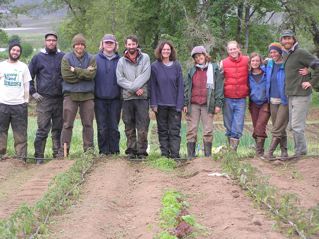
Farm Crew

(from left to right)

Blake, Brian,
Scott, Nicole,
Michael, Shari,
Shannon,
Vanessa,
Becky, Tanya
& Josh.

Tanya is SIO Farm Manager, Shannon is our new Crew Leader, Scott is our new Field Assistant, Josh is finishing up his last year at SIO as Special Projects Manager. Vanessa and Becky are 2nd year apprentices and Blake, Brian, Nicole and Michael round out our crew as 1st year apprentices. I co-founded SIO in 1993 and now play the role of office manager. You will hear all our voices through this blog and get a chance to meet us at weekly pick-up or work parties.

Community Bulletin Board

Remember this blog is also meant to be a way for you to communicate with fellow CSA members. So please email us any announcements you may have and we will post them on these pages. Also if you have any recipes to share we would love to hear from you.

You will soon see our truck in your neighborhood. Enjoy your vegetables!

Categories : CSA Newsletter, Recipe
« Previous Page

Recent Posts

  • CSA Week #22: October 31st & November 2nd
  • CSA Week #21: October 24th & 26th
  • CSA Week #20: October 17th & 19th
  • CSA Week #19: October 10th & 12th
  • CSA Week #18: October 3rd & 5th

Archives

Sauvie Island Organics | © 2025 All Rights Reserved
iThemes Builder by iThemes | Powered by WordPress | Site by LRP