Image

Archive for Recipe – Page 26

CSA Newsletter: Week 14- August 13, 2007 (composed by Scott)

Posted by csa on
 August 13, 2007


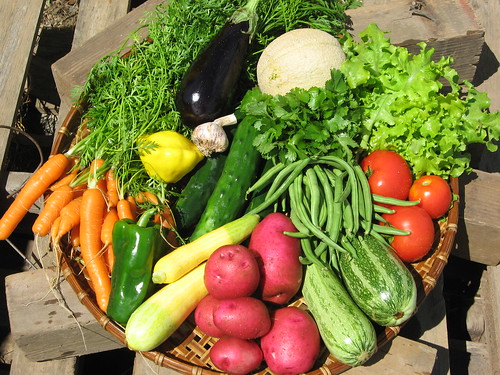
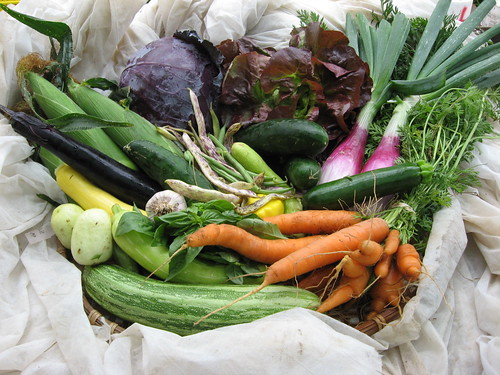
This weeks share

  • Beans
  • Carrots
  • Cilantro
  • Cucumbers
  • Eggplant
  • Garlic
  • Lettuce
  • Peppers
  • Potatoes
  • Summer Squash
  • Tomatoes 

*Basil

*Melons

Beans – Picked from our third planting, these Venture green are delicious raw or sautéed with your garlic.

Carrots – Fresh bunches of Nelson carrots.

Cilantro – A favorite herb for fresh salsas or cooked with eggplant.

Cucumbers – Just for fun serve the lemon cucumbers cut into wedges and topped with lemon juice.

Eggplant – Simply diced, fried, and mashed does it.

Garlic – Add to the pesto.

Lettuce – Don’t forget it’s the ‘L’ in BLT

Pepper – A single green bell pepper teaser. Most of our peppers we leave on the plant to fully ripen. The green fruits will turn red, yellow and even orange depending on the variety. It takes many months of sun to create a fully mature fruit. So while we are waiting we will give out a few green peppers for you to cook with.

Potatoes – These Sangre potatoes were harvested by fellow shareholders during the potato party that happened this past Saturday.

Summer Squash – The usual assortment from plants that seem to be slowing down a bit.

Tomatoes – Lets all think “hot weather” to get all the tomatoes to ripen on the vine. In the coming months these are the varieties you will be eating:

  • San Marzano – A Roma type red paste tomato that usually ripens in September, great for making sauce.
  • Early Cascade – The first tomato that has been given out so far, small round slicer.
  • Crimson Sprinter – A good slicer for salads.
  • Spears Tennessee Green – Tangy, juicy, and green, Tanya’s Favorite.
  • Brandywine – The quintessential heirloom, big, dark pink, a real tomato’s tomato.
  • Marvel – Deeply pleated, yellow to orange.
  • Cosmonaut Volokov – Round and red.
  • Valencia – Selected in Maine, it’s a bright orange, round tomato
  • Cherokee Purple – A dark red Heirloom with a purple and green cast, it is a great sandwich tomato

Note on Basil – Over the course of the next few weeks you will be receiving larger amounts of basil. On a rotating basis each pick-up will recieve about a half a pound. This should be enough to be able to make pesto and freeze some for the winter months. Pesto can initially be frozen in ice cube trays and then popped out and stored in plastic bags in the freezer.

Note on Melons- The melons are slowly ripening. They will be appearing in your shares in the next few weeks. As they ripen they will go out for pick up. If you do not see them this week you have something to look forward to in the next week or two.

Recipes

Agua de Pepino (Cucumber Limeade)

Adapted from B’s Cucumber Pages

  • 1 cucumber, peeled and cut into chunks
  • Juice of 2-3 limes
  • Sugar to taste (1/4 c or so is good)
  • water
  • ice

Put cucumber, sugar and lime juice in blender with enough water to reach an inch and a half below the top. Blend well. Strain the pulp out of the mixture and serve over ice.

Fried Cucumbers
Wash and slice cucumbers. Dip them in a mixture of egg and a little milk. Coat them in flour or corn meal and fry in a skillet like you would fry green tomatoes.

Cucumber Mousse 2

Adapted from The Joy of Cooking

  • 1 package lime-flavored gelatin
  • 3/4 c hot water
  • 1/4 c lemon juice
  • 1 T grated onion
  • 1 c sour cream
  • 1 cup cucumber, pared, seeded, and chopped

Dissolve gelatin in water.  Add lemon juice and onion. Chill until almost set. Stir in sour cream and cucumbers. Fill a wet mold with mixture and chill thoroughly. When set, invert onto a platter and garnish.
Potato Carrot Soup With Sour Cream & Dill Sauce

  • 3 tablespoons olive oil or butter
  • 1 pound carrots, peeled and cut into small, bite-sized pieces
  • 1 yellow onion, peeled and thinly sliced
  • 2 pounds potatoes, peeled and diced
  • 3 cloves garlic, minced fine
  • 1 1/2 quarts vegetable or chicken broth
  • 1 medium bunch chives, chopped fine
  • Salt and freshly ground pepper to taste
  • 1 cup low-fat sour cream
  • 1/2 teaspoon paprika
  • 2-3 tablespoons chopped fresh dill

In a large soup pot, over medium-low heat, cook the carrots, onions and potatoes in olive oil or butter until soft. Add the garlic and the broth. Simmer over medium heat for 30 minutes. Remove from stove and in batches, puree the soup in a food processor. Pour soup back into pot. Add the chives, and season generously with salt and pepper to taste. In a small bowl, combine the sour cream, paprika and dill. Ladle the soup in bowls, and garnish with the sour-cream mixture.

News from the fields

 Potato Harvest Party

This past Saturday was a beautiful day in the potato patch. The farm team and numberous CSA members helped pick up potatoes from the field after they were dug out of the ground with our potato harvester. In total we harvested about 3000 pounds of both Yellow Finn and Sangre varieties. Thanks for all your help. Afterwards we were treated to a delicious potluck lunch and the freshest French fries I had ever tasted, courtesy of Blake and Brian’s deep-frying expertise.
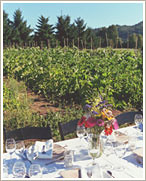
Plate and Pitchfork

We had an incredible weekend of dining on the farm. For three nights six different chefs created feasts under the stars. We raised $2000 for our CSA scholarship fund and $3300 for the Sauvie Island Center. If you want to participate next year be sure to get your name on the Plate and Pitchfork mailing list.
Categories : CSA Newsletter, Recipe

CSA Newsletter: Week 13- August 6, 2007 (composed by Tanya)

Posted by csa on
 August 6, 2007


This Week’s Share

  • Basil
  • Beans
  • Cabbage
  • Carrots
  • Corn
  • Cucumbers
  • Eggplant
  • Garlic
  • Lettuce
  • Onions
  • Summer Squash

Basil- Fresh basil deteriorates quickly so use as soon as possible. For short term storage, wrap in a lightly damp towel and refrigerate. Do not wash prior to refrigeration. You can freeze fresh leaves in a plastic zip-lock bag. Remove air, seal and freeze. Do not thaw before use.

Beans- This week you will receive either Dragon Tongue or Venture our second planting of green beans.

Cabbage- We grow three types of cabbage: Charmant a smooth green leaf variety, Super Red 80 a red leaf, and Melissa a green savory (crinkly leaves). This week we will be giving out either Charmant or Super Red 80.

Carrots- Try a simple puree of carrot soup with sauteed onions, freshly grated ginger and a dash of salt.

Corn – This week we will be harvesting both another round of Fleet, the variety you received last week, and Sugar Buns. Enjoy more corn on the cob, or try the corn fritter recipe below.

Cucumbers- How about chilled cucumber soup? Blend cucumbers with plain yogurt, a pinch of fresh mint, basil, and salt and pepper.

Eggplants – We grow two varieties of eggplant, Nadia, which is an Italian bell type, and Orient Express, an Asian type. Both can be used in recipes calling for eggplant. I find Orient Express to take slightly less time to cook. Eggplant can be grilled, broiled, baked, steamed, and sautéed. The eggplant is just starting to come on, so expect just one or two at first, and then eventually enough to make a meal based on them. For now, grill your eggplant and enjoy it on sandwiches or burgers.

Garlic – Killarney is the variety of garlic you’ll receive this week. It is one of the spiciest garlic we grow.

Lettuce- The lettuce has been enjoying the cooler temperatures.

Onions – The onions in the share are a torpedo type called Red Bottle. They are a fresh onion versus a cured onion, so store them in your refrigerator before using them.

Summer Squash- Try squash grated or thinly sliced into green salads, or shredded to make a squash slaw.

Recipes

Corn Fritters
adapted from Gourmet Magazine

  • 2/3 cup corn (cut from 2 ear)
  • 2/3 cup yellow cornmeal
  • 3 Tablespoons flour
  • 1/4 teaspoon salt
  • 1/8 teaspoon baking powder
  • pinch of sugar
  • 1/2 cup milk
  • 1 large egg
  • 1/3 cup vegetable oil

Cook corn in a small saucepan of boiling water until tender, about 3
minutes. Drain in a sieve, then rinse under cold water and pat dry.
Whisk together cornmeal, flour, salt, baking powder, and sugar in a
bowl.

Whisk together milk and egg in another bowl. Add to dry ingredients
and stir until just mixed. Stir in corn.
Heat oil in cleaned skillet over moderate heat until hot but not
smoking.

Working in batches of 4, spoon in a heaping spoon of batter per
fritter into skillet and fry, turning over once, until lightly
browned, about 4 minutes. Transfer with a spatula to paper towel to
drain.

Traditional Basil Pesto
adapted from Savour Italy by Annabel Langbein

Puree 2 cloves garlic. 1/4 cup lightly toasted pine nuts, 1 cup bail
leaves, 1/ 2 teaspoon salt, and 1/2 cup olive oil in a food
processor. Fold in 1/3 cup grated parmesan cheese.

Almonds, walnuts, and sunflower seeds can all be used to substitute
the pine nuts. Adding the cheese is also optional if you’d like to
make a vegan pesto. Pesto can be frozen and then thawed for later use.

Broiled Eggplant and Zucchini with Pasta and Pesto 

Tanya’s recipe

  • 1-2 eggplant
  • 1-2 zucchini or summer squash
  • 1 pound pasta – penne, spirals, or shells
  • 1-2 Tablespoons of your favorite pesto recipe
  • capers
  • olive oil

Boil the pasta, rinse with cool water, drain and set a side. Slice the eggplant and zucchini in 1/4 inch rounds. Use a pastry brush to coat both sides of each piece of squash and eggplant as you lay them out on a baking sheet. Broil on the top shelf of the oven, just under the boiler for 5-8 minutes, keeping an eye on them as the will cook quickly. Remove the baking sheet from the oven and turn over the squash and eggplant to cook the other side. The exact time under the broiler will depend on your oven. You are looking for a lightly browned color, but beware that this doesn’t quickly turn charred. When the eggplant and squash are cooked, set aside to cool for a few minutes. Then toss together the broiled vegetables with the pasta and your favorite pesto. Add a few tablespoons of capers if you wish and if you have any tomatoes on hand these too.

From The Fields

I’ll write my field notes this time, from the pages of my three ring binder that I lug around with me constantly these days – referring to spreadsheets and recording harvest notes. This notebook holds the map of the season that we chart in the cold winter months, snuggled up to the computer, dreaming and scheming about the season ahead. We imagine the perfect CSA share and then work backwards from there, determining the seeding and planting dates to achieve this harvest. All of this planning is bound together in the multiple excel spreadsheets that fill my farm binder. In the dizziness of summer that is upon us, with pounds and pounds of vegetables flowing into the barn, I take refugee in these notebook pages. They offer me a chance to get my bearings – to figure out where we are between the vision we had back in January and the reality of what the season brings.

On the greenhouse seeding spreadsheet, there are only a few entries left; the Mei Qing choi and tatsoi that you got to know in the spring will be seeded in a week for a fall harvest. After that we’ll do an experimental seeding of salad greens that we’ll transplant into the Haygrove high tunnels. Up until this year we have direct seeded the fall salad greens. Because the Haygrove space is so precious and the direct seeding window for the fall greens is so short, we thought it might be worth trying to transplant the salad greens. This will also give the salad greens a jump start against the fall chickweed that thrives in the cool fall months.

The seeding and planting list is also getting shorter. All the carrot seedings that we’ll harvest thru December are in the ground. There’s a month of salad greens seedings left. Fall onions and garlic will be planted in October and stay in ground until next July. Next week we’ll plant the last of the head lettuce, including a variety trial we’re working on with Seeds of Change. And there are still a couple of seedings of turnips and plantings of spinach.

As the seeding and planting lists grow shorter, the harvest list is getting longer and heavier. The cucumbers, as you may have noticed are reaching their peak harvest. Bucket after 5-gallon bucket are loaded onto the truck and into the barn. The tomatoes are just starting to ripen, the Early Cascades, a standard salad tomato being the first to make it’s appearance. Marvel, Valencia, Cherokee Purple, Brandywine, Spear’s Tennessee Green, and Cosmonaut Volkov will soon follow. The very first eggplant have already made their debut. Prepare yourselves for ratatouille, baba ghanouj, and eggplant parmesan. The pepper plants look promising and the melons are starting to ripen on their vines.

Already we’re taking notes on what we could do better next year such as: how to out smart some of the “pests” that have triumphed this year, how to be more efficient with our bin washing system, how to grow better spinach, or how to keep the parsley from bolting. But really I have got my bearings, right here smack-dab in the middle of summer, with the perfect taste of the first harvest of sweet corn.

Potato Party

Join us at the farm this Saturday, August 11th, from 10:00 a.m. to 2:00 p.m. for our annual potato harvest party. Here’s what you can expect…. We will be digging Yellow Finn and Sangre potatoes with our potato digger. You can help collect the potatoes from the field. This is a great work party for all ages to participate in. The field work will wrap up around 12:30 p.m. when we will give a farm tour as we head back to the barn area for a potluck lunch. Please bring a dish to share, water, and work gloves if you like to use them. Dress in comfortable clothes that you don’t mind getting dirty and wear a hat for sun protection.

If needed here are directions to the farm. Please, no dogs.

Farmer John Movie

If you didn’t get a chance to see “The Real Dirt on Farmer John” the last time it was in town, this weekend you have another chance. The movie that tells the story of a Midwestern farm facing the challenges
of farming in America is playing this weekend at the Hollywood Theater. Here’s the schedule of show times and events:
Q&A’s with Farmer John & Director Taggart Siegel after the 7pm & 9:15pm Screenings Friday & Saturday. Sunday after the 4pm Screening

Friday Aug. 10th ~ 7pm & 9:15pm ~ Meet Amazing Sustainable Groups ~ sponsored by PACSAC, Oregon Tilth, Portland Permaculture Guild, OSALT, Growing Gardens & Sustainable Table. Meet & Greet for pie at Moon & Sixpence Pub (2014 NE 42nd) after the films.

Saturday Aug. 11th ~ Psychedelic Farmer Costume Contest. Come dressed as a psychedelic farmer for the 7pm film. Costume Contest & live music after the film at Moon & Sixpence Pub (2014 NE 42nd). Farmer John will select best costume and award prize. Sponsored by ORLO.

Sunday Aug 12th ~ Film & Benefit Community Dinner. Film at 4pm at Hollywood Theatre. Community dinner to follow at 6pm at the NE Community Center, (1630 NE 38th & Broadway) with Farmer John & the film’s Director, Taggart Siegel. Sponsored by Sustainable Business Network of Portland Cost of dinner: minimum donation: $10 adults, $5 children for tickets call (503)232-2943.

For more information about the movie visit www.farmerjohnmovie.com

Categories : CSA Newsletter, Recipe

CSA Newsletter: Week 12- July 30, 2007 (composed by Shari)

Posted by csa on
 July 30, 2007


  This Weeks Share:

  • Beans
  • Beets
  • Carrots
  • Chard
  • Corn
  • Cucumbers
  • Garlic
  • Herbs
  • Lettuce
  • Summer Squash

Beans- Dragon Tongue is the variety of bean in your share this week. It is a beautiful flat bean with deep purple markings. To keep their unusual color you need to serve them raw. This is easy to do since they are so tender and sweet. They are also great cooked but unfortunately their purple color will fade.

Beets- Kestrel is the variety we are harvesting. This dark red beet is sweet with that hint of earth that makes beets so tasty. We are topping your beets because the greens are no longer nice enough to eat.

Carrots- According to the cookbook From Asparagus to Zucchini the carrot originated in middle Asia, first eaten by the hill dwellers of Afghanistan. The early cultivated varieties were purple and pale yellow. The first orange varieties did not appear until the 1600’s in the Netherlands.

Chard- Indigenous to the Mediterranean, chard is often referred to as Swiss chard due to its initial description by a Swiss botanist in the 16th century. The common beet root evolved from the leafy Swiss chard. We grow a variety called Rudy Red.

Corn- Corn is here! We transplant all our corn which is laborious but ensures a great stand and helps with weed pressure. We did eight separate plantings with seven different varieties of corn. This summer you will receive Sugar Buns and Spring Treat which are yellow, Sugar Pearl and Silver Queen which are white varieties and Fleet, Brocade and Luscious which are bicolor. This week is Fleet.

Cucumbers- Hope you are staying as “cool as a cucumber”. Cucumbers are refreshing because they are 95% water. They contain small amounts of vitamin A, C and a few minerals. Cucumbers are also rich in vitamin E which makes them not only great eating but effective skin conditioners. Try rubbing an end slice or an inside peel on your face and experience its refreshing benefits.

Garlic- If you need to store your garlic it does well in a cool, dark, dry and well ventilated place. Warm temperatures will encourage garlic to sprout. Do not refrigerate, unless storing peeled cloves for a short time. If so, keep them in an airtight container to avoid garlic odor spreading to other foods. For very long term storage, garlic can be minced and covered or blended with olive oil and placed in small airtight containers and frozen. After removing from the freezer, keep it in the refrigerator.

Herbs- Cilantro and dill will both be in your share this week. Both of these herbs are great chopped into a variety of chilled summer salads, such as pasta, potato, tuna and cucumber. They also enhance many stews and soups. Try this recipe for simple dill garlic butter. Melt butter over a low flame. Sauté garlic, being careful not to burn. Add finely chopped dill and continue to sauté for another couple minutes. Pour over potatoes or other cooked vegetables. With a splash of lemon it makes an excellent sauce for broiled or baked fish.

Lettuce- Lettuce is making a reappearance this week. Red Cross is the variety we will harvest.

Summer Squash- We harvest summer squash three times a week to unsure that the fruits do not get too big. If you find yourself falling behind on eating your squash it can be cooked, pureed and frozen in airtight containers. Then in the winter you can pull it out and use it as an addition to or as a base for winter soups.

Coming Soon- Eggplant and Tomatoes will all be showing up in your shares in the next week or two.

Recipes

Just to be adventurous or to prove to those picky eaters in the house that yes, they will eat summer squash or yes, they will enjoy beets here are two surprising ways to use your vegetables. As dessert!

Sweet Zucchini Crumble
Adapted from Farmer John’s cookbook The Real Dirt on Vegetables

Silky smooth baked zucchini is the surprising filling in this sweet dessert. Like the best apple crumble, this dessert has a tender, lemony-sweet, spiced filling just waiting to be discovered beneath its irresistible, crunchy crust. Serves 6 to 8

  • 4 1/2 cups flour
  • 3 cups sugar, divided
  • 1/2 teaspoon salt
  • 1 1/2 cups shortening, softened, or butter, cold
  • 6-8 cups thinly sliced zucchini (about 4 large zucchini)
  • 2/3 cup freshly squeezed lemon juice (about 3 lemons)
  • 1 teaspoon ground cinnamon
  • 1/4 teaspoon ground or freshly grated nutmeg

1. Preheat the oven to 350° F.

2. Stir the flour, 2 cups of the sugar, and salt in a large bowl until well combined. Add the shortening or butter and cut it into the flour with a pastry blender or your fingertips until the mixture looks like coarse oatmeal.

3. Pour half of the mixture into a 9×13-inch cake pan. Using your fingers or a rubber spatula, press the mixture evenly into the bottom of the pan. Bake for 10 minutes. Remove the pan from the oven and set it aside.

4. Combine the zucchini and lemon juice in a large pot over high heat and cook until zucchini is tender, 8 to 10 minutes. Stir in the remaining 1 cup of sugar, cinnamon, and nutmeg. Simmer for 1 minute more. Stir in 1/2 cup of the reserved flour mixture and continue to cook, stirring constantly, until mixture thickens. Remove the pot from the
heat to cool for 10 minutes.

5. Pour the zucchini mixture over the baked crust and sprinkle with the remaining flour mixture. Return the pan to the oven and bake until it is lightly browned and bubbly, 40 to 45 minutes.

Beet-Chocolate Cake
Adapted from From Asparagus to Zucchini: A Guide to Farm-Fresh, Seasonal Produce

  • 1 cup sugar
  • 2 cups flour
  • ½ teaspoon salt
  • 2 teaspoons baking powder
  • 1 teaspoon baking soda
  • ¼ cup oil
  • 3-4 ounces unsweetened chocolate
  • 4 eggs
  • 3 cups shredded beets

Combine dry ingredients. Sift or mix well together. Melt chocolate very slowly over low heat or in a double boiler. Allow chocolate to cool then blend thoroughly with eggs and oil. Combine flour mixture with chocolate mixture, alternating with the beets. Pour into 2 greased 9 inch cake pans. Bake at 325 for 40-50 minutes, or until fork can be removed from the center cleanly. Ten servings.

In The Fields

Last Monday we hosted a Farmscaping for Beneficials walk on our farm. These walks are sponsored by OSU and The Xerces Society who are working together on a project to support grower-led activities that build the knowledge and implementation of conservation biological control (CBC) on local farms. Conservation biological control can be defined as methods used on and around farms to restore and enhance beneficial organism populations that can increase to numbers that may limit pest populations. Such methods may include insectary plantings, grassy field margins, beetle banks and hedgerows. We have implemented several of their strategies on our farm to encourage beneficials: whenever possible we allow our cover crop to flower; we grow many cut flowers on the farm, and we have edges that are not disturbed by tillage. We continue to learn what we can do to create habitat that will encourage beneficials and help us to be better farmers.

Community Outreach

This is the second year that Sauvie Island Organics is involved with the Janus Youth Food Works’ program. Food Works is a youth employment program, which engages 14-21 year olds in all aspects of planning and running an entrepreneurial farm business. Their farm is adjacent to ours on Sauvie Island. On Fridays, the one day that we do not harvest and use our barn for pack out, we hear the music of the Food Works youth as they bring their harvest in for washing and packing. You can find them each Saturday at the PSU farmers’ market downtown.

Categories : CSA Newsletter, Recipe

CSA Newsletter: Week 11- July 23, 2007 (composed by Kylie)

Posted by csa on
 July 23, 2007

This week’s share

  • Beans
  • Carrots
  • Cucumbers
  • Garlic
  • Herbs
  • Kale
  • Onions
  • Summer Squash

Beans- Green that is. Venture green beans are a sweet young bean. Beans will be coming your way for weeks to come.

Carrots- Our carrots are sizing up a bit slowly this year. But what they lack in size they certainly make up for in taste and crunch.

Cucumbers- The two varieties we grow are Marketmore and Lemon. The plants, like other cucurbits (squash and melons), will really sprawl out, grabbing onto whatever they can. We are training our plants to climb trellises to make harvesting more efficient and keep the fruit in better shape.

Garlic- Making its debut this week is the lovely Siberian garlic. It is a porcelain garlic which means bigger cloves for you! This purple striped variety has a full flavor. As this garlic grows its neck becomes hard giving us a natural handle for easy harvesting.

Herbs- Yum! This week your share includes dill. Add to your cucumbers or last weeks potatoes for a delicious summer salad.  Also, Sweet Genovese basil (what a great variety name) will be included for those who did not receive it in last week’s share.

Kale- Red Russian kale is coming to you a bit later than planned. Some nasty little garden centipedes called Symphylans got a hold of our first planting but we managed to come back with this second planting and triumph over those tiny pests.

Onions- Another debut here, the Purplette onion is a mini summer variety. Started in the greenhouse in late January, these Purplettes first saw the true light of day in April. Some of you may remember planting these at our Spring onion party! Other varieties to come: Red Torpedo, more Walla Wallas and some storage onions to get you through the winter.

Summer squash- As Blake mentioned last week, the race is on. It’s time to get creative and use your resources. I simply typed in zucchini recipes on Google and one site boasted hundreds of recipes.

Note- Although broccoli is pictured above it will not be in your shares. We thought we could eke out one more harvest this week but alas broccoli is indeed done for the season.

Recipes

Oh, how the internet has changed our lives. When I was young I thought in the future we would be ordering pizza and groceries through our computers and they would pop out of the printer instantaneously. Though thankfully that is not the case some wonderful recipes can be found there. This one comes from www.low-fat-recipes.com and would be a great addition to a picnic or sack lunch. Add a little of your mini onions for added flavor (their greens can be used as well!)

CUCUMBER, POTATO AND DILL SALAD

  • 3/4 pound boiling potatoes
  • 1/2 cup plain yogurt
  • 1 tablespoon chopped fresh dill
  • 1/2 teaspoon ground coriander seeds
  • 1 tablespoon fresh lemon juice
  • 1 large cucumber, seeded and cut into 1/2-inch cubes

Peel potatoes and cut into 1/2-inch cubes. Cook potatoes until tender in a large saucepan of boiling salted water, about 5 minutes. Drain potatoes and rinse under cold water in colander. Drain potatoes well. Stir together yogurt, dill, coriander, and lemon juice in a small bowl. Combine with potatoes, cucumber, and season with salt and pepper and toss to coat. Serves 2.

Here is a recipe from www.cooks.com to help you eat all of your summer squash and give you a tasty healthy snack. Apple sauce can be used as a direct replacement (1:1) for the cooking oil to make this recipe a little lighter. Also, remembering to adjust the baking time, this recipe could turn into some wonderful muffins!

SUPER WHEAT GERM ZUCCHINI BREAD

  • 1 1/4 c. wheat germ
  • 3 c. flour
  • 3 tsp. baking powder
  • 1 tsp. salt
  • 1 tsp. cinnamon
  • 1 c. chopped nuts
  • 2 eggs
  • 1 3/4 c. sugar
  • 2 tsp. vanilla
  • 2/3 c. cooking oil
  • 3 c. grated zucchini

Mix together wheat germ, flour, baking powder, salt, cinnamon, and nuts. Beat eggs until light colored and fluffy. Beat in sugar, vanilla and oil. Stir in zucchini. Gradually stir in wheat germ mixture. Grease and flour two 8 1/2 x 4 1/2 x 2 1/2 inch loaf pans. Bake 1 hour at 325 to 350 degrees.

Introduction

My name is Kylie and I have been working here at Sauvie Island Organics for a little over a month now. I traveled from a land where yellow brick roads and ruby red slippers can be found on t-shirts in souvenir shops. From Kansas I journeyed west to check out the agricultural scene. I stumbled upon the organic farming scene about a year and a half ago with one semester left before my graduation from the University of Kansas. I was in need of one more credit in order to graduate and decided to take a look at the connection that people have with their food’s roots. I did an apprenticeship on a small farm in Oskaloosa, Kansas and got a taste of, what you all are taking part in, the CSA. I’m in love with this personal form of farming and am excited to meet more of you as the season progresses.

  Field Notes

 Though the weather as of late would have you believe that it is fall this is not the case. Summer is in full swing. Yesterday I saw one of the biggest smiles I have seen in a while as Shannon (our Crew Leader) walked in from the field carrying the first red, juicy tomato of the season! The ripe tomatoes are few and far between at this point but the excitement is building. Also, on the horizon, there are little baby eggplants greeting the world with their smooth deep purple goodness. Another sure sign of summer is that the ears of succulent sweet corn are filling out. I know it’s hard to wait for these summer gems, but waiting only makes them taste that much better!


  Lettuce Notes

Though you may not remember, it was quite hot and sunny just awhile ago. This intense heat causes the sensitive lettuce leaves to become bitter and bolt (go to seed) more quickly. For this reason some of you received small heads last week as we were scouring the field for every last usable head. This week we are taking a break from harvesting head lettuce in order to let them size up a bit for next week.

The Rain

What does all of this rain mean for us? Well, of course rain is good for the plants but too much rain can heighten our concerns about blight. Blight is a fungus that affects the foliage of our tomatoes and potatoes when too much moisture is present. You may recognize blight as the cause of the Irish potato famine. We use several tactics to figth the blight. We grow most of our tomatoes in our Haygrove high tunnels. These large greenhouse-like open-air tunnels give the tomatoes a little extra heat, which they like, and also protect them from direct contact with the rain. We also tie our tomatoes up, weaving twine between posts that are placed every three plants. This keeps the plants up off of the ground, also reducing the opportunity for blight. We also try not to handle the plants when they are wet as blight can be spread easily from one wet plant to another.

New Farm Truck

Our old farm truck has been retired from the road. It is now confined to the fields where it seems most at home. We have recently acquired a little red pick-up from a CSA member that will allow us to run our errands off farm. Thank you Laleña!

True “Farm” Love

Saturday evening we had a wedding on the farm. Congratulations Amber and Jason! Amber and Jason met as apprentices in 2005 here at Sauvie Island Organics.

Categories : CSA Newsletter, Recipe

CSA Newsletter: Week 10- July 16, 2007 (composed by Blake)

Posted by csa on
 July 16, 2007

This week’s share:

  • Beans
  •  Beets
  •  Broccoli
  •  Carrots
  •  Cucumbers
  •  Garlic
  •  Herbs
  •  Lettuce
  •  Onion
  •  Potatoes
  •  Summer Squash

Beans- This year we did four plantings of beans using three different varieties. The three varieties you will find in your share this summer are: Venture a slim green bean, Dragon Tongue a flat podded bean with purple markings and Roma II a flat podded green bean. If you did not receive beans in your share last week you are in for a treat. We are continuing to harvest Venture this week and next up is Dragon Tongue which is now flowering.

Beets- Chioggia beets are in your share this week. These are a spectacular candy-striped beet brought to the US from Italy in the 1840’s. They are a bit sweeter then their all red relative. An added bonus is that they do not bleed. Beets are wonderful cooked or grated raw on top of a salad.

Broccoli- The broccoli is going out with a bang here in mid-July. Enjoy it while it lasts.

Carrots- Notice the slow increase in the size of the carrots in your shares each week? We sure notice when we’re pulling them out of the ground…all of the crops are growing so quickly right now with the long daylight hours and summer heat.

Cucumbers- We grow two varieties of cucumber: a long green one called Marketmore and a specialty cucumber called Lemon because of its shape and color. Cucumbers are here to stay for the summer.

Garlic- I had never grown my own garlic before coming out to work on the farm, so the taste of our fresh home grown bulbs was a shock to me. It’s so pungent and tasty…not too much longer until there will be tomatoes to go with it…

Herbs- This week in your share you will be receiving either cilantro OR basil. Herbs will appear in your share most weeks of the summer. Making their appearance throughout the summer will be basil, cilantro, dill, and parsley.

Lettuce- The lettuce harvest continues…celebrate with a salad! Your share this week has all kinds of great salad fixing’s to go with it.

Onions- We grew some enormous Walla Walla sweet onions this year, and as a result your share includes one gigantic onion. Onion rings anyone? These are the last of our fall planted onions. Fall planted onions are harvested in the spring while our spring planted onions will come to you at the end of August. 

Potatoes- The Yukon gold potatoes are back this week. These flavorful taters make for a great cold potato salad. The next potatoes you will get to help us dig. On Saturday August 11, we will be having our annual potato harvest work party.

Summer Squash- The squash will be a constant in your share throughout the summer, because once these plants start fruiting there’s no stopping them. It’s a race against time to harvest the squash while it’s still young and tasty. I never enjoyed summer squash nearly as much as I have in the last few weeks, with several varieties to try and different methods of cooking to experiment with. If you’re doing any barbequing, these little guys taste delicious off the grill.

Recipe:

Fruits and vegetables are not the only things to be enjoyed seasonally…hobbies and activities have their times of year as well. In my opinion, winter is the time for complicated cooking, when the kitchen is warm and cozy, and summer is great for simple and easy recipes. With that in mind, here is a very simple recipe for roasted summer vegetables.

  • 1 lb. potatoes
  • 3-4 beets
  • Large onion
  • 5-6 carrots
  • 2 summer squash
  • ¼ cup olive oil
  • ¼ cup balsamic vinegar
  • chopped head of garlic
  • salt and fresh cracked black pepper
  • ground cumin
  • cayenne powder
  • fresh herbs, chopped

Preheat oven to 400 degrees and grease a baking pan or casserole dish. Chop the vegetables into bite sized pieces. In a bowl, combine the olive oil, balsamic, garlic, and spices. Pour over the veggies and toss to coat. Sprinkle with herbs; definitely the basil or cilantro, plus rosemary, thyme, or parsley from your own herb garden. If baking on a cookie sheet, cover with foil. Bake 45-50 minutes.

Introduction:

My name is Blake and I am a first-year apprentice out here on Sauvie Island. I am originally from northwestern Washington State, but I’ve been in the Portland area for a few years now. As first years, our brains are being filled every day with new information about crops, pests, soil, water, and more. It is both an honor and a pleasure to have the chance to grow food for you all.

Field Notes:

With all this hot, dry weather we’ve been having, irrigation out in the fields becomes increasingly important to keep the crops alive and happy. In June I got to be the irrigation assistant, helping Vanessa and learning tons of stuff about obscure farming technology. Here at SIO we use two types of irrigation- “overhead” and “drip.”

Overhead is what we call the use of sprinklers. Lines of aluminum pipe are hooked up to a high pressure hose, broadcasting water across 10 beds of crops and making a picturesque scene to look upon when the sprinklers are running in the evening. Using overhead irrigation demands the exhausting but rewarding job of moving the cumbersome pipes around the farm to whichever fields need water.

Drip is when we use lines of plastic tape which drip water at a steady rate directly onto the soil where the crops are growing. These lines are hooked up to a smaller hose via a pressure regulator to control and maintain water pressure throughout the lines. Some plants, such as tomatoes, prefer drip, as they don’t like getting water on their foliage. Setting up drip requires a whole plethora of gadgets and tools that are both fascinating and at times confusing.

Field trip:

Last week we got the chance to visit 47th Avenue Farm, which is similar in size and scope to ours. Like us, they have an apprenticeship program and grow a variety of organic crops. It is great to make connections within the farming community by meeting other apprentices and farmers.

Categories : CSA Newsletter, Recipe

CSA Newsletter: Week 9- July 9, 2007 (composed by Josh)

Posted by csa on
 July 9, 2007

share

This Weeks Share:

  • broccoli
  • cabbage
  • carrots
  • chard or kale
  • garlic
  • lettuce
  • parsley
  • potatoes
  • summer squash
  • broccoli – By now you should be familiar with this tasty flower bud, if you weren’t already. We grow 2/3 of a acre of broccoli every year to keep the shares full in the spring and early summer. The broccoli doesn’t really like all this hot weather so it probably won’t last much longer.

    cabbage – The variety is Gonzales and we grow it on tight spacing to keep the heads smaller. Cabbage is versatile and can be eaten raw or cooked, in salads, slaws, soups, or even used as a wrapper for rolls. Cabbage keeps very well in the refrigerator, if the outside leaves wilt peel them back just before using the center. The insides will keep crispy for weeks. See the recipe below.

    carrots – Carrots are another main crop for us. We plant about a half acre in 15 successions in order to have fresh carrots from now through the winter. While the tops are still beautiful we’ll bunch them. If you don’t use the greens for pets, or cooking (a rarity) you can remove the rubber band and cut them off at your pick up site (box share members: you’lll have to compost your own). If you plan on storing them more than a few days make sure to remove the tops so that they don’t wick moisture out of the roots making them limp and rubbery.

    chard or kale – If you’re a returning member and you’re wondering where the big bunches of kale and chard have been this spring, the symphylans have been eating them. Our first planting of kale was a total loss and the chard is just starting to produce now. We’ve been giving out as many cut greens as possible to replace the bunches that we’ve missed so maybe you haven’t even noticed. We’re hoping that our replants will keep us in greens through the fall. This week you’ll be seeing the first harvests from one or the other, with more to follow in future weeks. If you’re not familiar with these bigger leaves, both benefit from washing and then running a knife along the rib to cut away the leaves. Chop the ribs and cook them a few minutes before adding the leaves and wilting them. Chard will work wherever spinach is called for, and kale is a more delicate relative of cabbage.

    garlic – again this week is Romanian. This is the earliest head garlic we grow and was harvested three weeks ago. The latest of the garlic varieties was pulled out of the ground last week and all of the garlic is curing in the barn now. Romanian is a variety that we’ve decided not to plant again so instead of saving seed we’re giving it all out. Enjoy the beautiful heads while they last and look forward to sampling the four other varieties we grow later this season.

    lettuce – the lettuce harvests are continuing strong. In the winter we try to plan out the varieties that will be harvested each week but in the end it’s alway a suprise, almost until the moment they’re cut. We grow a wide variety to keep things interesting. Lettuce is planted weekly to keep the supply consistent through September and as far into October as the weather will allow.

    parsley – Italian Flat Leaf parsley is more than a garnish and a breath freshener. It is wonderful sauteed with garlic in olive oil and then poured over pasta. The heat sweetens the flavor. My father’s favorite meal when I was growing up was clam spaghetti, essentially the above recipe with a can of clams added.

    potatoes – a small bonus round of All Blue potatoes this week. The yields were good for such an early harvest so we have a few extra spuds to pass out. There will be lots more of the yellow and red varieties in weeks to come.

    summer squash – We’re growing five varieties of summer squash this year, two are experimental but you may see them in your share at some point during the season. Our standards are:
    Raven zucchini,
    raven squash
    Sunburst patti pan,
    sunburst
    and the yellow and green Zephyr.
    zephyr
    Added to the mix are Tromboncino, a long curling squash with lots of firm sweet meat and a tiny seed cavity,
    tromboncino
    and Cocozelle which replaces Costada Romanesco, a ribbed zucchini which is much more pleasant to harvest than its spiny relative.
    Cocozelle

    Recipe

    Here’s a recipe that I’m looking forward to trying from Madhur Jaffrey’s excellent cookbook, “World of the East, Vegetarian Cooking.” Umeboshi plums are a unique experience for those who haven’t tried them, very sour and pickled in salt. You can eat them whole but they make a better seasoning which is how they are used here. Umeboshi plum vinegar is also an excellent seasoning for cabbage and stir-fry, it’s expensive but a little goes a long way.

    Cabbage Seasoned with Umeboshi Plums

  • 1 small head of cabbage
  • 4 umeboshi plums (to make 2 ½ teaspoons pulp)
  • 2 ½ Tbs vegetable oil
  • ¼ tsp salt
  • ¼ tsp sugar
  • Core the cabbage and slice it into long thin slivers. Remove the pits from the plums and pound the flesh into a past, a mortar works well for this.
    Heat the oil in a skillet over medium. Add the cabbage and salt and stir for 3 to 4 minutes or until the cabbage has wilted and is just cooked. Add the sugar and plum past and mix togther.

    Field Notes

    Fields
    Introduction – For those of you who haven’t met me my name is Josh and I’ve been working on the farm for the past seven seasons. I started out as the Field Manager and then moved into the Crew Leader position last year when Zoe left the farm for graduate school. This year Shari has created a new position for me, “Special Project Manager.” This is also my last season on the farm, I haven’t figured out what next year will bring exactly but I want to concentrate more on garden scale food and seed production so I’m hoping I can find a way to do that in Portland and support myself at the same time.

    As “Special Projects Manager” I’m spending this year taking all of the ideas for improvements around the farm that I’ve collected over the last six seasons and actually making them happen. I’m also documenting a lot of what we do here on the farm, how we do it and how we’ve done it. Below are a few of the small tools that I’ve built or modified this spring and are now being used on the farm.

    The G mounted dibbler.
    g mounted dibbler
    We use a old Allis Chalmers Model G tractor for a lot of tasks on the farm and one of them is marking the beds for planting. In the past we would mark the beds with the tractor, which set the path ways (wheel tracks) and also made marks for the lines to plant on so that when we cultivate with the tractor we don’t take out the plants we just put in. The second step in the marking process was to pull our “dibbler” down the bed which made three rows of divots spaced one foot apart. If you’ve been to a planting party this probably sounds familiar.
    dibbler marks on bed
    The new dibbler mounts directly to the tractor so we’ve taken a two step process and eliminated one of the steps. The marks are clearer than the old method and the dibbler also creates nice firm paths that are easy to follow with our earthway seeder for direct seeded crops so we can use one marking method for almost all of our plantings.

    The G mounted spreader

    After five years of trying to figure out how to hook the drop spreader, that we use for spreading soil amendments, up to the tractor I finally succeeded. This doesn’t eliminate a step but it makes what used to be a very heavy job a little lighter.
    Scott seeding cover cropsThe new set up has also changed the way we seed most of our cover crops. The drop spreader will drop small seed as well as soil amendments so Scott has been seeding with the spreader. He can drag a ring roller behind the tractor which presses the seeds into the soil and this does save a step in seeding cover crop, as well as making it more convenient to do. As a result we have beautiful summer stands of sudan and buckwheat out in the fields right now (The photo below is the most beautiful field of sudan we’ve ever had with vegetables in the background).
    sudan with vegetables in background

    Other Projects
    It’s been a productive spring in the “Special Projects” department. Some of the other highlights have been improvements to apprentice housing, a new workshop area, garlic curing racks (see the week 7 blog for photos), new cultivation tools, and improvements to the wash area plumbing

    Cut Flower Care

    For those who signed up for the cut flower share here are some simple tips and tricks to extend the vase life of your cut flowers

    1. Location
    choose a spot in your home which is cool and not in direct sunlight. Avoid placing flowers near dry heat, drafts, or gas appliances. These things diminish the vase life of cut flowers.

    2. Check their water
    A clear glass vase is best to keep an eye on how fresh and deep the water is. Change the water at least every third day and cut 1/2 an inch off the stem base with clippers or scissors when you change the water.

    3. Feed your flowers
    Add a 1/2 teaspoon of table sugar per quart of water to your vase.

    4. Acidify the water
    At the base of the flowers stems bacteria grows and blocks the conductive tissue thereby starving the flowers. Add 1/2 of an aspirin per quart of water to the vase to acidify the water and slow the bacterial growth.
    dahlia

    Community Announcements

    CSA member Lisa Lyon asked us to help get the word out about this fundraising event for the Children’s Heart Foundation – Oregon Chapter

    We would like to invite you and your family to our fourth annual Lionheart in Laurelhurst Park on July 14 (11-3 pm) to celebrate the courage of children with congenital heart defects. This year’s event promises to top all other years!! Entertainment is listed below! Tickets are available at the door or at

    http://www.chforegon.org/lionheart.html

    July 14, 2007 11AM – 3PM

  • The Mudeye Puppet Company
  • Rockwall ($5 for 2 climbs)
  • Joe Mishkin, Balloon Artist
  • Zima! Marimba Band
  • Nail and Tattoo Parlor
  • Oregon Zoo Bug Exhibit
  • Bouncy Houses
  • Photo Booth
  • Fun art by CHAP – Children’s Healing Art Project
  • Air Brush Face Painting
  • Action Packed Activities for 8-12 year olds
  • Fabulous Raffle ($20 tickets – limited tickets will be sold for cash or check)
  • Delicious lunch provided by Burgerville
  • Categories : CSA Newsletter, Recipe

    CSA Newsletter: Week 8- July 2, 2007 (composed by Brian)

    Posted by csa on
     July 2, 2007

    This Weeks Share:

    • Beets
    • Broccoli
    • Carrot
    • Choi
    • Fennel
    • Lettuce
    • Onions
    • Summer Squash

    Beets– one of the best dietary sources of folate and also a good source of Vitamin C, potassium, manganese and fiber. Beets, whether roasted or boiled, pickled or pureed, add a distinctively sugary shock of color to any meal. Peel raw beets and grate them over the top of a salad for a nice color/texture addition.

    Broccoli– Broccoli is back this week and may only be making a few more appearances in your share before the weather gets too warm for our cool weather friend. Raw or slightly steamed these tasty florets are sure to be a crowd pleaser. See Recipe.

    Carrots– These little tasty treats are so sweet and delicious I recommend eating them raw with a salad or just by themselves. As the season progresses the carrots themselves will get larger and although they don’t lose a lot a flavor some of their baby sweetness goes away so eat them now and delight in their delicately sweet flavor.

    Choi– Stir-fry is one of my personal favorites and fresh chois are an extra special treat. When the time comes to start cooking, you’ll find that choi is extremely adaptable. Boiling, steaming, stir-frying and even deep-frying are all possibilities. When stir-frying add a tablespoon or two of water to the wok and cover. If desired, adjust the seasonings, adding a bit of salt or sugar during cooking. Whichever cooking method you choose, be sure not to overcook the choi – the stalks should be tender and the leaves just wilted.

    Fennel– These lightly licorice flavored bulbs are a summertime delight. Cooking with fennel has many possibilities. Grate in salads or use them in herbal vinegars. Thick slices are excellent braised, or boil the heads whole and then slice and sautee.

    Lettuce– Cool, crisp, head lettuce is a perfect way to delight your palate on a warm summer day. Great for making large salads and cold sandwiches

    Onions– These exceptionally sweet onions, from Walla Walla seed, are best eaten raw or only slightly cooked making them perfect for sandwiches and fresh salads. However, they sweeten any dish making them great in pizzas, pasta or grilled.

    Summer Squash-The plants are still small and just coming into production. We’re growing five varieties this year, all interchangeable in recipes but with subtle differences in taste and texture and especially in appearance.

    Recipes:

    Vegan Lemon Broccoli

    • 1 head broccoli, cut into florettes and small stem pieces
    • ¾ cup water
    • 3 to 4 Tbs lemon juice
    • 1/4 C+ 2 Tbs water
    • 1/2 to 3/4 tsp salt or to taste
    • 1 to 2 Tbs extra virgin olive oil (optional)
    • Garnish: 1 slice lemon, chopped fresh Italian parsley

    Put prepared broccoli into a 4-quart (4 liter) saucepan. Add 3/4 C water, cover, and bring to a boil over high heat. Turn heat down to low, and steam 4 to 5 minutes or until broccoli is just tender. Transfer broccoli to the food processor. Add lemon juice, water, salt, and olive oil and process until pureed but still textured. Adjust seasoning to taste. Remove to an attractive serving bowl and garnish with a twisted slice of lemon and a sprinkling of fresh, chopped Italian parsley.

    Tofu and Choi Stir-Fry:

    • 1 lb firm or extra firm tofu
    • 1 tablespoon canola oil
    • 1 walla walla onion thinly sliced
    • ½ lb Choi
    • 2 cloves garlic, minced
    • 3 to 4 tablespoons natural, good-quality stir-fry sauce, or to taste
    • 2-4 tablespoons olive oil
    • ¼ cup coarsely chopped peanuts, optional

    Cut the tofu into ½ inch thick slices. Blot well between clean towels or several layers of paper towels, then cut into ½ inch dice. Heat the oil in a wok or wide skillet. Add the tofu and the stir-fry over medium-high heat until golden on most sides. Add the choi, onion, garlic, stir-fry sauce, and about two table spoons of water. Quickly stir together, then stir-fry for another 3 to 4 minutes, just until the choi and its leaves are wilted. Stir in the optional peanuts and serve at once.

    Introductions:

    Hello, my name is Brian and I’m a first-year apprentice. Living and working out at the farm is a wonderful way to learn about sustainable farming practices. I’ve really enjoyed watching the season progress thus far and am excited about watching the farm change through the rest of the year. This is going to be my second year working on an organic farm. Last year I worked as an apprentice with Beth Gibans in Joseph, OR. Some of you may remember her from her days working here with Shari at Sauvie Island Organics. I’m really looking forward to the rest of the season and all of the wonderful opportunities that SIO has in store for me. See you Soon. Brian

    Field Notes:

    Flowers are on their way. Next week we’re expecting to harvest the first cuts of the season. There are still a few flower shares left so if you’d like to sign up there’s still time. Stay tuned next week for more information on how to care for cut flowers.

    CSA Reminders:

    Please Remember to check your name off on the check off list when you pick up your share. If you have an egg or salad share you need to check your name off on those lists too. Thanks

    CSA Connections:

    Coordinating egg deliveries with our new partner Kookoolan has connected the farm with an old Chef friend, Meg. We’re using her house as an intermediary transfer point between the two farms. A big thank you to Meg for helping make the egg shares happen this year.

    Meg is a personal chef and there’s a little write up below on her services. We’re always interested in what our CSA members do. If you’d like to be included in the blog or have announcements that would be appropriate for the CSA community e-mail us and let us know.

    If you, or someone you know, is struggling to get healthy meals on the table, a personal chef service may be something to consider. At Homemade Everyday we personalize meals to an individual’s specific needs and wants, cooking them fresh for the week or for freezing for future meals. Special diets, such as wheat-free, dairy-free, low-carb, low-salt, etc, are no problem. Our service uses the freshest ingredients we can find, going weekly to local farms for fresh eggs, milk, chickens, and vegetables. We can schedule cook-dates weekly, monthly, bi-monthly or on an occasional basis.
    Our web site explains the service in more detail:
    www.homemade-everyday.com
    Or call Chef Meg at 503-234-5646 and enjoy healthy, homemade meals again!

    Categories : CSA Newsletter, Recipe

    CSA Newsletter: Week 7- June 25, 2007 (composed by Michael)

    Posted by csa on
     June 25, 2007

    This Week’s Share:

    • Arugula
    • Carrots
    • Fava Beans
    • Garlic
    • Lettuce
    • Potatoes
    • Stir-Fry Mix

    Arugula – This nutty, mildly spicy green, can bring its signature flavor to just about any dish you dare. Try it chopped in scrambled eggs with fresh herbs and garlic, wilted on soups, sprinkled on pizza right out of the oven, as a welcome addition to any pasta dish (just toss with warm pasta right after draining), or use it to liven up cool summer salads be they green, pasta, orzo, couscous, or potato (see recipe below).

    Carrots – That’s right, this week’s share has the first carrots of the season. Baby carrots are young carrots harvested earlier than their soon to be larger more mature siblings. Baby carrots are crisp, tender, sweet, and delicious. If your baby carrots survive the journey home to your kitchen you can try them in the Golden Sesame salad dressing recipe below.

    Fava Beans – New for the CSA this year we’re trialing three varieties of Favas. They all taste great and none should need the double shelling sometimes associated with these fat beans. For more information on favas there’s a great article in the Spring 2007 “Edible Portland” as well as a recipe for Egg Noodles with Fava Beans, Leeks and Morels. Since leeks aren’t in season you can leave them out or substitute fresh garlic, or onions. If you have leftover fennel from last week that would be a great substitution as well.

    Garlic – The garlic in your share this week is called Romanian garlic which is a sub-variety of Porcelain garlic. Porcelain garlic, one of eight distinct garlic varieties, characteristically has larger cloves, a strong flavor, and stores up to eight months. However the garlic you are receiving this week is uncured. Uncured garlic is mature garlic that has not yet been dried for storage (for more information on curing garlic at the farm see the Field Notes section below). Still being moist the skin covering the cloves does not yet have the familiar papery parchment-like quality, but is still a bit tough and is better removed than eaten. Because the garlic has not yet been cured it should be stored in the refrigerator and has a milder flavor than it will eventually develop during the curing process.

    Lettuce – Summer means fresh green salad. Top with Golden Sesame Dressing (recipe below), then sprinkle with a mixture of toasted sesame, sunflower, and poppy seeds.

    Potatoes – Potatoes are traditionally cured after harvest to thicken the skin. This week you are receiving new potatoes. These freshly harvested, uncured potatoes have a thin delicate skin and are particularly flavorful. This week we have three varieties: the red is called Sangre, the blue is All Blue, and the white is Yukon Gold. Note the festive color scheme for the upcoming holiday, and enjoy them in the recipe below.

    Stir-Fry Mix – This week your stir-fry mix is a blend of Red Russian kale, tatsoi, and mustard. Tatsoi is the smallest of the chois (you may recall other chois from earlier shares like Joi Choi, Mei Qing, and Fuyu Shomi). This hearty little green can withstand temperatures down to 15 degrees Fahrenheit and can be harvested from under the snow. Try cooking the stir-fry mix in a wok. Heat the oil (try peanut oil with a little sesame oil) over medium heat. Quickly cook some minced garlic and grated fresh ginger careful not to burn. Add greens and toss for a couple of minutes. Add a splash of rice vinegar or tamari, and toasted sesame seeds if desired.

    Recipes

    Tricolor Potato Salad with Arugula and Garlic-Mustard Vinaigrette
    adapted from:Tomato Blessings and Radish Teachings;
    by Edward Espe Brown
    serves 6-8 people

    • 3 pounds red, white and blue new potatoes
    • 6 large shallots, thinly sliced; or 1 small or 1/2 large sweet onion, minced
    • 5 or 6 cloves garlic, minced
    • 3 tablespoons Dijon mustard
    • 3/4 teaspoon salt
    • freshly ground pepper to taste
    • 4 1/2 tablespoons sherry wine (or balsamic) vinegar
    • 3/4 cup olive oil
    • 1 bunch arugula (about 4 oz)

    Wash the potatoes and cut into bite-size chunks: halves, quarters, eighths, depending on the size of the potatoes. Cook the potatoes in boiling, salted water until tender (they should slide easily off a fork), about 6-8 minutes.

    Whisk shallots or onions, garlic, mustard, salt, pepper, together with the vinegar in a large bowl. Whisk in the olive oil.

    Drain the potatoes, toss with the vinaigrette, and let cool for 20 to 30 minutes.

    Fold the arugula into the potatoes. If you do this when the potatoes are still hot the arugula will cook slightly, soften and sweeten. The cooler the potatoes are the crisper and more pungent the arugula will be. I prefer somewhere in the mid-cooling range. This dish can sit for a while before serving, remember to check and adjust seasoning (salt, pepper, vinegar) just before serving.

    Golden Sesame Salad Dressing
    adapted from: The Moosewood Restaurant Kitchen Garden;
    by David Hirsch

    • 1/2 cup grated raw carrot
    • 1/4 cup fresh lemon juice (organic of course)
    • 2 tablespoon chopped scallion whites
    • 1/3 cup water
    • 1 teaspoon Dijon mustard
    • 1/4 teaspoon salt
    • 1/2 cup tahini

    Puree the carrot, lemon juice, scallion, water, mustard, and salt in a food processor or blender until smooth. Slowly add the tahini while continuing to blend. The dressing will thicken as it sits. Keep refrigerated for up to 10 days.

    Introductions

    Hello, my name is Michael. As a first-year apprentice I have a hand in many aspects of the farm; from seeding and watering in the greenhouse to weeding, irrigating, transplanting, and harvesting in the fields. It’s a great way to learn sustainable farming practices and participate in alternative food systems. I also value the opportunity to interact with some of you shareholders at the SE Ankeny CSA pick-up site which I facilitate every other Tuesday night alternating with our Crew Leader Shannon.

    I first became interested in sustainable agriculture and food politics through a career path in education, which found me participating in the Teacher in Residence Program at Slide Ranch, in Marin County, California last year. Slide Ranch is a field trip destination for San Francisco Bay Area youth. Getting them out of the city and onto the ranch gives them an opportunity to discover their connections to the natural world by exploring where their food comes from by milking a goat, feeding chickens, and cooking from the organic garden.

    The experience I had at Slide Ranch helped me refine my goals: I would like to start a small market garden at a school or other community space in an effort to help children and adults make connections with the natural world while modeling and educating about alternative food systems.

    It is both a privilege and an honor to be working towards my goals at SIO where the produce, the farm, and the people have been so good to me.

    Field Notes

    As the intensive spring plantings transition into the more measured pace of summer planting we have found time to catch up on other aspects of fieldwork like weeding, covering and uncovering recently planted beds with a floating row cover (better known as re-may) for pest control and as protection against cold nights, and continuing to tie the growing tomatoes to vertical stakes to maintain good health and manageability for future harvest.

    Josh, our Special Project Manager, is at it again. Last Friday he finished building the handsome stackable garlic drying racks he designed just in time for our first garlic harvest. Designed for compact stacking while maintaining proper air-flow for curing, this welcome addition will allow the garlic to dry for winter storage while bringing flavor and pungency to its full intensity.

    Categories : CSA Newsletter, Recipe

    CSA Newsletter: Week 6- June 18, 2007 (composed by Becky)

    Posted by csa on
     June 18, 2007


    This week’s share

    • Broccoli
    • Cooking Greens
    • Fennel
    • Garlic Scapes
    • Lettuce
    • Mizuna
    • Onions

    Broccoli- I hope you have been enjoying the broccoli as much as I have enjoyed harvesting it for your shares. Broccoli is harvested first thing in the morning, we walk down between the rows, knife in hand, pausing to inspect the large heads. How’s the size? How’s the color? Too tight? Too loose? Just right! Whack and a toss over the shoulder into the broccoli back pack and on to the next plant.

    Cooking Greens- Cooking greens are delicious way to get your vitamins, they are high in calcium and make a great side dish. Top with chopped and sautéed garlic scapes and walla walla onion, butter, lemon juice or vinegar with salt and pepper for a quick and easy side dish.

    Fennel- Fennel will make its debut in your share this week, we grow two plantings of fennel a year- one in the spring and one in the fall. Enjoy this delicious lightly licorice scented and flavored vegetable cooked or raw. Try it simply sautéed in butter until tender for a decadent dish. I am a fennel fanatic and slaw addict so below you will find one of my favorite recipes combining the two.

    Garlic Scapes- Garlic scapes are one of my favorite spring treats, they are here for such a short time and give us the garlic we crave before the bulbs are ready. Garlic scapes are the immature flower buds of the plant, we pinch them so the plant can focus it’s energy into producing large bulbs. Fire up the grill and toss the garlic scapes with olive oil and a pinch of salt, they take only a few minutes on the grill to become tender and are of a milder garlic taste than the green garlic.

    Lettuce- We grow many kinds of lettuce here at the farm, it is one of our mainstays in our CSA bounty, indispensable for it’s versatility. Try it with different salad recipes and no sandwich is complete without it.

    Mizuna- Mizuna is one of our key salad mix ingredients, it is milder in taste than the more familiar arugula. This makes it good companion to many tastes be it sweet or savory, my favorite recipe combines the both and is listed below in the recipes.

    Onions- Walla Wallas are the sweetest, juiciest onion you’ll ever taste. I’ve been dreaming of walla walla onion rings since the onion starts went into the ground and now their finally ready. They are so sweet you can eat them raw, though I highly recommend sautéing or grilling them with a little olive oil and salt and pepper. They make a great addition to just about any meal.

    Coming Soon: Carrots
    Crisp and sweet the first carrots of the season are on their way.


    Recipes

    Fennel Slaw

    • 2 tablespoons apple cider vinegar
    • 1/3 cup mayonnaise
    • 1/2 teaspoon freshly ground black pepper
    • 2 teaspoons sugar
    • 1/2 teaspoon finely grated lemon zest
    • 1/8 teaspoon salt
    • 1 tablespoon of caraway seeds
    • 2 bulbs of fennel thinly sliced

    Whisk together all ingredients except fennel in bowl. Add thinly sliced fennel and toss until evenly coated. Season with additional salt and pepper as desired.

    Mizuna Strawberry Salad

    • 3 tablespoons sugar
    • 3 tablespoons mayonnaise
    • 2 tablespoons milk
    • 1 tablespoon poppy seeds
    • 1 tablespoon apple cider vinegar
    • 1 bunch of mizuna
    • 1 cup of strawberries
    • crumbled goat cheese (as desired)
    • chopped walnuts (as desired)

    Combine first five ingredients in a bowl and whisk together to make the dressing and set aside. Place the mizuna on plates and sprinkle with the strawberries, walnuts and goat cheese. Drizzle with the dressing.
    (Many seasonal fruits work well with this, so experiment and enjoy)


    Introductions


    Those who pick up their shares at the Wednesday SE Elliott site may know me, I alternate weeks with Scott our field assistant. For those members who I haven’t met I’m Becky and I am a second year apprentice along with Vanessa. As of May 1st we experienced an entire year at Sauvie Island Organics and are now entering the final season in our 17-month apprenticeship. It has been and is a truly amazing experience, education through hands on work, practicum and classes. I got my first taste of farming in 2001 working at a small farm in Massachusetts. I moved to Portland 3 years ago and was inspired by the agricultural scene. When I first heard about CSA farming I was immediately curious to find out how it worked. Over the past year I have come to learn the value of a CSA, of building a direct relationship between the farmer and those eating the beautiful food we grow.

    Flower Shares

    This winter I spent much of my time working on the flower share planning for the 2007 season. With the help of Tanya we experimented with creating a flower share projection similar to how we plan our food crops. This involved me awakening math skills long dormant in my brain to figure how many stems can each plant produce based on its growing habits and seasonality. This then led to how many to seed in the greenhouse thinking far along and taking into consideration some wouldn’t germinate, some would get eaten by birds and perhaps a few would die in the field. So with a cushion on the flower count and an armload of paper work I placed the seed orders based on what flowers have proven themselves to be sturdy enough and long enough for cutting, have a decent vase life (my goal is a week) and can produce nice re-growth or be easily planted in succession, and most importantly be easy on the eyes. This week the final seeds were started in the greenhouse and the last plant out will coincide with the first harvest. Every week will feature a unique arrangement to show off the colors of the season as it progresses. There are still a few flower shares left, the share is for ten weeks and starts the first week of July. The cost of the flower share is $150. Contact the office if you would like to sign up.

      Field Notes

    This week the peppers left the warmth of the green house to be planted out next to the eggplants, both are snug now under their billowing sheets of remay protecting them from the cool nights that are still upon us. The remay came off the summer squash revealing plants doubled in size since they were transplanted two weeks ago and free of cucumber beetles, there are already a few squash flowers and you can anticipate seeing them in your share in just a few weeks. The onion fields are almost all weeded but as the crops grow so does the weeding list, high on priority are the broccoli and potatoes. The last of the tomatoes are being staked and some are soon to be taller than some of us farmers and we are tying and wheel hoeing weekly. Our first corn planting is shin high, right on schedule for knee high by the fourth of July. I know I already mentioned the carrots but carrots are almost here, so are the beets!

    Apprentice Rotations

    As second year apprentices Vanessa and I get to take on more responsibility in the operation of the farm. There are three rotations that we switch off so we can gain as much experience and knowledge as possible before we graduate and apply our new found skills towards our goals.

    Field Jedi- Field Jedi coordinates with Scott our field assistant and is responsible for mixing and spreading of soil amendments, the irrigation of crops by drip tape or overhead watering, everything on the farm needs an inch of water a week, this makes for a tight watering schedule and a lot of laying out drip and moving pipe as crops get planted out into the field. Field Jedi is also responsible for the management of our compost piles.

    Greenhouse- Greenhouse rotation manages the daily opening and closing of the greenhouse and maintaining of proper temperature, airflow, and watering needs of all our seed starts. We seed all of our crops according to the farm’s schedule which is planned out over the winter. We keep records on all greenhouse seedings to ensure we get the right count to be planted out in the fields.

    Barn Owl- Barn Owl is responsible for keeping the yield records of the crops as they are harvested, we weigh and wash and pack and divide up the goodies for all our CSA members and the restaurants we sell to. In addition to this Barn Owl gets the opportunity to go on Friday morning field walk with the managers, this is when we set the week’s harvest and make our weekly to do list.

    Egg Notes

    Just a reminder to those who receive egg shares, if you share a dozen egg share please make sure you take a full dozen to split with your share partner. Pre-packed half dozens are for those who ordered a half-dozen share. In addition Kookoolan Farms can only take back their own egg cartons. We will gladly take the cartons back and return them. We cannot accept egg cartons that are not from Kookoolan Farms.

    Sharing a Share

    If you share a share make sure you coordinate with your share partner, if you are the one picking up you can put your share partners half in a paper bag provided at the pick-up and write their name on the bag.

    Compost Buckets

    Please remember to bring back your compost bucket each week to replace it with a fresh one. We gladly will take all your vegetable and fruit scraps as well as coffee grounds and filters, tea bags, eggs and egg shells, bread, dairy (in small amounts) leftovers without meat. Please do not compost any meat, fish, bones, paper, rubber bands, plastic or other non compost items.

    Categories : CSA Newsletter, Recipe

    CSA Newsletter: Week 5- June 11, 2007 (composed by Vanessa)

    Posted by csa on
     June 11, 2007


    This Week’s Share

    • Arugula
    • Bok Choi
    • Broccoli
    • Green Garlic
    • Lettuce
    • Spinach

    Arugula – This spicy green is one of my favorites. I enjoy it fresh sprinkled with olive oil, herbs, salt and pepper. Or mix it with some of your spinach for a tasty salad.

    Bok Choi – This new variety of Choi is called Fuyo Shomi. The Johnny’s seed catalog describes it as, “New last year! Medium-green, spoon-shaped leaves. Very uniform, dense plants. Wide, light green petioles. 10-12″ tall.” Try a quick stir fry by heating oil in a wok or pan, quick cooking some green garlic and sesame seeds until tender, and then add the chopped Fuyo Shomi (put the stalks in first because they take longer, then add the leaves). This quick stir fry is sure to delight.

    Broccoli– Hearty and healthy, broccoli is a wonderful vegetable. Broccoli is the flowering head of this leafy plant. When we harvest your broccoli it’s a few days away from flowering. You can enjoy this veggie in a variety of ways, but there is a recipe for you below in case you need some inspiration.

    Green Garlic – This immature garlic can be used in so many ways and is a good companion to many of the other produce in your share this week. Sauté with broccoli or Fuyo Shomi. It also makes a spicy and delicious salad dressing when blended with olive oil, sesame oil, salt and a smidgen of rice vinegar.

    Lettuce – This week you will get two heads of Romaine in your share, and that means this is a good week for a Caesar Salad. See below for a simple Caesar dressing recipe. The large, long, ribbed leaves of Romaine are also great for making lettuce wraps. Tabbouleh, rice salad and pesto make a great stuffing for those big Romaine leaves.

    Spinach – A cool welcome to spinach! This satisfying cool weather crop is packed with nutrients and can be eaten fresh or cooked (or steamed, sautéed, braised…you get the point). You can make spinach the center of a hearty salad, or steam it as the bed for a delicious garnish. This leaf is where it’s at. Spinach only comes around twice a year, spring and fall, when it is not too hot for it to flourish. Enjoy it while it’s here!

    Recipes

    Caesar Salad Dressing
    adapted from cooks. com

    • 1 cup mayonnaise
    • 1 tbsp lemon juice
    • 1 tsp Worcestershire
    • green garlic to taste
    • 1/4 tsp salt
    • 1/8 tsp pepper
    • 1/2 c Parmesean cheese
    • 1 tbsp of milk or half and half

    Add hard boiled egg, bacon pieces, croutons and other goodies. Try including some chopped spinach from your share with this salad too.

    Farmgirl Susan’s Super Spinach Soup
    adapted from the Farmgirl Fare Blog

    Makes 4 cups

    • 1/8 cup nice olive oil
    • 1/2 pound yellow or white onions, chopped
    • 3 cups (48 ounces) chicken stock or vegetable stock
    • 1/8 cup uncooked white rice
    • 4-8 ounces fresh spinach
    • 1/2 teaspoon salt
    • 1/4 teaspoon good pepper

    Heat olive oil in a large pot and cook onions, stirring frequently, over medium heat until translucent and just starting to turn golden at the edges, about 7 to 10 minutes. Add stock, bring to a boil, add rice, turn down heat, and simmer, with the lid cracked, stirring every so often, for 20 minutes. Stir in spinach, salt, and pepper and simmer another 5 to 7 minutes. Carefully puree the soup using a blender or immersion hand blender. Serve hot, garnish if desired (but it really doesn’t need it) with dollops of sour cream or crème fraiche and a few chive blossoms if you happen to have any laying around.

    Garlic & Lemon Broccoli
    adapted from Southern Cooking

    • 3 tablespoon butter
    • ¼ c green garlic, chopped
    • 3 tablespoons fresh lemon juice
    • salt, to taste
    • pepper, to taste, optional

    Steam broccoli until tender but firm, about 5 to 7 minutes. Heat the butter in a heavy nonstick skillet over medium heat; add the garlic and sauté for 2-3 minutes. Add the cooked broccoli, lemon juice and salt and pepper to taste, cooking briefly to combine.

    Introductions

    Hi! My name is Vanessa and I am a second year apprentice at the farm. I became interested in sustainable farming a few years ago and have been passionate about the topic ever since. My long term interests include teaching youth the importance of healthy food and how to grow it, bringing local food to schools, raising poultry or working on food policy issues. I also have the fantasy of growing acres of nothing but heirloom melons or opening up a rural breakfast spot where diners can watch the chickens pasture while eating delicious eggs! We’ll just have to wait and see what happens next. In the mean time I am learning valuable knowledge about every aspect of farming and I am enjoying growing and caring for your food on a daily basis.

    The Apprenticeship

    Sauvie Island Organics offers a unique opportunity for people who are interested in gaining a complete and long term farming experience. The apprenticeship program is 17 months long and three new apprentices are brought on to the farm every May. The apprentices overlap for the summer season (when the most labor is needed) and work together under the crew leader to do almost all the labor on the farm. Whether seeding, transplanting, irrigating, weeding, harvesting or washing and packing out, us apprentices are in on most of the action. It’s a great way to work and learn at the same time! In September the second year apprentices graduate from the farm and the first years hold down the fort until the new apprentices come in May.

    In the Fields

    June is a huge month for transplanting at the farm. This month almost all of the summer transplants leave the warm protection of the greenhouse for planting in the open fields. This includes corn, peppers, eggplants, melons, basil, winter squash, and the weekly lettuce plantings. Field preparation and irrigation must be carefully coordinated with each planting, making for a well choreographed schedule of plantings throughout the week. It will be so hard to wait for all these juicy, colorful vegetables to grow and ripen in the fields…I can just taste the melons now!

    Grass Roots

    I filled out much of last year’s newsletters talking about sayings that originated in agriculture but have become common place in our lexicon. Phrases like nip it in the bud (which originated in the late 1500’s as nip it in the bloom and referred to the de-budding of plants), redneck and even the idea of a brand name. Grassroots was on the list last year, but it wasn’t until weeding the perennial herb bed early this spring that I really came to have a thorough understanding of those real grass roots. Those tangled, deep-diving runners just kept going endlessly. No matter how many clods of grass I dug up and threw into the road or how many roots I chased down, unburied from the earth and tried to destroy…the grass sprung up almost immediately and after a few weeks was back in full force, blanketing the herb bed with its bright green blades. As members of this CSA, you are all part of a very Grassroots movement to support local food and bring it to the forefront. I hope that together we can all spread our grass roots and continue to help the local food movement thrive and multiply.

    Good Reads- Edible Portland

    If you are not yet familiar with Edible Portland, now is the time! The summer issue of this wonderful publication, with a focus on “Celebrating the abundance of local foods, season by season”, just came out and is full of juicy recipes, exciting events and food related issues relevant to us North westerners. Read more at www.edibleportland.com or pick up a copy at New Seasons or the Ecotrust building.

    Good Entertainment- The Endless Feast

    The Endless Feast is a 13-part PBS series that brings together local farmers and food artisans, food lovers and star chefs to explore the connection between the land and the food on our tables. In each episode, a rotating group of chefs celebrate the bounty of a particular region by creating tantalizing menus with local specialties. The dinners are staged in beautiful outdoor locations, from farm fields to vineyards to urban community gardens, celebrating food at its source. Our farm will be featured Sunday June 17 at 2:30 pm and again at 11:30 pm on OPB channel 10.

     Community Corner

    CSA member Amy Aycrigg runs City Dog, Inc.  She welcomes dogs into her home for kennel-free boarding where they become part of the family.  Your dog will enjoy walking in the neighborhood on leash or going to Forest Park for a romp. Four-legged guests are given plenty of TLC. Amy’s family includes Kathy Saunders, who works for the City of Portland, China their 12 year old Australian Shepard, and 2 cats-Tinto and Patches. Email Amy at adaycrigg@hotmail.com if you are interested in finding out more about City Dog, Inc.

    Categories : CSA Newsletter, Recipe
    « Previous Page
    Next Page »

    Recent Posts

    • CSA Week #22: October 31st & November 2nd
    • CSA Week #21: October 24th & 26th
    • CSA Week #20: October 17th & 19th
    • CSA Week #19: October 10th & 12th
    • CSA Week #18: October 3rd & 5th

    Archives

    Sauvie Island Organics | © 2025 All Rights Reserved
    iThemes Builder by iThemes | Powered by WordPress | Site by LRP