Image

Archive for Farm News & Updates – Page 18

CSA News: Week 5- June 16 to June 22

Posted by sio@dmin on
 June 16, 2009

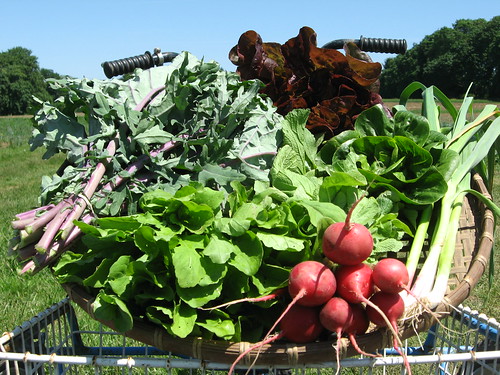
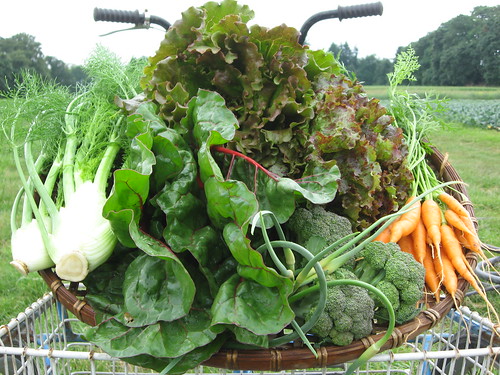
This Week’s Share

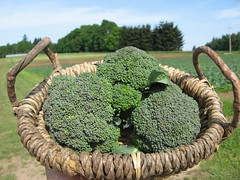
  • Broccoli
  • Carrots
  • Chard
  • Fennel
  • Garlic Scapes
  • Lettuce

Recipes


Fennel Recipes

Pasta with Fennel and Chard
Adapted from Riverland Farm in Sunderland MA, www.riverlandfarm.com

Note: Sweet fennel pairs nicely with bitter greens
Ingredients

1/2 cup olive oil
1 onion, minced
1 medium fennel bulb fronds removed and set aside, halved and thinly sliced
salt and pepper
2 tablespoons balsamic vinegar
1 lb spaghetti
1 bunch chard or (other cooking green), washed and chopped
1 cup grated parmesan cheese

Heat oil in a large braising pan or skillet with a cover. Add onion; sauté over medium heat until softened, about 5 minutes. Stir in fennel; sauté until golden, about 10 minutes. Add 1/2 cup water and season to taste with salt and pepper. Cover and simmer over medium-low heat until fennel is tender, about 8 minutes longer. Stir in vinegar; simmer to blend flavors, 1 minute longer. Season to taste. Meanwhile, bring 4 quarts water to boil in large pot. Add 1 tablespoon salt and the pasta; return to boil. Add the chopped chard to boiling pasta and continue to cook until pasta is al dente, about 7 minutes. Drain pasta and greens, then toss with fennel mixture and cheese. Transfer portions to warm pasta bowls. Garnish with reserved minced fennel fronds. Serve immediately with more cheese passed separately.

Fennel, Mushroom and Parmesan Cheese Salad
Adapted from The Kitchen Garden Cookbook by Sylvia Thompson

Note: You can prepare the dressing an hour or two in advance, but the salad ingredients won’t keep pristine for more than half an hour.

For Dressing:
1/3 cup mild olive oil
2 tablespoons fresh lemon juice
1 tablespoons finely packed fennel leaves, finely chopped
salt & freshly ground white pepper to taste
a tiny pinch of nutmeg

For Salad:
2  fennel bulbs, sliced paper-thin
1 oz. Parmesan cheese, shaved paper-thin
4 plump mushrooms, about 1 oz each, sliced paper-thin
freshly ground white pepper to taste

Use a fork to blend the dressing ingredients in a small bowl.  Taste for seasoning.  Cover and keep in a cool place. Combine the thin sliced fennel and cheese in a mixing bowl.  Beat the dressing to blend it and add 1/4 cup to the bowl.  Blend carefully with your hands – the cheese tends to sink to the bottom, and you don’t want to end up with just crumbles. Spread a handful of this mixture on 4 salad plates, filling the plates.  Heap the mushroom slices lightly over the fennel, leaving a curly border of the fennel.  Beat the dressing again and spoon 1 Tbsp. over the mushrooms on each plate.  Grind pepper over the salads and serve at once as a separate course with bread.

Chard Recipes

Swiss Chard with Raisins and Pine Nuts
Adapted from Food to Live By, by Myra Goodman

1 bunch Swiss chard
2 tablespoons olive oil
3 tablespoons garlic scapes, minced
grated zest of 1 lemon
1/4 cup raisins (golden raisins have a nice flavor, but any kind will do)
1/2 cup toasted pine nuts
coarse salt and freshly ground black pepper

Rinse the chard and cut the ribs off the leaves. Cut the ribs into 1/2 inch dice and set aside. Stack the leaves and cut them into 1/2 inch strips. Set the leaves aside separately. Heat olive oil over medium heat in large, heavy pot or large, deep skillet with a tight fitting lid. Add the garlic scapes and chard ribs and cook, uncovered, until soft, about 5 minutes. Add the chard leaves and cook, stirring frequently, about 1 minute. Add 2 tablespoons water, most of the lemon zest, and the raisins. Cover the pot and cook, stirring occasionally, until the chard is tender and the water has almost evaporated, 4 to 8 minutes. If the water evaporates before the chard is tender, add an additional splash of water. Remove the pot from the heat. Stir in the pine nuts, and season the chard with salt and pepper to taste. Serve immediately garnished with remaining lemon zest.


Pasta with Fennel and Chard

(see above in Fennel Recipes)

Carrot Recipes

Carrot Broccoli Salad
Adapted from allrecipes.com

2 cups fresh broccoli florets
1 cup shredded carrot
1/2 cup sunflower kernels
1/2 cup dried cranberries
1/2 cup coleslaw dressing (recipe below, or you can purchase at the store)

In a small bowl combine all ingredients and mix well. Serve or refrigerate.

Basic Coleslaw Dressing:

Note: This is just a good basic dressing, but you can spice it up however you wish.
Mix it at least 24 hours ahead of time and refrigerate.

1/2 cup mayonnaise
2 tablespoons cider vinegar
1 teaspoon sugar (more or less depending on personal taste)
2 tablespoons milk
1 tablespoon celery seed

Mix all together, preferably in a glass container. Stir and taste a few times in 24 hours of time it is sitting.

Farmer in Training (FIT) Spotlight: Katie

Q: What fruit of vegetalbe would you be and why? A: Cherry, because theyre so sweet.

After finishing her undergraduate degree in Landscape Architecture at the University of Oregon and working with the Urban Farm Program on the U of O campus, Katie went to Arco Santi, an alternative and sustainable living community in the high desert of Arizona, earning her Permaculture Certificate. Katie then returned to Portland and worked as the Youth Educator Coordinator for the Sauvie Island Center. For two years she helped educate first through fifth graders about where their food comes from. During this time she also worked for Pistil’s Nursery. Despite her love for Sauvie Island and the Northwest, the world abroad was calling her, and Thailand is where Katie ended up. In Thailand she had the opportunity to farm, learn seed-saving methods, participate in natural building projects and gain overall skills in rural self-sufficiency. After Thailand Katie made her way back to Portland and decided it was time to gain experience in production farming and learn what it really means to have 400+ people rely on you to bring them their food each week. So far her favorite jobs on the farm are planting tomatoes and making compost piles. She enjoys both because of the way they embody the cyclical nature of life and the ability to experience the process from beginning to end.

Sauvie Island Center Summer Celebration


Sauvie Island Organics is a proud partner of the Sauvie Island Center. Using our farm fields for their field trips, The Sauvie Island Center serves elementary school youth of Portland by providing hands-on
education about food, farming and the land.


On July 26th from 4:30-7:30 the Sauvie Island Center  will host a Summer Celebration at Howell Territorial Park (just adjacent to Sauvie Island Organics).  Come see the farm, experience educational programs, and enjoy live music on the grass.


4:30-5:30 pm Field trips in action. Children’s activities.
5:45 pm Welcome/Introduction of Center’s work
6:00-7:30 pm Picnic, music, dessert
7:30 pm Evening ends


This event is free of charge but donations to the Sauvie Island Center will be accepted.


You bring: friends and family, a picnic supper, a blanket, your checkbook.
Sauvie Island Center will provide: lemonade and dessert, live music, friendly tour guides.

RSVPs appreciated to info@sauvieislandcenter.org or (503) 231-2757.


Categories : Blogroll, CSA Newsletter, Farm News & Updates, Recipe

CSA News: Week 4- June 9 to June15, 2009

Posted by sio@dmin on
 June 8, 2009

This Week’s Share

  • Dill
  • Fuyo Shomi
  • Garlic Scapes
  • Kale
  • Lettuce
  • Spring Onions, Walla Walla Sweets
  • Turnips, Hakurei


On Rotation:

  • Broccoli

Meet Our Farmer In Training Crew

Left to Right: Jeramy, Melissa, Carol, Caitlyn, Katie, Kristin, Justin, and Meryl


The Farmer in Training (FIT) Program at SIO is for individuals with a serious interest in gaining the skills necessary to farm. The program provides each participant with the opportunity to spend a season working and learning on SIO’s well-established 16-acre vegetable farm. The majority of the educational component is based on learning from the experience of working, but the FIT participants also attend monthly workshops covering crop planning, soils and fertility, irrigation, beneficial insects and pests, farm equipment, and business planning and marketing.

This season we have 8 enthusiastic, unique, and energetic Farmers In Training. They started here with us the first week of May and will be here through October seeding, planting, harvesting, weeding, washing in the barn, moving irrigation pipe, and taking part in all the day-to-day work that allows SIO to provide you with your weekly farm share. Throughout the season we will do individual spotlights of each of the FIT participants so you can get a closer look at all the wonderful and hard working people that help grow your food.

Recipes


Kale Recipes

Farm Fresh Kale Salad with Pine Nuts and Raisins
Recipe adapted from The Oregonian: FOODay

Note: This recipe yields ¼ cup dressing and can be prepared 1 day ahead; cover and refrigerate. Bring to room temperature 30 minutes before using.

Dressing:

2 tablespoons olive oil
1 tablespoon lemon juice
2 teaspoons maple syrup
1 teaspoon Dijon mustard
½ teaspoon kosher salt
½ teaspoon (or less) crushed red pepper flakes
¼ teaspoon freshly ground black pepper

Salad:

½ bunch kale
¼ golden raisins (other raisins or dried cranberries also work)
¼ cup pine nuts, toasted

Whisk together olive oil, lemon juice, syrup, mustard, salt, red pepper flakes and black pepper (set aside, or refrigerate if making ahead of time).

To toast the pine nuts place in a heavy dark skillet over medium heat and cook, stirring until light brown (4-5 minutes or less). Watch carefully, as they burn easily. Once toasted set aside.

Remove and discard the stems and center veins from the kale leaves. Then cut the leaves crosswise into ½-inch-wide strips to yield 6 well-packed cups of kale. Place the dressing in a salad bowl and whisk well. Add the kale and toss to coat greens thoroughly with dressing. Garnish salad with raisins and pine nuts.

Kale Chips

Note: This recipe is back by popular demand, so if you are an already seasoned kale chip lover spread the word to the newbies that it is definitely worth a try, especially if you have kale skeptic children in the house.

Kale (as much or as little as you like)
1-2 tablespoons olive oil
salt, to taste,
pepper, to taste (opitional)

Wash kale and remove center stems. Tear kale into roughly chip size pieces. Toss with olive oil and salt. Place kale ‘chips’ in a single layer on a baking sheet and put in a hot oven, 400˚-450˚F. Bake watching closely, you may have to turn a few chips to make crisp on each side…Voila, Salty Kale chip snacks!

Spring Onions Recipe

Grilled Spring Onions . . . Salad
Adapted from The Oregonian: FOODay

Note: These grilled spring onions are delicious as a side dish, but also can be used in fresh salad where they will add some punch and crunch to the mix.

4 tablespoons olive oil, plus more for oiling grill grates
1-2 sweet spring onions (as a side dish halve two onions, for the salad option cut one onion through the root end into 8 wedges.
Coarse salt and freshly ground black pepper
1-2 teaspoons soy sauce (tamari), red wine or balsamic vinegar (for side dish option)

Additions for Salad Option:

2 tablespoons lemon juice (fresh is always better)
1 head lettuce, chopped or torn into salad-sized pieces
2 garlic scapes, minced
2 sprigs fresh dill, chopped
4 ounces soft goat cheese, crumbled

For Grilled Onions:

When grilling onions keeping a bit of the root end and a good portion of the green tops attached prevents the onion layers from falling apart. Heat grill to medium. Lightly oil grill grates. In a small bowl, gently toss the cut onion with 1 tablespoon oil (and soy sauce or vinegar for side dish option). Season with salt and pepper. Grill onion halves or wedges, turning occasionally until soft, 15-20 minutes.

For Salad:

Grill onions as directed above. In a large bowl, whisk together lemon juice, remaining 3 tablespoons oil, minced garlic scapes, and chopped dill. Season with salt and pepper. Add lettuce and toss to coat. Serve topped with grilled onion wedges and cheese.

Dill Recipe

Soft Herb Roll (for Busy Cooks)
Recipe adapted from www.bigoven.com

Note: These rolls are so good you could eat a dozen! So if you are having company double the recipe.

1 package active dry yeast (about 1 tbsp.)
3 tablespoons sugar
1 teaspoon table salt
1-2 tablespoon fresh dill, minced
1 tablespoon fresh rosemary, minced
1 tablespoon fresh chives, minced
1 tablespoon garlic scapes, minced (optional)
1 tablespoon melted butter
1 large egg (for dough)
1 egg, beaten (for brushing rolls before baking)
1 cup milk or half-and-half
3½  cups all-purpose flour
1 tablespoon coarse salt

In a large bowl sprinkle yeast over ¼ cup cool (70°) water. Let stand until dissolved 5 minutes. Stir in sugar, table salt, herbs, butter, whole egg, and milk; add 3¼ cups flour and stir to moisten. Knead dough on a lightly floured board until elastic and not sticky) 15 minutes; add flour as needed to prevent sticking. Shape into 12 equal size balls; place in a well-buttered 9 by 13 inch pan. Let dough rise in a warm place until doubled (45 to 60 minutes). Meanwhile, preheat oven to 350°. Brush rolls with beaten egg and sprinkle with coarse salt. Bake until deep golden, 25 to 30 minutes.

Fuyo Shomi Recipe

Radiant Fuyo Shomi
Adapted from Vegetable Love by Barbara Kafka

1 tablespoon canola oil
2 tablespoons turmeric
1 tablespoon coarse salt
2 heads fuyo shomi, halved lengthwise
1 can coconut milk, plus enough water to make 2 cups liquid
1 tablespoon fresh lime juice or 4 lime wedges (optional)

In an 8- or 9-inch saucepan, heat the oil over low heat. Stir in the turmeric and salt and cook for about 1 minute. Add the pieces of fuyo shomi, laying them on their sides and cramming them in so as to make them as compact as possible. Pour in coconut-water mixture, cover the pan and bring to a boil over medium heat. Cook for 6 minutes. The fuyo shomi should sink into the sauce and cook evenly. If some of the fuyo shomi is not covered with liquid, turn the pieces. Re-cover and cook for 6 minutes. Stir in the lime juice, if using (or serve hot with lime wedges if desired). This is also good tepid.

Categories : Blogroll, CSA Newsletter, Farm News & Updates, Recipe

CSA News: Week 3- June 2 to June 8, 2009

Posted by sio@dmin on
 June 2, 2009

This Week’s Share

  • Braising Mix
  • Green Garlic
  • Lettuce
  • Mizuna
  • Radishes or Turnips
  • Spinach


On Rotation

  • Broccoli

Recipes


Braising Mix Recipes

Our braising mix is one of our signature recipes at Sauvie Island Organics, arriving in your share during the cooler months of spring and fall when the many varieties of kale, mustard, and Asian chois that make up this mix thrive. You will enjoy green and red mustards, red choi, white steamed pac choi, yukina savoy (tatsoi) and Red Russian kale in this flavorful mix of “greens”.

Although all of these leafy greens can be eaten raw, as the name suggests, they are perhaps best lightly braised, steamed, or stir-fried. The recipes below offer ways to use them outside of a standard stir-fry or braised side dish. A quick and easy preparation is to sautee your green garlic until soft, adding in any other vegetables you want to use at the same time as the green garlic. Throw in the braising mix in the last few minutes of cooking with some soy sauce and rice vinegar and any other seasoning that you choose.

White Cheddar Polenta with Braised Greens, Spring Morels, and Pancetta
Recipe from Emily Thomson at Full Circle Farm, http://www.fullcirclefarm.com

½ pound fresh wild morels (or other seasonal mushroom), cleaned and sliced in half
3-4 tablespoons olive oil
1-2 stems green garlic, thinly sliced
¼ pound pancetta (Italian cured bacon), sliced
4 cups water
1½ teaspoons salt
1 cup polenta (coarse cornmeal)
¾ cup grated white Cheddar cheese
¼ cup butter
1 pound braising mix, washed and torn into bite size pieces
Salt and pepper, to taste
¼ cup freshly grated Parmiggiano-Reggiano cheese

Combine 4 cups water and 1½ teaspoons salt in large saucepan. Bring to boil. Gradually whisk in polenta. Reduce heat to low. Cook until polenta thickens and begins to pull away from sides of pan, whisking often, about 25 minutes. Whisk in the grated Cheddar and the butter. Adjust seasoning if necessary. Turn off heat, cover and set aside.

Meanwhile, rinse the braising mix in cold water and set in a colander. In a large, heavy pan, heat the olive oil and sauté the green garlic and pancetta until lightly colored. Toss in the morels and cook for 5-6 minutes. Turn heat to high and add the washed greens; the water that clings to them will create the braising liquid. Toss with tongs until slightly wilted, then turn heat to low, cover, and braise for 5-6 minutes.

Stir the polenta and spoon onto plates. Top with the greens and morel mixture and scatter the rest of the grated cheese over the top. Finish the dish with freshly ground pepper and a drizzle of olive oil.

Mess o’ Greens Salad with Warm Pecan Dressing
Adapted from www.seasonalchef.com

1 lb braising mix
2 tablespoons balsamic vinegar
2 teaspoons honey
1 tablespoon Dijon mustard
2 teaspoons oil (vegetable, olive, peanut, etc.)
½ cup pecans, roughly chopped or broken

Wash greens, dry thoroughly, and remove and discard the long stems. Tear the greens into salad-size pieces and place in a large bowl. In a small bowl, combine the vinegar, honey and mustard. Set aside. Heat the oil in a small skillet until hot but not smoking. Add the vinegar mixture and pecans and cook, stirring regularly, for 2 to 3 minutes. Pour over the greens and serve at once.

Spinach Recipes

Spinach and Lentil Salad with Balsamic Vinaigrette
Recipe adapted from www.1001recipe.com

2 cups spinach
3-5 radishes or turnips, grated (optional)
½ cup mushrooms, sliced
¼ cup lentils
1 tablespoon balsamic vinegar
2 tablespoons olive oil
Salt, to taste
Pepper, to taste

Cook lentils with some salt in boiling water for 20 minutes, or until done. Rinse with cold water. To make the vinaigrette, whisk thoroughly olive oil and balsamic vinegar with some salt and pepper, or use vinaigrette recipe from below. Combine spinach, grated radish or turnip, chopped mushrooms, and cooked lentils. Pour the vinaigrette on and toss before serving.

Spinach and Mizuna Salad with Baked Goat Cheese Rounds
Recipe adapted from the Culinary School of the Rockies Staff

2 cups spinach
½ bunch mizuna
8-ounce goat cheese log
Vinaigrette (recipe below) or bottled Italian dressing
½ cup breadcrumbs

Preheat oven to 400 degrees. Rinse and dry mizuna and spinach and arrange on a platter or place in a salad bowl. Cut goat cheese log into eight ½ inch slices. Lightly brush goat cheese slices with some of the vinaigrette or salad dressing. Place breadcrumbs on a plate and thoroughly coat goat cheese slices in breadcrumbs. Place on a baking sheet and bake in oven for 10 minutes. Remove carefully from baking sheet. Place the baked goat cheese slices around the edges of the salad on the platter or on top of the salad in the bowl. Dress as desired and serve.

Note: Feel free to add whatever fresh sliced vegetables to the salad as you wish. Also try olives, fresh or roasted peppers, walnuts or almonds.

Basic Vinaigrette Recipe
Recipe adapted from the Culinary School of the Rockies Staff

Note: This recipe is given in terms of proportions so you can make as little or as much as you want.

3 parts acid such as vinegar or lemon juice.
1 part Dijon-style mustard
9 parts oil — vegetable (safflower, canola, etc.) or olive oils
Salt and freshly ground pepper, to taste

Whisk the acid, mustard, salt and pepper together until dissolved. Add the oil very slowly, by droplets, whisking continuously until emulsified.

Mizuna Recipes

Soba Noodle Salad with Mizuna
Recipe adapted from Dani Spies, www.danispies.com

2 cups mizuna leaves, washed, stemmed, and chopped
4-5 radishes or turnips, thinly sliced
2-4 scallions, thinly sliced (optional)
2 carrots, cut into diagonal slices (optional)
2 cups of cooked Soba noodles
2 stems green garlic, thinly sliced
1 tsp ground ginger
1 tablespoon of toasted sesame oil
2 tbsp low-sodium soy sauce
2 tbsp sesame seeds

Combine mizuna, radishes or turnips, green garlic, carrots, scallions and noodles in a large bowl. In a separate bowl, combine garlic, ginger, oil, and soy sauce. Whisk together and pour over noodles. Top with sesame seeds and enjoy. Serves 3.

Spinach and Mizuna Salad with Baked Goat Cheese Rounds
(see above in Spinach Recipes)

What can I put in my SIO Compost Bucket?


If you’re at one of the bulk pick-up sites you can participate in our compost bucket exchange. Take a clean bucket and bring it back the following week with whatever compost you generate that week.

Here are the basic guidelines for what can go in the buckets: Any vegetable material, including coffee grounds, citrus, etc., also egg shells, and small amounts of oils, fats, and dairy are fine. Just please no meat in your buckets. We don’t like plastic bags in the buckets; they’re hard to clean out. Please don’t put rubber bands or other non-degradable items in the bucket, we end up having to sift them out and throw them away.

The most important thing is that you don’t hold onto a bucket for more than a week (and try to keep it in a cool place, out of the sun, during the week). After a week they start to get pretty smelly and that means they’re running out of air. This makes the compost from them less valuable.

Categories : Blogroll, CSA Newsletter, Farm News & Updates, Recipe

CSA News: Week 2- May 26 to June 1, 2009

Posted by sio@dmin on
 May 26, 2009

This Week’s Share

  • Arugula
  • Green Garlic
  • Kale, Red Russian
  • Lettuce
  • Radishes, Cherry Belle
  • Tomato Plant, Cherry

Cherry Tomato Plants


Note: This week each share will recieve a cherry tomato plant.  If you are splitting a share you and your share partner(s) can decide which home it will go to.

Cherry tomatoes are wonderful snacks and great on salads. They are easy to grow and fun to pick in small quantities. However, they are very labor intensive to pick on a larger scale. For this reason we are giving you your own plant to enjoy. We concentrate on growing many different varieties of slicing, saucing and heirloom tomatoes, which you will see in your shares starting at the end of July.

Tomatoes appreciate full sun, and plenty of space to climb. Bury the plants deep so that only a little stem and the newest leaves are showing. Water them deeply. This will help to encourage a strong root system. They like a trellis to keep their leaves and fruit off the ground. Once established, tomatoes do not need to be watered more then once a week. Use about 5 gallons of water per plant. Tomatoes don’t like wet leaves so try to keep the leaves dry when you water.

If you do not have room to plant the tomato outside you can plant it in a five-gallon bucket with a drain hole. Keep it in a sunny space and remember to water frequently as container plants tend to dry out quickly.

Recipes


Radish Recipes

Beijing Radish Salad
From Marquita Farm in Watsonville, CA, www.marquita.com

1 bunch radishes
2 tablespoons rice or balsamic vinegar (or a combination)
1 tablespoon soy sauce
1 teaspoon sugar
2 teaspoons sesame oil
1 stem green garlic, finely chopped

Wash and julienne (cut into thin matchstick size sticks) radishes. You can use a mandolin to do the julienning if you have one, you can use a grater, or you can cut them into matchstick size pieces. Mix together the rest of the ingredients in small bowl and dress the radishes with the dressing.

Sauteed Radish and Arugula
Adapted from recipesource.com

4 tablespoons butter

1 bunch radishes, halved or quartered depending on size

2 cups arugula


Wash the radishes and arugula. Melt butter in a sauté pan, add radishes and cook over medium heat about 4 minutes. Transfer cooked radishes to a bowl. Add the arugula to the skillet and sauté 3 minutes, until wilted. Return the radishes to the skillet and toss together with the arugula, heat briefly. Serve hot.

Arugula Recipes

Arugula-Green Garlic Pesto Pasta

Adapted from the Seacoast Eat Local Blog, http://blog.seacoasteatlocal.org

2 cups arugula, washed

3-4 stalks green garlic, root removed

½ cup pine nuts (cashews, almonds, or walnuts also work)

4-6 oz. chevre, gorgonzola or other soft salty cheese

2 tablespoons parmesan cheese

2-3 tablespoons extra-virgin olive oil

1 lb. fresh pasta (found at all grocery stores in the pasta refrigerator case, or make your own if you know how)


Start a large pot of boiling water for pasta. Meanwhile, toast the pine nuts in a dry pan over medium low heat, tossing frequently until mostly golden brown. In a food processor or blender pulse the arugula and green garlic. Add pine nuts, olive oil, and cheese and process until there are no large chunks remaining. Boil pasta per package directions. Before draining, reserve 1 cup cooking liquid. Drain the pasta. Add about ¼ cup of the pasta cooking water to the pesto and pulse one last time. Toss pesto with pasta, adding additional cooking water if desired to achieve a more smooth consistency. Serves 4.

Note: You may also use this recipe as a general use pesto by not adding the additional pasta water at the end of the process. It’s great on sandwiches, in salad dressing, or any other use you may find for it. It will keep fresh covered in the refrigerator for 7-10 days, or freeze for up to 6 months (or freeze up to a year if no cheese is added).

Sauteed Radish and Arugula

(see recipe above in Radish Recipes)

Kale Recipe

Kale & Mushroom Risotto

Adapted from a recipe by Ben Watson at the Riverford Farm Shop in the United Kingdon, http://www.riverford.co.uk/

½ cup mushrooms, sliced (porcini, portobello, or any other kind that is in season at the market)

½ bunch kale, stems removed

½ bottle red wine

2-3 cups vegetable/chicken stock or broth

3 medium onions, finely chopped

2-3 stems green garlic (or 5 cloves garlic), finely chopped

1 tablespoon fennel seeds

2 strips bacon, coarsely chopped (optional)

1 ½ cups Arborio rice

2 tablespoons olive oil

balsamic vinegar, to taste

black pepper, to taste

1-2 cups parmesan cheese, grated (really you can use as much or a little as you like)

1-2 tablespoons butter


Soak the mushrooms in water. Coarsely chop the kale leaves and blanch for 7 minutes. Combine the red wine, the mushroom soaking water, and strengthen with stock/broth to make up to 5 cups total. Heat up the pot of liquid so it will already be hot when you start adding it to the rice.

While the liquid is heating add 2 tablespoons olive oil to a sauté pan and fry the finely chopped onions, green garlic, fennel seeds and chopped bacon for 5 minutes. Add the Arborio rice and stir until well coated. Turn down the heat and start adding the already heated liquid approximately ½ -1 cup at a time . Keep stirring and adding the liquid as it is absorbed by the rice.

After about 10 minutes add the kale and continue stirring and adding liquid as it is absorbed. After another 3-6 minutes add the mushrooms. When all the liquid is gone or the rice is cooked (whichever happens first) add a splash of balsamic vinegar and plenty of black pepper. Stir in the grated parmesan cheese and butter and serve. Serves 4.

Categories : Blogroll, CSA Newsletter, Farm News & Updates, Recipe

CSA News: Week 1- May 19 to May 25, 2009

Posted by sio@dmin on
 May 19, 2009

This Week’s Share

  • Lettuce
  • Asian Greens, Joi Choi
  • Green Garlic
  • Radishes
  • Turnips, Hakurei
  • Mizuna

On Rotation

  • Broccoli

Note: All CSA members will receive the same quantity of broccoli during the course of the season, although some pick-up sites may receive their first share of broccoli during Week 1 and some may receive their first share in Week 2. Throughout the season we distribute several of our crops on a rotation schedule because of how they mature for harvest.

Welcome

Welcome to the first week of the CSA season. Each week we will post a CSA Newsletter to the blog that includes a photo and a list of the share, 3-5 recipes that correspond to the share for the week, and any farm news or community updates. We hope you use the blog as a tool for connecting with the farm, finding new and creative ways to use your share, and looking ahead to what vegetables you will be receiving for the week. If you have any favorite recipes you want to share please email them to siorganics@aol.com and we will include them in the blog when appropriate. In the share list for most items you can click on the name and it will show you a photo and give you general information, cooking and storage tips, history, and any interesting field notes for that vegetable.  Thanks so much for joining us this season, we look forward to growing for you these next 30 weeks.

Recipes

Hakurei Turnip Recipes

These little gems are enjoyed both fresh and cooked. Sliced and mixed in with a lettuce and mizuna salad is a quick and tasty way to use them.

Fresh Greens Salad with Hakurei Turnips
From the Sauvie Island Organics Crew

1 head lettuce (may increase or decrease quantity depending on needs)
1 bunch mizuna (may increase or decrease quantity depending on needs)
2-3 Hakurei turnips, sliced
2 tablespoons sunflower seeds, toasted and chopped nuts (optional)
2-3 tablespoons of Asian Salad Dressing (recipe below) or dressing of your choice

Wash lettuce, mizuna, and turnips. Leave the mizuna whole, and tear or chop lettuce into smaller pieces and place in salad bowl. After slicing the Hakurei turnips place them in the salad bowl as well. Add seeds or nuts as desired, dress, and toss.


All-purpose Asian Salad Dressing/ Marinade

Adapted from Astray Recipes, www.astray.com

This dressing is great with fresh greens, sautéed greens, steamed vegetables, and cold meats as well as any other applications you may create for it.

2 tablespoons white vinegar
1½ tablespoons soy sauce
1 tablespoon plus 1 teaspoon sugar
1½ sesame oil
½ teaspoon fresh ginger, grated
1 tablespoon cilantro, chopped
a few drops of hot pepper oil (optional for those with aversions to spiciness)

Place all ingredients in a container for mixing. You may use a blender or food processor to mix to your desired consistency or shake vigorously in a liquid tight container.

Curried Hakurei Turnips
Adapted from The Veggie Project: Cooking Family-Friendly Meals with Local Produce, http://veggieproject.blogspot.com/2008/07/curried-hakurei-turnips_01.html

2 stems green garlic, chopped
2 tablespoons oil
5-6 Hakurei turnips, sliced thin
2 teaspoons curry powder
1 teaspoon salt
one lemon, cut into wedges

Sauté the chopped green garlic in the oil for a few minutes until translucent. Add the turnips, the curry powder and salt and cook until everything is tender, about 10 minutes. Squeeze some lemon juice over the dish before serving and serve with extra lemon wedges.

Joi Choi Recipe

Joi Choi, Radish, and Broccoli Stir-Fry

Adapted from Aspargus to Zucchini: A Guide to Farm Fresh Produce by the Madison Area Community Supported Agriculture Coalition

2 tablespoons peanut oil
¼ -½ teaspoon hot pepper oil (optional, but good addition if you like spiciness)
1 bunch radishes, topped and quartered
2 stems green garlic, chopped
2 cups broccoli florets and stems (chopped)
1 three-inch piece of ginger, grated
pinch of salt and pepper
2 heads joi choi, shredded
3 tablespoons rice wine vinegar (or 3 tablespoons dry sherry) with 1 teaspoon sugar mixed in
1-2 tablespoons soy sauce
1-2 cups rice, cooked (optional)

If you are serving this with rice get the rice started before making the stir-fry. Heat oil in wok or deep skillet. Stir-fry radishes, green garlic, broccoli, ginger, salt and pepper until radishes and broccoli softens slightly, 3-4 minutes. Add joi choi and rice wine vinegar mixture; cook 2 minutes. Sprinkle with soy sauce. Serve immediately over rice. Serves 4 if paired with rice.

Green Garlic Recipe

Note: Green garlic is featured in some of the other recipes above, but the recipe below calls for the entire 4 stems included in your share for this week.

Green Garlic Pesto
Adapted from www.culinate.com

4 stems green garlic, roots removed
1 cup raw walnuts, or other nuts you have available
1 to 2 oz. hard, salty cheese (romano, ricotta salata, parmesan, etc.)
2/3 cup extra virgin olive oil
½ teaspoon salt (sea salt and kosher have best flavor)

Cut root ends of green garlic and discard. Cut into 1-inch lengths, discarding the tougher green portions on top. In a saucepan over medium heat toast walnuts by cooking for several minutes, stirring constantly until they start browning. Place nuts and green garlic into a food processor or blender and pulse/process on low until roughly chopped. Cut cheese into chunks, add to blender/processor, and process. In a steady stream while blender/processor is running, add olive oil until desired consistency is reached. Salt to taste and keep in an airtight container in the refrigerator until ready to use. Use with pasta, served over fish, spread on bread, or in whatever way pleases your pallet. If you have to much to use for one meal you can keep in a covered container in the fridge for 7-1o days, or freeze for up 6 months (will freeze up to a year with no cheese added).

Categories : Blogroll, CSA Newsletter, Farm News & Updates, Recipe

Spring Update: April 10, 2009

Posted by sio@dmin on
 April 13, 2009

Think Spring!

Spring seeding and planting is well underway, with lettuce, kale, chard, fennel, garlic, potatoes, peas, spinach, mizuna, arugula, and broccoli (pictured left) already setting their roots and weathering the elements out in the field. And what’s that sprouting in the picture above?Its calendula getting a head start in the green house before its transplanted to the fields. Calendula, along with many other flower varieties, serve as insectory plants that attract beneficial insects that help pollinate crops or prey on pests to lower their presence in the fields.

We have nearly completed our new 180 ft. hoop house. We will use this structure for housing our transplants and for growing our sweet peppers in the summer.

We have started direct seeding out in the newly added 5-acres, and the 360 ft. beds “feel long”, as they should being twice as long as the 11 acres of 180ft beds. We are excited to see the bounty the new fields will offer through out the season.

There is so much going on out on the farm and we can’t wait until we start bringing the farm to you in May, just a few weeks away! We still have shares available, so tell your friends and family its not too late to share in the harvest.

Save the Date

Join us Saturday May 2nd for our Annual Onion Planting Party. Bring your kids, bring your share partner, and bring a potluck dish to share. We will be serving an onion soup using storage onions planted during last years party, so you can see and taste the full cylcle of the onions. You can join us for the whole day or part of the day, we just want to see your smiling faces!

-10am-12:30pm Onion Planting
-12:30-1pm Farm Tour
-1pm-2pm Potluck Lunch

Categories : CSA Newsletter, Farm News & Updates

CSA Newsletter: Week 29- December 1, 2008

Posted by csa on
 December 1, 2008


This Week’s Share


  • Brussels sprouts
  • Cabbage, Savoy
  • Carrots
  • Celeriac
  • Garlic, Silver Rose
  • Kale
  • Onions, Copra
  • Potatoes
  • Winter squash, Acorn
  • Winter squash, Delicata

Prepare for your Last Share

Bring an extra bag or box for this week’s pick-up because there will be some larger quantities of more heavy things and we want to make sure all of it makes it home safely. Also take notice of some tips about storage for produce in this week’s share and from some vegetables that you may still have around.

End of the Season Reflections
(by SIO Farm Manager Tanya Murray)


As farmers, we live each season three times. First there’s the planning life of the season. We look ahead, our hands intimate with the keyboard of the computer. Winter squash and broccoli smile back at us from the glossy pages of seed catalogues, perfect specimens of the vegetables they promise to be. The tillage, seeding, and planting schedule all orchestrated perfectly between the straight gridlines of spreadsheets.

Then there’s the delicious, calloused handed, life of the season. We make plans each day and change them with the weather. Vegetables that had once been innocent lists on seeding charts come to life. There are 32,460 onions to plant; the Arkansas Traveler tomatoes need to be trellised, and eventually the Maverick melons are ready to harvest. We weed and water and eat what we envisioned and planned for months earlier.

Finally there’s looking back, the time that’s upon us now, a vegetable day of reckoning of sorts. We reflect on the season with gratitude, pride, and awe. The seeds that were delivered by the UPS truck in early spring have amounted to meals on our table and yours. We look at records of yields and dates, taking notes on what worked well and what we could have done better at. And then, without much of a pause, we open up the next seasons planning charts and begin again.

The 2008 season came with the usual mix of challenges and successes in the field. The most notable challenge this year was the cool spring that extended into a cool summer. For some crops, there were few repercussions, but peppers and eggplants like it hot. To compound this, the crop rotation put these crops in a field that already has its own cooler micro-climate. And so despite our best efforts, we did not have the bountiful harvest of these crops we had planned on. We are considering our options to insure a better harvest in 2009. Plastic ground cover is used on many northern farms to warm up the soil for heat loving crops. While we are not a plastic-free farm, we put careful consideration into its use. Plastic row cover is not easily re-used after one season, making its life span short. We will experiment in 2009 with planting some peppers in unheated hoop houses. The hoop houses are made of plastic but are multi purpose structures that get many seasons of use. This year we did make the choice to grow heirloom and sauce tomatoes exclusively in unheated plastic hoop houses. After too many seasons of finding ourselves harvesting perfectly ripe tomatoes, split from late summer rains, we enjoyed harvesting over two tons this year.

Alliums were also a big success this year. We saved enough garlic seed to plant our 2009 crop and to distribute a few extra bulbs in our last share. The leek planting method that we experimented with in 2007 was fully implemented in 2008. The leeks were easier to weed and had over ten inches of blanched shaft. We were pleased with the Cipollini onion varieties that we trialed, and plan to grow them again next year.

Spinach is an ever elusive crop for us. We should be able to grow it easily in our cool, damp springs. Struggles with germination led us to starting seedlings in the greenhouse and transplanting 3600 plants per planting. If this was working it might be worth the time it takes, but so far we have still not had the yields we’d like on spinach. Experiments with soaking the seed before planting did seem to increase germination rates. We will continue experimenting with this along with more successive seedings.

A new walk behind seeder that drops seeds with greater precision made our fall Hakurei turnip crop a great success. Last winter’s investment in a root crop washer made our potato and carrot washing system more efficient and it also uses less water.

Our broccoli yields this season were not as high as we had hoped. Our earliest plantings were likely set back by the freezing temperatures we had in early April this year. We have also continued to have challenges with symphylans, an arthropod that is infamous for feeding on the root hairs of young plants. We will be participating in a research project with Oregon State University beginning this December that will likely help us hone our broccoli growing skills and increase our yields in future seasons.

In 2007 we had a big problem with carrot rust fly and the damage this pest did to our carrot crop. This season, we covered each of our carrot seedings with floating row cover to act as a physical barrier between the crop and the carrot rust fly. Although using this strategy has meant more time both covering beds and hand weeding, we have seen little to no damage on the carrots this year.

In summary, when you’re growing over fifty different vegetables any given year is bound to be good for some crops and not for others. There is always more to learn, skills to hone, and improvements to be made based on the previous season. For over 15 years Sauvie Island Organics has been doing just this and we will continue fine tuning our systems to bring you the most bounty nature will allow.

We hope your reflections on the 2008 season conjure up delighted taste buds and a full belly. Maybe you are a new member who was introduced to celeriac for the first time. Or maybe you’ve been with the farm for years and are raising SIO fed kids. While we may not be able to grow the perfect quantity of beets to suit everyone’s tastes, we are always happy to hear your feedback and take it into account as we plan for seasons ahead.

We also hope your reflections on the season will connect you back to the reasons you chose to support a local, organic farm. Because Michael Pollan has provided inspiration for many people to think about how they eat, we’re including a link to a recent letter he wrote to the future president elect.

As you may already know, we are growing an additional five acres of vegetables in 2009. Our increasingly long waiting list suggested that more people want to have the direct relationship with their food that CSA provides. Getting bigger is also an economic decision. There are efficiencies to be gained with increasing acreage. Take seeding carrots for example. The time it takes to get the seeder set up and walk out to the carrot field is about equal to the time to seed a carrot bed. Seeding a couple more beds once you’re set up and out there makes the time spent setting up more worthwhile. These small savings in efficiencies add up. These savings increases the bottom line and allow us to employee more permanent, year round staff on the farm. The longer people stay with us at SIO the smarter and more efficient we get at farming. The more efficient we become, the closer we can come to providing jobs that pay truly livable wages. Now that is sustainable agriculture.

We’ve been asked about our choice to expand in tough economic times. Our hope is that people will continue to invest in our local food economy. A reporter recently interviewed us about this subject and asked if we promote what a savings CSA is when we are selling CSA shares. The answer was a resounding no. Choosing to support a CSA should not be seen as the “cheap” option. We do recognize the cost of a CSA share is not accessible to everyone. We have made efforts to increase it’s accessibility through our CSA Scholarship Fund. Thanks to many of you who have made generous donations to this fund that covers up to half the cost of a share for low-income families. Over the years we have continued to donate foods to local food banks and soup kitchens. These are small solutions to our national problem of food security that cannot be solved by the farmer alone. Cheap food is not the solution. When the fossil fuel dependence, environmental degradation, and health costs that make cheap food possible are taken into account, we have to ask whether cheap food is really worth its ultimately high cost. We recently received a CSA membership renewal check in the mail with a note that said “Even though we are young-ish and poor-ish artists, we feel like it was the best use of our money.” We appreciate that you as CSA members recognize the true value of the food we grow.

We hold on to our values as we take the step of getting bigger and we proceed with caution and limits. We will not become the industrial scale of agriculture that has made food cheap at a high cost. We are committed to growing a wide diversity of high quality vegetables for our local market. The diversity of what we grow means we do not face the challenges of mono cropping that are often met with increased pesticide usage. This diversity of crops also puts a healthy limit on our use of fossil fueled mechanization. While we do use tractors for tillage and cultivation, we still hand harvest everything we grow, with the exception digging potatoes, and those still need to be picked up. We plant cover crops to feed the soil, increase organic matter, and prevent erosion. The food we harvest travels 15 miles or less from the farm to your CSA pick up site – using less fuel and arriving with less packaging, higher nutritional value, and better overall quality. We are committed to having a direct relationship with you, as eaters and community members, and as always welcome you to visit the farm. And as Community Supported Agriculture really is about this relationship, our commitments are only possible with your reciprocal commitment to us. Thank you for your continued support and we look forward to growing for you in 2009.

Recipes


Celeriac Recipes

Celery Root and Wild Rice Chowder
Adapted from Local Flavors by Deborah Madison

½ cup wild rice
2 celery root

2 large leeks, white parts only (or if you don’t have any leeks left you can substitute with 1½ large onions or 2-3 shallots)
2 tablespoons unsalted butter (or butter substitute)
1 cup thinly sliced potatoes (russet variety from this weeks share work great)
¼ cup chopped parsley, plus extra for garnish
1 bay leaf
1 large thyme sprig
sea salt and freshly ground pepper
2 cups vegetable stock, chicken stock, or water
2 cups half-and-half or milk


Cover the wild rice with 5 cups water in a small saucepan. Bring to a boil, then lower the heat. Cover and simmer for about 45 minutes or until tender.

Thickly cut away the celery root skins, then quarter and chop the root into bite-sized pieces. Chop and wash leeks (or onions or shallots).


Melt the butter in a soup pot. Add the vegetables, parsley, bay leaf, thyme, and 1½ teaspoons salt. Cook over medium-high heat for about 5 minutes, then add the stock. Bring to a boil, reduce the head to low, and simmer for 20 minutes. Add the half-and-half and simmer until the vegetables are tender. Taste for salt and season with pepper. To give the soup a creamy background, puree a cup of the vegetables and return then to the pot. If the soup is too thick, thin it with some of the rice water or additional stock.


Divide the soup among 4 or 6 bowls and then add a mound of the wild rice to each. Garnish each bowl with parsley and serve.


Celeriac and Carrot Gratin
Adapted from Taunton’s Kitchen Gardener: The Vegetable and Herb Gardening Journal

1 tablespoon olive oil
2 medium onions
3 to 4 medium carrots
1 large celeriac root, sliced
Acidulated water (2 tablespoons vinegar or lemon juice to 4 cups water)
1 teaspoon dried tarragon
salt and freshly ground pepper
1 to 1 ½ cups half-and-half


Preheat the oven to 375˚F. Heat the olive oil in a large non-stick frying pan over low heat. Peel and slice the onions and sauté them in the olive oil until golden yellow. Set aside.


Peel and cut the carrots into 1/8-inch thick slices, and set aside. Peel and quarter the celeriac and cut into 1/8-inch thick slices, immersing it into acidulated water as you go.


To assemble the gratin, drain the celeriac and rinse it under cold water. Arrange half of it evenly in a 2-quart baking dish and sprinkle with ½ teaspoon of the tarragon and some salt and pepper. Arrange the remaining celeriac evenly over the carrot layer. Sprinkle the remaining tarragon and salt and pepper to taste. Top with onions and add enough half-and-half to come just below the top of the final celeriac layer. Cover the gratin with aluminum foil, place on a baking sheet, and bake for 30 minutes. Remove the aluminum foil and press down the layers to base the top layer. Continue baking for 30 minutes more, or until cooked through. Serve warm. Makes 4 servings


Brussels Sprouts Recipe


Brussels Sprouts with Mustard-Caper Butter
Adapted from Local Flavors by Deborah Madison

Note: This recipe originally calls for 1 pound of Brussels sprouts, 1 small head cauliflower (chopped) and 1 small head of Romanesco (chopped). If you have either cauliflower or Romanesco available please feel free to substitute them in appropriate quantities for an equally delicious dish. The main difference in the cooking process is adding the cauliflower and Romanesco to the boiling water 3 minutes after the Brussels sprouts, then continue to boil for another five minutes. Aside from that all directions are the same.


For the Mustard-Caper Butter:

2 garlic cloves
sea salt and freshly ground pepper
6 tablespoons unsalted butter (or butter substitute), at room temperature
2 teaspoons Dijon-style mustard, can use more or less depending on personal taste
¼ cup drained small capers, rinsed
zest of 1 lemon
3 tablespoons chopped fresh marjoram (3 teaspoons dried marjoram)


Pound the garlic with ½ teaspoon salt in a mortar until smooth, then stir it into the butter with the mustard, capers, lemon zest, and marjoram. Season with pepper. The butter can be made a day ahead and refrigerated. Bring back to room temperature before serving.


For the Brussels Sprouts:

2½ pounds Brussels sprouts (all three stalks from this weeks share, sprouts stripped off the stalk)
sea salt and freshly ground pepper


Trim the base off the sprouts, then slice in half or, if large, into quarters. Bring a large pot of water to a boil and add salt. Add the Brussels sprouts and cook for 6-8 minutes, or until the sprouts are tender. Drain, shake off any excess water, then toss with the Mustard-Caper Butter. Taste for salt, season with pepper and toss again.


Cabbage Recipe


White Beans with Kale and Savoy Cabbage
Adapted from Local Flavors by Deborah Madison

1 cup dried cannelloni, navy or gigantes, soaked for 4 hours or overnight
sea salt and freshly ground pepper
1 large onion, finely diced
2 leeks, white parts only, diced (can omit and use another onion or shallot if you don’t have any leeks)
7-10 leaves kale
1 small Savoy cabbage (or half of a large one), quartered, cored, and chopped
2 plump garlic cloves, minced or pounded with a pinch of salt
½ cup chopped parsley
2 tablespoons olive oil, plus extra to finish


Drain the soaked beans, then put them in a pot and cover with cold water. Bring to a boil, add ½ teaspoon salt, then lower the heat and simmer, partially covered, until the beans are tender, about 1½ hours.


While the beans are cooking, chop all the vegetables. Rinse the leeks (if using), kale, and cabbage, but don’t dry them. Warm 2 tablespoons of the olive oil in a heavy wide skillet. Add the onion and leeks and cook over medium-low heat until the onion is soft but not browned, about 12 minutes. Add the kale, cabbage, garlic, parsley and 2 tablespoons salt. Cook with the heat on low and the pan covered until vegetables are soft and the volume greatly reduced, about 30 minutes.


When the beans are done, add them, along with a cup or two of their cooking liquid, to the pot. Simmer until the greens are completely tender. Taste for salt and season with pepper. This is very tasty served with, or over, garlic-rubbed toast drizzled with olive oil.


Winter Squash Recipes


Quinoa Stuffed Squash

Adapted from UCSC Farm and Garden Field Notes


Quinoa (pronounced keen-wa) is a fluffy, high-protein grain from South America. Look for it in natural foods stores in the grains section or in the bulk bins. You may also substitute a nutty blend of brown and wild rice.

2 Delicata (or Acorn) squash, split lengthwise and seeds scooped out
1 cup quinoa
1 tablespoon olive oil or butter
1 medium onion, chopped
2 cloves garlic, chopped
8 to 10 fresh mushrooms, sliced (optional)
¼ cup chopped parsley (may omit or used dried if you don’t have fresh available)
½ cup chopped walnuts
3-4 pinches of nutmeg
1-2 pinches of thyme
salt and pepper
1 cup grated cheddar cheese


Preheat oven to 350˚F. Place squash cut sides down on a lightly oiled baking sheet. Bake until just tender, about 20-25 minutes. Remove from oven and set aside. While squash is baking, bring 1½ cups water to a boil. Add dry quinoa. Reduce heat, cover and let simmer for 15-18 minutes, until all water is absorbed. Remove from heat and set aside. In a large skillet over medium heat add oil or butter and sauté onions, garlic, and mushrooms until soft and starting to brown. Remove from heat. Stir in parsley, walnuts, quinoa, and seasonings (nutmeg, thyme, salt and pepper). Add ½ cup cheese. Divide mixture between squash, topping each half with a sprinkle of the remaining cheese. Return to the oven for 10-15 minutes, until the stuffing is heated through and the cheese is melted and bubbly. Serves 4 as an entrée.


Baked Acorn Squash with Maple Syrup and Balsamic Vinegar
Adapted from The Oregonian FOODay


Note: Do not try and substitute red wine vinegar for the balsamic in this recipe, it doesn’t work. Although, both younger less expensive and finer aged balsamic vinegars will work. Also, this recipe works well with all winter squash and is easily doubled, so if you are wanting to use up more squash just increase the ingredients to whatever ratio you are using and continue as usual.

2 acorn squash, halved lengthwise and seeds scooped out
¼ cup maple syrup
1/8 cup balsamic vinegar
1 tablespoon fresh lemon juice
4 teaspoons unsalted butter (or butter substitute)
freshly grated nutmeg (or already ground)


Preheat oven to 375˚F. Place the squash halves, cut side up, in a large baking dish. In a small bowl, stir together the maple syrup, balsamic vinegar, and lemon juice. Using a pastry brush, brush some of the mixture over the cut surfaces of the squash. Bake for about 20 minutes, then brush the squash again with the maple syrup mixture. Divide any remaining mixture among the squash cavities and add 1 teaspoon butter to each. Sprinkle nutmeg lightly over squash. Return to the oven and bake until the squash are tender when pierced with a knife, about 1 hour longer, basting two or three times. Serve warm. Makes 4 servings.

Storage Tips

Here are some suggestions about storing the produce you will be receiving in this week’s share. This information, and more, can also be found by accessing the pop-up links provided in the share list.


Brussels Sprouts: Do not wash sprouts prior to storing. Snap sprouts off the stem and discard the stems. Keep the sprouts in a plastic or paper bag in the refrigerator for 4-6 days.

Cabbage: Savoy cabbage is the most tender of cabbages and as such is them most fragile in terms of storage. Tightly wrap the cabbage in plastic and refrigerate, it will keep for under a month. For other less delicate red and green cabbages they keep very well in the refrigerator, or other cool places (like the garage, back porch or the basement). With the outside leaves left on and prevented from drying out, it should do well for many weeks.

Carrots: Run the roots under cold water to clean and store in a bag in your refrigerator. They should store for a couple of weeks in ideal conditions.

Celeriac (Celery Root): Trim off the top leaves if any are still remaining, and store celeriac in the refrigerator (in a plastic bag is good because it creates an environment with higher humidity). Protected by its tough rind, it will keep for several weeks.

Garlic: Don’t refrigerate your garlic heads. The Silver Rose variety is the longest storing of those we grow, so store them in a cool and dry spot in your kitchen away from direct sunlight. If stored well, garlic should keep for many weeks.

Kale: Store kale in a plastic bag in your refrigerator where it will remain moist. If it is not allowed to dry out, kale should keep for about a week. If you are looking to preserve it for a longer period of time you can try blanching and freezing it.

Onions (storage varieties): Whole onions are best kept in a cool, dark part of the kitchen, where they will last for many weeks. Leftover pieces of onion can be stored in the refrigerator for several days, in an airtight container so as not to contaminate other foods with the smell they release.

Potatoes: Potatoes should be stored in a cool dark part of the kitchen away from any light, or in the refrigerator. Potatoes should be wiped clean but not washed before storing. Any moisture will tend to rot them. In ideal conditions, they will keep for many weeks.

Winter Squash: Winter squashes were bred for storage. Most can be stored in a cool place for up to 6 months. Among the exceptions are Delicata, which should keep for several weeks in a cool and dry part of the kitchen away from direct sunlight. Store squashes that have been cut open in the refrigerator for several days. Also the Butternut from this years harvest needs to be used fairly soon due to some freezing damage experienced while out in the fields.

CSA Season Comes to a Close

As the saying goes, time sure flies when you are having fun (and eating well)! That said, this week 29 is the last week of CSA. This season was planned for 29 weeks with the idea of a big finish on Thanksgiving. Because of the long, cool, wet spring we started a week late making our finish the first week of December. In 2009 we have planned for a 30 week season and this is reflected in the price increase for 2009. We look forward to starting the cycle over again with you in May. We have a last few reminders and thoughts for you before saying goodbye for the 2008 season:

  • Please return any and all box bins you may have in your possession so we can put them back to use again for the next CSA season. We will be returing to Metro, PSOB, Ecotrust, and St Johns next Wednesday to pick up bins.

  • We will be opening up the 2009 season with our annual onion planting party in the April, so keep you calendars open because you won’t want to miss it!
Categories : CSA Newsletter, Farm News & Updates, Recipe

CSA Newsletter: Week 27- November 17, 2008

Posted by csa on
 November 17, 2008

This Week’s Share


  • Brussels Sprouts
  • Carrots
  • Celeriac (Celery Root)
  • Escarole
  • Garlic 
  • Kale
  • Leeks
  • Winter squash, Butternut 

Declare Your Commitment to Local and Healthy Food

We at Sauvie Island Organics (SIO) know that healthy, locally grown, organic food is important to you, your family, and the environment. It is now time to let food policymakers hear your voice by endorsing the Declaration for Healthy Food and Agriculture. By visiting http://www.fooddeclaration.org you can read over the Food Declaration and click the link at the bottom to endorse and/or comment on the Draft Declaration.

Recipes


Celeriac Recipes


Quick and Simple Celeriac and Carrot Slaw
Adapted from the pallets of the SIO Crew


This is a favorite of Scott, Field Manager here at SIO. He likes to eat this with a sandwich or just on its own. This preparation lets the vegetables speak for themselves and takes less than 10 minutes.

1 head celeriac, grated
2 carrots, grated
Juice of 1 lemon (or 2-3 tablespoons bottled lemon juice)
2 tablespoons mayonnaise (optional)
1 tablespoon fresh herbs, chopped (or 1 tsp dried)

Salt and pepper (to taste)


Grate the celeriac and carrots in a medium size bowl. Add the lemon juice, mayonnaise, fresh or dried herbs, and salt and pepper to the bowl and mix until well combined. That’s it, you’re done!

Celeriac Rémoulade
Adapted from Gourmet, found at www.epicurious.com


This recipe is a favorite of Tanya, Farm Manager at SIO, and she enjoys the fresh flavors of this raw root crop dish. This rémoulade recipe speaks to the slaw above, but is a traditional French preparation using only celeriac. This recipe is used as a salad or side dish.

1/4 cup mayonnaise (or peanut oil)
2 tablespoons crème fraîche or sour cream (crème fraîche is a soured cream and is of French origin, it is less sour and thicker than traditional American sour cream)
1 tablespoon minced fresh parsley leaves (1 teaspoon dried)
2 teaspoons fresh lemon juice (may use bottled if you don’t have fresh lemons)
2 cornichons (sour gherkins), minced, or 1 tablespoon minced dill pickle (optional)
1/2 teaspoon drained bottled capers, minced (optional)
1/2 teaspoon Dijon mustard
1 pinch dried tarragon, crumbled
Salt and pepper (to taste)
2 celeriac heads, peeled and cut into matchstick pieces or shredded coarse


Place a large saucepan of salted water on the stove on high and bring to a boil.


While bringing water to a boil stir together in a small bowl mayonnaise, crème fraîche/sour cream, minced pickle, parsley, lemon juice, capers, mustard, tarragon, and salt and pepper to taste until combined well.


In the large saucepan of salted boiling water cook already cut/grated celery root 2 minutes. Drain celery root and refresh under cold water. Dry celery root completely. Add celery root to already prepared sauce and stir together. Chill until ready to serve.

Brussels Sprouts Recipe

Brussels sprouts, also called mini cabbages, are one of the crops that really tastes sweeter after a hard frost. Most of the commercial Brussels sprout production in this country is done in coastal California, where temperatures are cool, but where it also rarely frosts. This is too bad because it means most people will never get to experience the frost sweetened sprouts you have in your share this week.


Brussels Sprouts with Leeks

Adapted from Simply in Season, by Mary Beth Lind and Cathleen Hockman-Wert


Brussels sprouts are one of my (Francesca’s) personal favorites, especially when paired with some crisp bacon pieces. For vegetarians this recipe is equally as delicious without the addition of bacon, so omnivores and vegetarians alike indulge yourselves.

1 pound Brussels sprouts (about half your share this week) sliced in thirds       

2 leeks, thinly sliced (or 1 onion chopped) 

2-3 cloves of garlic minced
1 tablespoon olive oil

1 tablespoon butter
1/4 cup water
2 tablespoons mixed fresh seasonal herbs such as thyme, rosemary, sage, and/or parsley chopped (or 2 teaspoons dried blend of basil, oregano, thyme, and rosemary).
2-4 strips of bacon, chopped into smaller pieces (optional)

1 tablespoon lemon juice (optional)


Start by slicing the Brussels sprouts and leeks. In a large frying pan add 1 tablespoon olive oil and 1 tablespoon of butter together and heat to medium-high. Add the sliced sprouts and leeks, herbs and water and cook until the sprouts are tender, about 10 minutes. If including bacon add in for the last 5 minutes of cooking and turn heat to high for the last two minutes. If adding lemon juice do that in the last 2 minutes as well.

Winter Squash Recipe


Squash Gratin
Adapted from Bon Appétit, found at www.epicurious.com

I discovered this recipe last winter when I had an over abundance of winter squash and wanted to try something new. I brought the dish to a potluck and it was gone in a flash. I have made it for family and friends in different variations and using different squash types since then and had the same ‘quickly emptied pan’ response. This is a warm and cozy recipe, good for the cold days ahead!


1 large butternut squash peeled, seeded, quartered and sliced into 1/4 inch thick slices (you can use the Acorn or Delicata varieties if you still have them around)

1 tablespoons olive oil
4 tablespoons (1/2 stick) butter

1 medium-large leek, sliced
2 cloves minced garlic (optional)
2 tablespoons chopped fresh sage (2 teaspoons dried)
1 log (5.5 oz. ) soft fresh goat cheese (can use a blend of any cheese you have around as well, about to 2 cups grated)
1 cup heavy cream
Salt and pepper to taste
1/2 cup fresh or prepared bread crumbs
1/2 cup hazelnuts, toasted, husked, coarsely chopped (optional)


Place butternut squash slices and olive oil in large bowl; sprinkle with salt and ground pepper and toss to coat. Set aside.


Use 1 tablespoon of butter to grease an 11×7-inch baking dish or casserole. Set aside.


Melt the remaining 3 tablespoons butter in heavy medium skillet over medium-low heat. Add sliced leeks and chopped sage; sprinkle with salt and pepper. Sauté until tender but not brown, about 15 minutes. Coat 11×7-inch baking dish with remaining 1 tablespoon butter. Spread half of leek mixture over bottom of prepared baking dish. Layer half the prepared squash on top of leek layer and sprinkle half of cheese. Repeat layering with leeks, squash, and cheese. (Can be made 1 day ahead. Cover and chill. )


Preheat oven to 375°F. Pour cream evenly over gratin. Sprinkle with toasted chopped hazelnuts and bread crumbs. Bake uncovered until gratin is heated through, browned and crisp on top and and cream is bubbling, about 45 minutes (about and hour if previously chilled).

Farm News and Updates

Thoughts for Thanksgiving

The big meal is just around the corner and in preparation we here at Sauvie Island Organics have some thoughts to share. As a member of a local CSA you may already be aware that you are helping support a local food system, and the 100-Mile Thanksgiving encourages you to join and share with other people and families around the country who are also eating local this holiday season. Visit http://100milediet.org/thanksgiving to join the movement and show your support for delicious local food and passionate local farmers this Thankgiving.


And now you are wondering what is in my share for the week of Thanksgiving? For those of you menu planning and making your shopping lists we are providing a preview of the share.


Carrots (1 pound)
Collards (10 leaves)
Garlic (1 head)
Onions, Copra (2)
Potatoes (4 pounds)
Pie Pumpkins, Baby Bear variety (2)
Shallots (4 minimum)
Squash, Hubbard (1)
Turnips, Scarlet Queen (1 pound)


We would like to remind you of the changes to all CSA pick-ups for the week of Thanksgiving.

At the Farm: Tuesday, November 25- by 4:30pm  

SE Ankeny: Tuesday, November 25- 5:00pm-7:00pm

SE Elliot:  Tuesday, November 25- 5:30-6:30pm

Friendly House: Tuesday, November 25- 5:00-7:00pm

Ecotrust Building: Wednesday, November 26- by noon

Metro Building: Wednesday, November 26- by noon

Portland State Office Building: Wednesday, November 26- by noon

St John’s: Wednesday, November 26- by noon

Dry Beans Available

Select from 15 varieties of beautiful and tasty heirloom bean (descriptions below) organically grown on Sauvie Island by former SIO apprentice Amber Baker. Each variety has been carefully grown and processed by hand and comes in a one-pound bag. $6.00/bag. Email SIO (siorganics@aol.com) with your order including varieties you would like and how many pounds of each by November 28. We will have them available for pick-up the week of December 1, 2007. Please make checks payable to Amber Baker and mail to 8955 N Portsmouth Ave Portland, OR 97203.


Golden Appaloosa
This full kidney shaped bean comes to our farm from a seed exchange in California. Enjoy its rich golden color and hearty flavor.
Black Calypso
Sometimes called “yin-yang” for its distinct markings or “Orcas” for its signature “eyes.” A round coco-shaped bean, perfect in cold salads or baked.
Vermont Cranberry Mix
A usual standard, this season’s Vermont cranberries mixed with several of our trial varieties yielding a beautiful array of beans you’ve never seen before. A ready-made mix of soup beans.
Black Coco
A large oval round very shiny black bean. This variety is good for making a rich and hearty black bean soup.
Tongue of Fire
A large kidney-shaped bean with a fresh green bean flavor. Try this one as a bed for your next meat or vegetable entrée.
Monos Negros
A smaller bean than the Black Coco, this variety is more of a deep dark purple. Use this in your fresh corn and bean salad or blended into a black bean spread.
Lowe’s Champion
A round red bean brighter than the normal kidney. Try this variety in place of kidneys in all of your favorite recipes.
Indian Woman Yellow
A round red bean brighter than the normal kidney. Try this variety in place of kidneys in all of your favorite recipes.
Peregion
A native to Oregon this bean has a full nutty flavor that makes it one of our favorites. These multi-patterned beans hold their markings through cooking.
Jacob’s Cattle Bean
With a creamy texture this burgundy and white mottled bean is known for its ability to absorb flavors.
Main Yellow Eye
New Variety for 2008! A white bean with a golden eye. These beans hold their shape well and have a subtle sweet flavor.
Black Valentine
New Variety for 2008! This small black bean is one of our favorites with its meaty texture. A go-to chili bean or good mashed into a black bean dip.
Norwegian Yellow
New Variety for 2008! A slender golden brown bean to add to your favorite winter soup or served cold in a bean salad.
Carioka
New Variety for 2008! A Brazilian heirloom similar to Perigion but slightly smaller and pink in color.
Blue Tepary
New Variety for 2008! Tepary beans are native to the southwest but this variety has been growing well for us here in Portland. Tepary beans are known for their anti-diabetic properties and are wonderful in a fresh bean salsa or used as a bean spread.

Help the Farm, Return Your Bins!

It is almost the end of the CSA season and as such we ask that all box members please return any and all bins you may have at home. Thanks.

Categories : CSA Newsletter, Farm News & Updates, Recipe

CSA Newsletter: Week 26- November 10, 2008

Posted by csa on
 November 9, 2008


This Week’s Share


  • Beets
  • Braising Mix
  • Collard Greens
  • Garlic
  • Onion, Copra
  • Parsnips
  • Turnips, Hakurei
  • Winter Squash, Acorn


As the rain establishes its presence and the coming of the winter season the farm crew has been busy making sure the bounty continues for the last four weeks of the CSA. This week’s share includes three new arrivals and several delicious repeat appearances. In your share you might at first be overwhelmed by the amount of greens, but have no fear both the braising mix and collard  greens cook down to a more manageable sizes (1 lb. fresh = approx. 1 cup cooked). The braising mix is a beautiful blend of mustard greens and Asian greens and the Hakurei turnips compliment the mix well in a stir-fry.

Recipes


Collard Recipes

Collard greens can be used similarly to both chard and kale, and substituting them freely in recipes is appropriate.

Collard Green Olive Pesto
Adapted from Gourment and UCSC Farm and Garden CSA Field Notes


This recipe makes a large quantity of pesto. Use half the pesto for 1 pound of cooked pasta and chill the rest in an airtight container for up to 3 days (or freeze for up to 6 months).

10 leaves collard greens
7 large brine-cured green olives (2 ¼ oz.), pitted
2 garlic cloves, chopped
1/3 cup water
½ teaspoon balsamic vinegar
½ teaspoon salt
¼ teaspoon black pepper
½ cup extra-virgin olive oil
1 oz. finely grated Parmigiano-Reggiano


Bring a 6- to 8-quart pot of salted water to a boil. Meanwhile, cut stems and center ribs from collard greens and discard. Stir collards into water in batches, then simmer, uncovered, stirring occasionally until tender, about 15 minutes. Transfer collards with tongs to a colander and drain, gently pressing on greens to extract excess water. (If making pasta, reserve water in pot for cooking pasta.) Coarsely chop collards. Blend olives and garlic in a food processor (or blender) until finely chopped. Add collards, water, vinegar, salt, cayenne, and pepper and pulse until finely chopped. With processor running, pour in oil slowly until evenly blended. Turn off processor, then add cheese and pulse to combine.

Sautéed Collard Greens
From Jim Leap, Farm Manager at UCSC Farm and Garden

10 leaves fresh collard green
2 tablespoons olive oil
½ teaspoon hot pepper oil (a few drops)
½ teaspoon sesame oil (a few drops)
Garlic, chopped (choose amount according to your own preference)
Dash of salt or soy sauce
Sesame seeds
1-2 teaspoons water


Prepare collard greens by removing lower portion of the stem. Carefully stack and roll up the leaves and cut into ½ inch strips. In a cast iron frying pan or wok heat up the olive oil on medium-high (hot enough to lightly brown, but not burn garlic). Add the chopped garlic to the oil, and add the hot pepper oil and sesame oil as well. Quickly sauté the garlic until lightly browned. Throw in the collard greens and under fairly high heat toss to uniformly heat and mix. While sautéing greens add a dash of salt or soy sauce and toss in sesame seeds. Uniformly mix, lower heat, add water, and cover and steam for 5 minutes. May be eaten alone our served as a side dish, either way it is delicious.

Parsnip Recipes
If you are not familiar with parsnips prepare to enjoy yourself. Their sweet and nutty flavor lends well to a variety of dishes, and we have two recipes to start you off.

Maple Glazed Parsnips
Adapted from Simply in Season by Mary Beth Lind and Cathleen Hockman-Wert

This a great recipe for introducing parsnips to children or other skeptical tastebuds!

2 cups parsnips, peeled, cut in ½ rounds (about 1 ½ large parsnips or 2 medium parsnips)
1 tablespoon maple syrup
½ teaspoon butter, melted
2 tablespoons walnuts, chopped and toasted


Combine maple syrup and butter and pour over the cooked parsnips. Top with walnuts and serve.

Whipped Parsnips and Potatoes
Adapted from Fresh from the Farmers Market by Janet Fletcher

2 parsnips (1 lb.)
¾ lb. baking potatoes (Cannella’s from last weeks share work great)
½ cup heavy cream
1 clove garlic, minced
¼ onion, minced
2 tablespoons unsalted butter
salt (season to taste)
freshly ground black pepper (season to taste)


Peel parsnips and potatoes and cut into ½ inch chunks. Bring a large pot of salted water to a boil over high heat. Add parsnips and potatoes and cook until tender, 8 to 10 minutes. While vegetables are boiling, combine cream, garlic and onions in a small saucepan and bring to a simmer; simmer 1 minute, then adjust heat to keep warm without simmering.

Drain parsnips and potatoes. Either mash the vegetables with a potato masher or pass them through a food mill. This can be done directly in the pot. With a wooden spoon, beat in butter and warm cream mixture. Season well with salt and pepper. Serve immediately.

Braising Mix Recipe

The braising mix is a beautiful blend of mustard greens and Asian greens and the Hakurei turnips compliment the mix well in a stir-fry.


Quick and Tasty Young Winter Greens
Adapted from Field of Greens by Annie Somerville

2 pounds braising mix (in your share this week)
1-2 tablespoons olive oil
2 cloves garlic, minced (more if you desire)
2 quarter-size slices fresh ginger, peeled and cut into matchstick size pieces (about 2 tablespoons)
1 tablespoon soy sauce


Heat olive oil to medium-high heat in a large sauté pan or cast iron skillet. Add the garlic and ginger and sauté for 1 minute. Add the braising mix in portions until evenly combined and sauté for another 2-3 minutes. Add the soy sauce and continue to sauté for another minute. Greens should be wilted, but still crunchy toward the stem bases. Serve immediately.

Sauvie Island Organics is Growing


As the bounty for this season continues we are already planning for 2009. We will be expanding our CSA program from 250 members strong to 400 members. We will be adding an additional CSA pick up night and are hoping to venture into SW Portland. We will let you know when we decide on a site (we are open to suggestions). To make sure we continue to serve you to the best of our ability we have added a new year-round position to the Sauvie Island Organics’ crew. Below meet Francesca SIO’s new CSA Assistant.

We hope to continue growing for you in 2009. Please take a moment to fill out our 2009 Community Farm Agreement. Filling out this form and sending in your $100 deposit will ensure you a spot for 2009.

A New Face Joins the Sauvie Island Organics Crew


Hello CSA Members! My name is Francesca and I am the newest addition to the wonderful crew out at Sauvie Island Organics. I had the chance to meet many of you last week at your pick-up sites, and look forward to getting to know all of you through the end of this season and all of next season as the CSA Assistant. I moved to Oregon in June, and before making my way to Sauvie Island I was working as a youth educator at Zenger Farm in outer Southeast Portland. I recently completed my undergraduate degree in Environmental Studies at University of California, Santa Cruz and focused in agroecology and sustainable food systems. Although I am not a native Oregonian, I grew up in Spokane, WA and feel a strong connection with the Pacific Northwest. During and after my time in California I felt strongly about returning to the Pacific Northwest and found Portland the perfect place to set my roots and flourish. My large Italian family in Seattle, Tacoma, and Spokane are also excited to have me back within their grasp, and I owe the ability to follow my dreams to their unending love and support. Again, I look forward to working with all of you and thank you for your warm welcome to Portland and Sauvie Island Organics.

Categories : CSA Newsletter, Farm News & Updates, Recipe

CSA Newsletter: Week 18- September 15, 2008

Posted by csa on
 September 15, 2008


This Week’s Share


  • Basil 
  • Carrot
  • Cucumbers
  • Fennel
  • Garlic
  • Kale
  • Lettuce
  • Onions
  • Summer Squash
  • Tomatoes, heirlooms & slicing


On Rotation


Melons, beans, sauce tomatoes (5 pounds) and eggplant are still all making the rounds.

Recipes


Italian Tomato and Bread Soup
Adapted from Chez Panisse Vegetables by Alice Waters

2 small onions, diced
4 to 6 cloves garlic, chopped
Salt
2 pounds very ripe tomatoes
¼ pound basil
2 to 2 ½ cups bread crumbs
Reggiano Parmesan cheese


Saute the onions in about ½ cup o the olive oil until soft. Add the garlic and some salt and cook a few minutes more.


Core and chop the tomatoes. When the onions and garlic are done, remove and set aside one third o the mixture. Add the tomatoes to the remaining onion mixture, along with the basil stems (reserving the leaves), and cook for about 15 minutes to make a nice tomato sauce. Pass through a food mill or a fine mesh strainer to remove skins and seeds. Return sauce to pan.


Add the reserved onions and garlic to the tomato sauce. Over very low heat, stir in about 11/2 cups of the bread crumbs. After 10 minutes, turn off the heat and let the soup site for 10 minutes. As the bread crumbs absorb liquid, the soup will slowly thicken. The dryness and density of the bread crumbs, the soupiness of the tomatoes, and your own personal preference will dictate how much bread to add. The denser the crumbs, the longer the soup takes to thicken and the less you will need. If you have very dense bread, make finer crumbs and cook the soup more slowly. If the soup thickens too much, thin it out with a little water.


Chop a handful of the reserved basil leaves and stir them into the soup, with a little more olive oil if you like, and adjust the seasoning. Serve hot or cold, garnished with a thread of olive oil, grated Parmesan, and a whole basil leaf if you wish.


Gingered Fennel with Garlic
Adapted from Moosewood Restaurant Low-Fat Favorites by the Moosewood Collective

2 medium fennel bulbs
2 garlic cloves, sliced
2 teaspoons vegetable oil
2 tablespoons grated fresh ginger root
½ cup orange juice (or sherry)
2 teaspoons sugar
Salt and ground pepper to taste


Thinly slice fennel and in a large skillet, sauté garlic, fennel and oil on medium-high heat for about 7 minutes (until the fennel is golden brown) while stirring frequently. If necessary, add a splash or two of water to prevent sticking. Add the ginger and orange juice, cover, lower the heat and simmer for about 5 minutes- until the fennel is tender. Sprinkle on salt, sugar and pepper to taste.


Squash and Kale Risotto
Adapted from Moosewood Restaurant Low-Fat Favorites by the Moosewood Collective

4 ½ to 5 cups vegetable stock
1 cup minced onions
2-3 teaspoons olive oil
1½ cups Arborio rice
½ cups dry white wine (optional)
2 tablespoons butter
2 cups cubed squash (¾ to 1-inch cubes)
3 cups steamed and chopped kale, packed (about ½ pound before steaming)
1/8 to ¼ teaspoons nutmeg
1 teaspoon freshly grated lemon peel
Salt and ground pepper to taste
¼ cup grated Pecorino or Parmesan cheese


Heat 2 tablespoons of butter in a heavy sauté pan and then sauté the squash until golden brown. Set aside.


Bring vegetable stock to a boil, and then reduce it to a simmer. In a heavy saucepan sauté onions and 2 teaspoons oil for about 5 minutes until softened, but not browned. Then add the rice and stir with a wooden spoon (to prevent breaking the grains) until well coated with oil. If using wine, add it to the rice and onions. When it is absorbed (this shouldn’t take too long), ladle in 2 ½ cups of the simmering stock, ½ cup at a time, stirring frequently for 2-3 minutes between each addition until rice has absorbed the liquid. Add the steamed kale and sautéed squash and stir.


Continue adding ½ cup of broth every couple minutes for about 10 minutes and stir often until all stock has been added and the rice is tender yet firm. Add nutmeg, lemon peel, salt and pepper to taste. Remove the risotto from the heat stir in the cheese and serve immediately.


Beer Batter-Fried Kale
Adapted from JustVegetableRecipes.com

1 cup plus 2 tablespoons beer (not dark)
1 cup All-purpose flour
1/2 teaspoon Table salt
1/2 teaspoon Freshly ground pepper
Vegetable oil for deep-frying the kale leaves
8 medium sized Kale leaves; washed and cut to smaller size if necessary
Coarse salt for sprinkling the leaves
Lemon wedges


In a blender combine the beer, the flour, the table salt, and the pepper until the batter is smooth, transfer the batter to a bowl, and let it stand, covered, for 1 hour.


In a large deep skillet heat 1 inch of the oil until it reaches 360F. Dip each leaf into the batter, coating it thoroughly and knocking off the excess batter on the side of the bowl, and fry it in the oil for 30 seconds on each side, or until it is golden. Transfer the kale as it is fried to paper towels to drain and sprinkle it lightly with the coarse salt. Serve with the lemon wedges.

Field Notes

In addition to our weekly CSA harvest, we have been busy harvesting our storage onions. These are the onions that some of you joined us in planting back in late April. Now, over four months later, the onions have formed bulbs and the tops have started to dry indicating that they are reaching maturity. Storage onions require ideal curing conditions. When onions “cure” the leaves dry and shrivel and ultimately create a seal so that disease doesn’t make its way into the succulent onion. Ideal conditions for curing are temperatures in the 75-85 degree range and humidity at 65-70%. Once the skins and tops are dry, we’ll clip the tops off, clean the onions, and then bring them your way over the months to come.

Categories : CSA Newsletter, Farm News & Updates, Recipe
« Previous Page
Next Page »

Recent Posts

  • CSA Week #22: October 31st & November 2nd
  • CSA Week #21: October 24th & 26th
  • CSA Week #20: October 17th & 19th
  • CSA Week #19: October 10th & 12th
  • CSA Week #18: October 3rd & 5th

Archives

Sauvie Island Organics | © 2026 All Rights Reserved
iThemes Builder by iThemes | Powered by WordPress | Site by LRP