Image

Archive for Farm News & Updates – Page 17

CSA News: Week 15-August 25 to August 31

Posted by sio@dmin on
 August 25, 2009

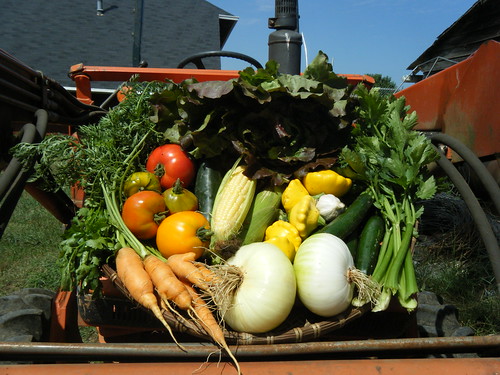
This Week’s Share

  • Carrots
  • Celery
  • Cilantro
  • Corn
  • Garlic
  • Lettuce
  • Onions, Siskiyou Sweets
  • Summer Squash
  • Tomatoes


On Rotation

  • Beans
  • Eggplant
  • Melons

Recipes


Celery Recipes

Braised Celery

Adapted from Recipes from America’s Small Farms by Joanne Lamb Hayes and Lori Stein

6-8 celery stalks (with leaves)

3 bacon slices, quartered, or 2 tablespoons unsalted butter

1 medium onion, coarsely chopped

¾ cup vegetable stock

1 tablespoon chopped fresh parsley, or 1 teaspoon dried

celery leaves, chopped

salt and freshly ground black pepper, to taste

Preheat the oven to 350˚F. Rinse, drain, and trim the celery; cut the stalks into 2 inch pieces and set leaves aside. Saute the bacon in a large, heavy, ovenproof skillet for 4 to 5 minutes, until it begins to brown. (Or melt the butter). Add the celery and onion and sauté until the onion begins to brown, 3 to 4 minutes. Pour the stock over the mixture. Cover the skillet with an ovenproof lid or aluminum foil and braise the vegetables in the oven for 20 to 25 minutes, until the celery is tender. Stir in the parsley and celery leaves; season with salt and pepper to taste and serve.

Cream of Celery Soup

Adapted from the Joy of Cooking

1 tablespoon butter

1 cup (or more) chopped celery with leaves

1/3 cup thin onion slices

2 cups chicken or vegetable stock

2 cups milk, divided

1 ½ tablespoons cornstarch

2 tablespoons chopped fresh parsley

Melt the butter in a saucepan, add celery and onion, and sauté 2 minutes. Add stock; simmer 10 minutes. Strain or puree soup. Return to heat, add 1½ cups of the milk and bring to a boil. Dissolve cornstarch in remaining ½ cup milk; stir gradually into hot soup. Bring to boil again; stir and cook about 1 minute. Sprinkle with parsley. Makes 4 cups.

Onion Recipes

Delicious Siskiyou Sweets Onion Rings

Recipe from Shannon Raider (SIO Alumni)

Oil for frying

2 large sweet onions

Salt

1½ cups all-purpose flour

1 tablespoon salt

½ cup Cornstarch

1 good cold beer (I prefer a Porter)

Pour oil for frying (canola, grapeseed or peanut) 2 in. deep into a cast iron skillet or your favorite frying vessel and heat to 350˚F. Slice onions crosswise to 1/4 in. thickness and separate rings. In a brown paper bag toss rings till dusted with cornstarch and set aside. Mix flour with salt and cornstarch. Quickly stir in 1 good COLD beer and stir till the lumps are pretty much gone. Set the bowl of batter in another bowl full of ice water. Keep batter cold while you dunk rings. Fry onions taking care not to crowd the pan. Too many will cool the oil and resulting in a less crisp ring. Lightly salt if preferred and indulge immediately.

Fresh Summer Salsa

(see Tomato Recipes below)


Tomato Recipe

Fresh Summer Salsa
Recipe from Francesca Benedetti (CSA Coordinator at SIO)

Note: I prefer intense and bold flavors in my salsa so I tend toward the higher amount suggested in the ingredients. Also, increase quantities proportionately for your desired amount of servings.

1-2 heirloom or slicing tomatoes

1/2 to 1 onion

2 to 4 cloves garlic, chopped

1 ear of sweet corn, kernels stripped from cob

2 to 4 tablespoons chopped cilantro

juice of 1/2 to 1 lime (can add some lime zest too for and extra pop)

1/2 to 1 hot pepper, minced (optional, but can use jalapeno, Serrano, Anaheim, Hungarian black, ancho, etc.)

salt and pepper to taste

Dice tomatoes and place in a medium size bowl, letting some of the juice drain as you are transferring them to the bowl. Chop the onions coarsely and mince the garlic and place in the bowl. Cut the corn from the cob by resting the cob over a plate or bowl and cutting the kernels off in strips (for even more flavor you can cut them off in two rounds, only cutting halfway down the kernels the first round and cutting down to the cob the second round). Add the corn to the bowl. Chop the cilantro and add to the bowl. Juice the lime either directly over the bowl, or into a separate container to remove any seeds if desired. You can also grate up some lime zest into the bowl at this point as well. Now mince your hot pepper (if using), and add to the bowl (be mindful not to touch your face or eyes until after thoroughly washing your hands, because the compounds that make peppers hot can also transfer to your skin and then to whatever other part of your body you touch ). Mix up all of the chopped ingredients in the bowl, and taste. Add salt and pepper as desired and any more of the already included ingredients as desired. Let sit for at least 10 minutes to allow flavors to settle. Eat with tortilla chips, quesodillas, tacos, on top of fish or chicken, or just by the spoonful.

FIT Spotlight: Kristin

First involved as a volunteer with a CSA Program in her home of Austin, TX, Kristin was inspired to learn more about farming. From there, Kristin and her partner decided to go WWOOF-ing (World Wide Opportunities on Organic Farms) and see the world together. After spending time at an egg farm in Western Colorado, a 16-acre asparagus and diversified vegetable farm in the United Kingdom, and another vegetable farm France they were ready to return stateside and settle in the Pacific Northwest. Kristin says she moved to Portland, “for the blackberries and cooler weather,” and remarks that, “farming in Texas is very different from farming in the NW.” Out at the farm her activities are direct seeding crops and harvesting everything. “I really wanted to experience a full growing season in Portland,” says Kristin, “SIO offers the big picture experience and a community.”

Categories : Blogroll, CSA Newsletter, Farm News & Updates, Recipe

CSA News: Week 14- August 18 to August 24

Posted by sio@dmin on
 August 18, 2009

This Week’s Share

  • Basil
  • Chard
  • Cucumbers, Slicing and Lemon
  • Onions, Torpedo
  • Potatoes, Sangre
  • Summer Squash
  • Sweet Corn
  • Tomatoes

On Rotation

  • Beans
  • Eggplant
  • Melon

Share Notes

  • Cucumbers: Here at SIO we grow a classic green cucumber and a lemon cucumber variety, which is round and yellow but tastes nothing like a lemon. Both can be used fresh sliced in salad and on sandwiches, for soups, lightly sautéing, and for sauces.
  • Potatoes: This week in your share you will receive 3 pounds of beautiful, large Sangre potatoes. As we allow your potatoes to size up the fields there is always some chance for small cosmetic damage. There is a possibility over the season you may see damage from wire worm  or scurf and the damage is usually to a small portion of the outer skin which can be easily peeled or cut off.
  • Tomatoes: Out here on the farm we grow three types of tomatoes. These are slicing tomatoes, heirloom tomatoes, and San Marzano paste tomatoes. Throughout the season you will receive all three types of tomatoes in your share.

Recipes

Basil Recipes

Basil Pesto
Recipe from Francesca Benedetti (CSA Coordinator at SIO)

Note: If you have never made fresh pesto you are truly in for a treat. Its easy, delicious, and can keep for up to 6 months in the freezer (or up to a year if you don’t add the cheese before freezing). You can look forward to another pesto size quantity of basil in a future share, so if you just can’t resist eating your whole batch at once you can do another round in a few weeks.

2 cups basil, thick longer stems removes
3-4 cloves garlic
1/3 cup toasted pine nuts, cashews, sunflower seeds, or pecans
¼-½  cup olive oil (how much depends on your preferred pesto consistency)
½ cup grated Parmesan cheese
1 tablespoon lemon juice (optional)
salt and pepper to taste

Put basil and garlic in a blender or food processor and pulse until coarsely chopped. Add the toasted nuts and pulse a few more times. Now pour the olive oil into the blender/processor relatively slow with the blender/processor going until a paste is formed. Add the Parmesan cheese and continue adding oil (up to 1/2 cup) until your desired pesto consistency is achieved. Add salt and pepper to taste. You may also add in 1-2 tablespoons lemon juice near the end for a more tangy flavor. Makes approximately 1 cup pesto. Great on pasta, sandwiches, vegetable dishes, corn on the cob, toast, and many more things.


Insalata Caprese

Recipe passed down through generations of Italians who have enjoyed this delicious combination of flavors fresh from their gardens’ for hundreds of years.

Note: This simple tomato, basil, and mozzarella salad originates from the island of Capri in the Campania region of Italy, and it is truly one of the most delicious ways to enjoy the flavors of summer. If you are up for a real treat try making your own 30-Minute Fresh Homemade Mozzarella (recipe below) to accompany the SIO grown tomatoes and basil.

1 slicing or heirloom tomato, sliced to ½ inch thickness
1 ball fresh mozzarella, sliced into ¼ inch thickness (make your own, recipe below)
10 leaves fresh basil, sliced into thin strips
1 tablespoon olive oil
salt and pepper to taste

*This recipe gives snack size quantities, but its very easy to double, triple, or increase at whatever proportion to meet your needs.

Fresh Homemade Mozzarella (in only 30 Minutes)
Adapted from Ricki Carroll, Author of Home Cheese Making

1 gallon whole (or 2%) cow milk (avoid ultra-pasteurized)
1 ½  tsp citric acid (found in the bulk spice section at New Season, Fred Meyer, etc.)
¼  tsp liquid rennet*
Cheese salt (any non-iodized salt, such as kosher, sea salt, or non-iodized table salt)
Cooking thermometer (a.k.a. Candy or cheese thermometer)
Cheese cloth (optional)

* Rennet is a natural complex of enzymes produced in any mammalian stomach to digest the mother’s milk, and is often used in the production of cheese. There are non-animal sources for rennet that are suitable for vegetarian consumption (Foster and Dobbs located in NE Portland and Kookoolan Farms in Yamhill both carry the animal and vegetarian liquid rennet, along with many other useful cheese making supplies).

Combine rennet and ¼ cup water in a small bowl and set aside. In another bowl, dissolve citric acid powder in ½ cup water and stir until dissolved. Pour citric acid into a very large pot. Add milk, stir, and heat moderately. Small clots starting to form and floating in the milk is normal.

Using a cooking thermometer, remove pot from heat when the milk reaches 88 degrees. Add rennet and stir for 30 seconds, then allow to set undisturbed for 6-8 minutes. The process is complete when the liquid milk has transformed into a semi-firm custard consistency.

While still in the pot, cut the curd gently with a knife. Drawing the knife through the curd from top to bottom and from side to side, you’ll end up with a checkerboard pattern in the surface of the curd. The liquid whey should be clear and slightly yellowish.

Scoop out the curd and put into a colander (or in cheese cloth in a bowl). Curds will be soft but should hold their shape. Drain curds briefly while gently pressing. Pour off pooling whey.

If you have a microwave, microwave curds on high for 1 minute. Drain off excess whey, then knead the curd the same way you would bread. Heat for 30 seconds, drain, and knead again. Repeat this process at least 3 times. Note that the cheese curd will become very warm, so you may want to wear rubber gloves. Incorporate salt in small amounts as you knead (not more than a teaspoon).

If you don’t have a microwave, heat a pot of water to near boiling-about 180 degrees. Dip the curd in the hot water for several seconds, remove, and knead. It’s helpful to divide the curd into several segments. Repeat the process about 3 times. Incorporate salt to taste.

Stretch! As you knead, the mozzarella will gradually become smooth and pliable, much like bread dough. When the curd stretches effortlessly like salt water taffy, shape the cheese in any manner you like (balls of any size, one large ball, or strands). Cool in ice water. Once cool, it’s ready to eat! Makes about 3/4 pound.

Corn Recipes

Note: Remember to look at the Chef’s Corner in the Week 12 blog post for corn ideas from Laurelhurst Markets’ David Kreifels.

Grilled Chicken & Corn Red Potato Salad with Jalapeno Vinaigrette
Recipes adapted from www.simplyscrupmptiousfoodie.com

Note: This salad can be made with or without the grilled chicken. If you do include the grilled chicken feel free to make it using your favorite recipe, or you can try out the Lime and Herb Grilled Chicken recipe included below.  Either way, make sure you enjoy this fun Southwest twist on potato salad.

Jalapeno Vinaigrette

1/2 cup plus 1 tablespoon extra-virgin olive oil
6 tablespoons red wine vinegar
1-1/2 teaspoons Dijon mustard
1/4 teaspoon pepper
a pinch of salt
3/4 cup finely chopped red onion
2 jalapeno chilies, seeded and finely chopped

Grilled Chicken & Corn Red Potato Salad

2 cups Grilled Chicken, chopped and diced (recipe below)
1 tablespoon extra virgin olive oil for drizzling on corn
5-7 red potatoes
2 fresh ears corn, with husked removed

Put the onions and jalapeno in a bowl. Add olive oil, vinegar, Dijon mustard, salt, and pepper. Then whisk until the vinaigrette becomes a smooth dressing. In a pot of salted water, bring the potatoes to a boil and cook until just tender, about 20 minutes. Drain the potatoes and set aside to cool, then cut into bite-size pieces. Grill the corn and keep turning until almost all sides have char marks, which should take about 10 minutes or less. Slice the kernels off the cobs. Add the corn to the potatoes. Then add the grilled chicken. Add the vinaigrette. Then toss to combine all of the ingredients. Serve as a side dish or have this yummy salad as a quick to-go lunch!

Lime and Herb Grilled Chicken

2 tablespoons lime juice
2 skinless, boneless chicken breasts (about 1 pound)
1 tablespoon extra-virgin olive oil
1 teaspoon onion powder
1 teaspoon garlic power
2 tablespoons parsley (could also use basil)
1 tablespoon rosemary
1 tablespoon sage
2 teaspoons freshly ground black pepper
1 teaspoon fresh garlic, minced

Place the chicken into a bowl and pour the lime juice over the chicken. Season with onion powder, garlic powder, parsley/basil, rosemary, sage, and black pepper. Drizzle the chicken with one tablespoon olive oil and turn to coat. Cover and let marinate in the fridge for an hour or two. Preheat a grilling pan or once again the beloved George Foreman grill. Place the chicken onto the grill. Grill for about 15 minutes, or until beautiful char marks have developed.

Summer Squash Recipe

Zucchini Provencal
From Herbs Love Tomatoes, Peppers, Onions and Zucchini by Ruth Bass

Note: Use the basil and garlic in whatever quantity you please.

1 pound zucchini (4-5 small, 2 medium, or one large)
2 tablespoons extra virgin olive oil
1 onion, thinly sliced
1 garlic clove, minced
1 large ripe tomato
2 teaspoons chopped fresh basil
2 teaspoons chopped fresh parsley
salt and freshly ground black pepper

Scrub the zucchini and slice into 1/4-inch rounds (if using medium or large size zucchini you may need to cut rounds into halves or quarters). Heat the oil in a large skillet. Add the onion and garlic and cook for 10 minutes over very low heat, taking care not to brown the onion. Core the tomato, halve crosswise and scoop out some of the seed with a melon baller or small spoon. Chop the tomato coarsely. Add the zucchini to the skillet and cook over low heat stirring frequently to prevent any vegetables from sticking. After 2 minutes, add the basil and parsley. When the zucchini is almost tender add the chopped tomato and salt and pepper to taste. Cover the skillet and continue cooking for 3-4 minutes. Serve immediately. Makes 4 servings.


Potato Recipe

Grilled Chicken & Corn Red Potato Salad with Jalapeno Vinaigrette
(see above in Corn Recipes)


Tomato Recipes

Insalata Caprese
(see above in Basil Recipes)

Zucchini Provencal
(see above in Summer Squash Recipe)

Categories : Blogroll, CSA Newsletter, Farm News & Updates, Recipe

CSA News: Week 13- August 11 to August 17

Posted by sio@dmin on
 August 11, 2009

This Week’s Share

  • Beets
  • Cucumbers
  • Dill
  • Garlic
  • Lettuce
  • Onions, Siskiyou Sweets
  • Summer Squash
  • Sweet Corn, Sugar Buns

On Rotation:

  • Eggplant
  • Melons
  • Tomatoes, Slicing

Recipes

Beet Recipe

Quick Pickled Beets
From American Wholefoods Cuisine by Nikki and David Goldbeck

Note: Picked beets are especially good with mild, creamy dishes, providing a contrast of taste and texture to foods sauced with yogurt, sour cream, cottage cheese, or a smooth gravy.

3-5 beets (approx. 1 pound), steamed*
1 small onion (or a portion of a larger onion)
1/4 cup cider vinegar
1/4 cup water (from steaming beets, or plain water)
1 tablespoon honey
1/2 teaspoon salt
4 whole cloves
1/2 bay leaf

When steamed beets are cool enough to handle, peel and slice. Cut each slice in half. Place in a shallow casserole or bowl. Combine remaining ingredients in a saucepan, bring to a boil, cover and cook for 5 minutes. Pour over beets. Chill for at least 1 hour before serving. To store, keep in a covered container in the refrigerator. Pickled beets will keep for 2 to 3 weeks in the refrigerator.

* To steam beets, scrub beets and remove tops and long roots. Steam whole until the bulb can be pierced. This will vary from 30 to 45 minutes, depending on the size and age of the beets. When beets are cool enough to handle, skin will slip off readily with gentle pressure.

Corn Recipes

Note: Remember to look at last week’s blog for corn ideas from Laurelhurst Markets’ David Kreifels.

Soft Delicate Corn Fritters
From The Victory Garden Cookbook by Marian Morash

Note: Serve these as a side dish with main-course meals; or sprinkle with powdered sugar and eat as a dessert. In this recipe the flour is only necessary if the corn is very milky. For the egg component you may do as directed below or you can also separate 3 eggs, using 2 of the yolks in the mixture, then beat the 3 egg whites and fold into batter before frying.

2 eggs
2 cups scraped* corn
1 teaspoon salt and freshly ground pepper
2 tablespoons flour (optional)
1 teaspoon sugar
1 tablespoon melted butter
vegetable oil or clarified butter, enough for frying in

Lightly beat eggs; mix with remaining ingredients except oil or clarified butter. Heat oil or clarified butter to a medium.  Drop fitter batter by spoonfuls into hot oil or butter, browning on both sides, 3-4 minutes per side. Makes 15-20 small fritters or patties.

*To scrap corn run a knife down the center of a row of kernels, slicing right down to the end of the ear. Continue until all the rows have been prepared. Place the sliced ear of corn over a bowl, then using the back of a knife push or “scrape” down on the kernels/ the flesh and “milk” will spurt out. Go back and forth up and down the ear until it’s finished.

Cucumber Recipe

Tzatziki Yogurt Sauce
Recipe from www.suite101.com

Note: Tzatziki sauce is served as a condiment along with Greek meals. Tsatziki is typically served on top of chicken, lamb and other meat dishes such as gyros. In addition to being used as a meat sauce, tzatziki can also be used to make potato salad, and as a dip along with pita bread and fresh vegetables, such as some sliced up cucumbers, carrots, broccoli, or any other veggie that sounds good.

1 16 oz. container Greek style yogurt
1 medium cucumber
3 cloves garlic, grated
2 tablespoons fresh dill, chopped fine
Zest from one lemon
3 tablespoons lemon juice
1 tablespoon extra virgin olive oil
1 teaspoon red wine vinegar
2 teaspoons salt

Peel the cucumber if desired. Cut the cucumber in half, and remove the seeds.
Use a hand grater, or food processor, to grate the cucumber. Place the grated cucumber in a double thickness paper towel, and gently squeeze out the moisture. Replace the wet paper towel with dry paper towel, and continue squeezing the cucumber until most of the moisture has been removed. Add the cucumber to a medium bowl. Stir in the garlic, dill, lemon zest, lemon juice, olive oil, vinegar and salt. Add the Greek yogurt and stir until well blended. Cover the tzatziki sauce and place in the refrigerator until ready to serve. Makes a total of 2 1/2 cups of tzatziki sauce.

Dill Recipes

Dill Cheese Spread
From the Moosewood Restaurant Kitchen Garden

1 1/2 cups grated firm cheese (Cheddar, Monterey Jack, Swiss, Jarlsberg, gouda)
2/3 cups cream cheese or cottage cheese (regular or low-fat)
1/4 cup or less chopped fresh dill (can also use this same recipe with other herbs)
2 to 3 tablespoons additional seasonings: chopped vegetables, chilies, nuts, garlic, or edible flowers)

Allow the grated cheese to soften at room temperature for easier mixing. Use a food processor or mixer to whip the cheeses together until smooth and well blended. Add the remaining ingredients. Makes about 2 1/2 cups.

Dilly Mayonnaise
From the Moosewood Restaurant Kitchen Garden

4 egg yolks
1 tablespoon cornstarch
1/4 cup vegetable oil (or use part olive oil)
2 tablespoons fresh lemon juice or herb vinegar
1/2 cup hot water
1/2 teaspoon Dijon mustard
salt and freshly ground black pepper to taste
2 to 3 tablespoons chopped fresh dill

Combine egg yolks and cornstarch in a small saucepan. Slowly whisk in the oil, followed by the lemon juice/herb vinegar and water. Cook over low heat, whisking constantly, until mixture thickens. Remove from heat and add mustard, salt, pepper, and dill. Transfer mayonnaise to a bowl, cover tightly, and refrigerate immediately. It will keep refrigerated for up to week. Makes 1 cup.

Tzatziki Yogurt Sauce

(see above in Cucumber Recipes)


Summer Squash Recipe

Lonnie’s Chocolate Zucchini Cake
Unknown Source

Note: Member Jennerifer Siebold brought this cake to the SIO Potato Harvest and French Fry Feast and it was a big hit. She says of the recipe, “I’d like to say Lonnie was my great grandmother and this was an old family recipe…but it isn’t and I have no idea who Lonnie is, except for a great cook!  At the SIO French Fry potluck I substituted gluten free flours, ghee, and milk & vinegar (for the butter milk), reduced the sugar to 1 cup and forgot the chips…so as you can see it is a pretty flexible and forgiving recipe–the best kind!  Enjoy!”

1/2 cup soft butter
1/2 cup cooking oil
2 eggs
1 1/2 cup sugar (can be reduced)
1 tsp vanilla
2 1/2 cups flour
1 tsp baking soda
1/2 tsp salt
1/2 cup chocolate chips
1/2 cup buttermik
4 tbsp cocoa
2 cups grated zucchini
1/4 cup nuts
1 tsp cinnamon

Mix oil, butter, eggs, sugar, vanilla, and milk together.  Add cocoa, baking soda, cinnamon, and salt.  Mix well. Add four and mix well. Add zucchini, chocolate chips and nuts and mix.  Divide the batter into two well greased loaf pans or one well greased 13×9 inch baking dish.  Bake for 350 for 45 minutes or until a tooth pick poked into the center comes out clean.

FIT Spotlight: Carol

Carol grew up in the Portland area and, “doesn’t plan on living anywhere else”. After graduating from the University of Oregon in 2003 with a degree in Environmental Studies Carol participated in an independent study on rural community life found her way to WWOOF-ing (World Wide Opportunities on Organic Farms) in France. Since then she has wanted to join a serious farm apprenticeship, and eventually found her way to the SIO FIT Program. The balance between country life, city life, and staying close to friends and family all created the ideal situation for Carol at SIO. She would like to have her own farm one day and already feels that the FIT Program is allowing her to gain the skills and confidence to do so.  Out at the farm Carol enjoys pinching basil, planting with the crew, and hanging out with the farm cats, and of course like any SIO employee she loves, “sharing in the harvest.”

Categories : Blogroll, CSA Newsletter, Farm News & Updates, Recipe

CSA New: Week 12- August 4 to August 10

Posted by sio@dmin on
 August 4, 2009

This Week’s Share

  • Basil
  • Carrots
  • Corn
  • Cucumbers
  • Garlic
  • Lettuce
  • Summer Squash
  • Onions, Torpedo
  • Potatoes, Bintje

Chef’s Corner: August


In addition to the crops SIO grows for our 400 member CSA program, we also grown and sell produce to 30-40 Portland area restaurants and kitchens, and this season at SIO we decided to partner with some of those restaurants for some culinary inspiration. We have been picking the brains of some of the areas most talented chefs and restaurant owners, and have asked them to provide us with recipes and general cooking techniques based on the crops that you receive in your shares. Out at the farm we crop plan separately for both our CSA program and restaurant sales, so you don’t have to worry that part of your share may be going the restaurant down the street. For the month of August our featured restaurant is Laurelhurst Market, located at  32nd and E. Burnside in the Laurelhurst neighborhood.

By David Kreifels, Co-Owner and Chef de Cuisine at Laurelhurst Market


Laurelhurst Market opened just this past May on 32nd and East Burnside St.  My business partners, Jason Owens, Ben Dyer, and myself transformed an old mini mart of the same name into a steakhouse/butcher shop with a focus on local and sustainably grown produce and meats. Sauvie Island Organics plays a large role with this.  I was introduced to SIO. a few years back by Troy McClarty, who was working with us at Simpatica at the time.

Establishing good relationships with farmers is such a key piece to the puzzle of running a successful kitchen and these guys made that process a breeze.  With any crazy request I made either came a “yes” or at least a good alternative.  And when running a catering company, those requests are frequent.

Here at Laurelhurst Market we’re currently using SIO’s salad greens, beets, kale, potatoes, and herbs, while looking forward to their amazing onions for a French Onion Soup in the fall.

Our hours for the butcher shop are 10:00 AM til 7 PM daily.  The restaurant opens at 5 PM for dinner service Wednesday through Monday.

Beans

I love green beans.  They can stand up to so many cooking methods and so many flavors.  I like them simply blanched on a Nicoise salad or stewed for an hour in olive oil with some onion and finished with some chopped nuts and mint.  Here at the restaurant we have a side of grilled green beans with grilled onions, pancetta, basil, dijon, and creme fraiche.  Here’s the recipe:

1 lb. green beans; stems removed
1 small sweet onion.  A torpedo or siskyou will work great.
4 oz. pancetta; diced medium  (I can recommend a good butcher shop!)
2 sprigs basil; torn
1 tbsp. dijon mustard
1/3 cup creme fraiche (sour cream mixed with a tablespoon of buttermilk would work in a pinch)
salt and pepper
1/2 lemon

-Blanch beans in heavily salted water for 45 seconds.  This gives them a head start so they wont burn on the grill. Lay out in a single layer and cool in the fridge.
-Slice the onion into 1/2 inch rounds.  On a plate, rub with canola oil, salt, and pepper.  Reserve.
-In a sauté pan, add diced pancetta and a few tablespoons of water.  Bring to a boil over med-high heat.  The water will evaporate while cooking the pancetta.  When all the water is gone, stir frequently until the pancetta gets crispy on the outside, tender in the middle.
-Drain onto a paper towell and save the fat for the dressing.
-Over hot coals, first grill the onions.  Remove from grill back to the plate and cover with plastic wrap.
-Next grill the beans.  I’ve found an upside down cooling rack helps them from falling through the grill.  Or, if you’re fancy, you can purchase one of those new pans meant for grilling vegetables.  Grill only for a couple minutes, tops.  Best for them not to get too black.
-In a big bowl, mix together the dijon, creme fraiche, and a squirt of lemon juice.  Break up the onion into individual rings and add them along with the beans, pancetta, and the torn basil.
-Finish with a little reserved pancetta fat, and some salt and pepper if you feel it needs it.

I like making this when the main course is coming from the grill too.  You can cook everything while the coals are raging and set it aside while you prepare the rest.  The salad holds well for an hour at least.

Corn

SIO grows some of the best corn I’ve tasted.  That said, simply throwing it on the grill still in it’s husk is great and totally satisfying.  However, it too is such a versatile vegetable that takes on other flavors so well.  I love it roasted in a chili releno or as a base for some hushpuppies.  (See Paul Prudhomme’s Louisiana Kitchen cookbook for a good recipe.)  This season in our kitchen we’re serving creamed corn with some of our housemade bacon.  It’s easy and packs a ton of flavor.  Goes great with a nice fatty rib eye too.  By the way, this creamed corn added to Mr. Prudhomme’s hushpuppy recipe is a winner.

4-5 ears corn
1 medium siskyou onion; small dice
2 cloves garlic; chopped
4 ounces bacon; small dice
2 cups cream
1/2 tsp. cayenne
1/2 tsp. black pepper
1 tsp. paprika
1 tsp. dried oregano
1 bay leaf
2 sprigs fresh thyme
1 tbsp. butter
salt

-cut corn off cob in two steps.  The first taking half the kernel off, and the second removing the remainder.  This opens up the kernel to release the starches and flavor better.  It’s a neat trick.
-cut the naked cobs into 6 or 7 pieces and place in a pot along with the cream and bay leaf.  Bring to a simmer and let it go for a few minutes.  There’s some good flavor that will be extracted.  Set aside.
-In a large sauté pan, preferably stainless steel, add bacon and render out the fat over medium heat, stirring often.
-When crispy, remove from pan and set aside, keeping the fat in the pan.
-Add butter and diced onions with a little salt.  Sweat them until translucent.
-Add spices and bloom for a minute.
-Add garlic and sautee a moment more; don’t brown it.
-Add thyme; then corn.  Sautee for 5 minutes, stirring.
-Strain in corn cream.  Bring it all to a boil, then turn down to simmer.
-Let go for 10 minutes.  Adjust seasoning with salt and pepper.  Add the bacon back in.
-Cool down for at least a few minutes before serving.

You can make this a day or two in advance and it’s just as good, if not a bit better.  Just re-warm over low heat.  You might add a bit more cream if it got too thick.

Tomatoes

Besides slathering them with Best Foods mayonnaise and a bit of salt and pepper I suppose there are a few other things to do with them… Like mix them with some room temperature roasted beets, some torn parsley and some sliced cucumber.  All that needs is some lemon and olive oil.

Once the bounty really hits, most people struggle to give them away.  That’s when a gazpacho comes in handy.  It takes a good amount of tomatoes to feed just a half dozen people.  At Laurelhurst Market, we’re serving ours with some poached Dungeness crab and fried croutons.

5 lbs tomatoes; early girl, roma, probably not cherry; peeled
a few slices crusty bread, crusts off
2 red bell peppers; seeded
1 small hot pepper such as a jalapeno
1/2 bulb fennel
1 cucumber, peeled and seeded
1/4 red onion
a few garlic cloves, smashed
a few sprigs basil
a few sprigs thyme
2 tablespoons paprika
1 tsp black pepper
1/4 cup sherry vinegar

-Rough chop everything and toss together in a bowl.  Let marinate for a few hours in the refrigerator or up to overnight.
-Puree in batches in a blender until very smooth
-In a large bowl, whisk in 1 cup extra virgin olive oil.  Soup should be emulsified.
-Adjust seasoning with salt, pepper, and sherry vinegar.
-Fry bite size pieces of bread in hot oil, then drain on paper towels.
-Serve the soup cold drizzled with a little extra virgin and the croutons.

You can put a number of seafood garnishes on gazpacho.  Crab is what we’re using.  Ceviche’ works great, so do seared scallops.  Sauteed squid sounds good… maybe next week’s menu?

Recipes


Corn Recipes


Succotash Chowder

Adapted from The New Moosewood Cookbook by Molly Katzen


Preparation:
Soak 1to1 1/2 cups dry baby lima beans in water for at least 4 hours. Cook in plenty of simmering- not rapidly boiling- water for 35 to 40 minutes or until perfectly tender. Try not to overcook the beans, or the soup will become gluey and lose its textural charm.

1 medium potato , diced (peeling optional)
1 tablespoon butter
2 cups chopped onion
3 to 4 cloves garlic, crushed or minced
3 stalks celery, minced
1 1/2 teaspoons salt
1 tablespoon fresh chopped basil
1/2 teaspoon thyme
3 cups fresh corn
2 to 3 cups cooked baby lima beans
4 cups milk (can be lowfat
a generous amount of black pepper
finely minced parsley, chives, or basil (optional)

Cook the diced potato in boiling water until just tender. Drain well, and set aside. Meanwhile, melt the butter in a kettle or Dutch oven. Add onion, garlic, celery, salt, and herbs. Saute over medium heat for about 10 minutes, or until the onion and celery are tender. Stir in the corn, and sauté for about 10 minutes more. Add the cooked beans.  At this point you can puree some of the sauté in a food processor or blender and return it to the kettle, as this will make for a thicker soup Add potatoes and milk. Season to taste with black pepper and salt. Serve very hot, topped with minced fresh herbs

Grilled Corn with Chipotle-Lime Butter
Adapted from EatingWell in Season by Jesse Price

Note: The chipotle-lime butter used in this recipe is also great melted on some grilled fish or chicken.

4 ears fresh sweet corn, husked
2 tablespoons butter, softened
1/4 teaspoon freshly grated lime zest
1 teaspoon lime juice
1/2 teaspoon minced chipotle chile in adobo sauce* plus 1/4 teaspoon adobo sauce or 1/4 teaspoon chipotle pepper
1/2 teaspoon kosher salt
2 oz queso fresco, crumbled (optional)

*Chipotle chiles in adobo sauce are smoked jalapenos packed in flavorful sauce. Look for the small can with the Mexican food in large supermarkets. Once opened, they’ll keep for up to 2 weeks in the refrigerator or 6 months in the freezer.

Preheat gill to high. Wrap each ear in foil. Place on the grill and cook, turning frequently for 10 minutes. Remove from grill and let stand in the foil while preparing butter. Combine butter, lime zest, chipotle and adobo sauce (or ground chipotle) and salt in a bowl. Carefully unwrap the corn. Serve with the butter, and top with queso fresco if desired.

Summer Squash Recipe

Cheesy Zucchini
Recipe

Note: Don’t be fooled by the title, using your yellow pattypan and green zucchini both in this recipe is delicious.

2 tablespoons extra-virgin olive oil
4 large cloves garlic, thinly sliced
1 1/2 pounds summer squash
1 tablespoon coarsely chopped flat-leaf parsley (from last week)
1 tablespoon coarsely chopped fresh basil
1/4 teaspoon salt
1/3 cup freshly grated Parmesan cheese
1/2 cup freshly grated mozzarella

Heat the olive oil in a large nonstick skillet over medium heat. Add the garlic and cook, stirring frequently until softened, 1-2 minutes. Add the squash and stir to coat it with the garlic-oil mixture. Cover the skillet and cook the squash, stirring occasionally, until it is glossy and tender but still crisp, 4-6 minutes. Sprinkle the basil/parsley and salt evenly over the squash and cook stirring frequently, until the basil/parsley wilts, about 1 minute. Stir in the Parmesan cheese and stir constantly until it melts, about 1 minute. Sprinkle the mozzarella cheese evenly over the squash, cover the skillet again, and remove it from the heat. Let the squash sit until the mozzarella cheese melts, 1 to 2 minutes.

Potato Recipe

Roasted Potatoes with Basil Vinaigrette
Adapted from www.kitchengardeners.org

Here’s an easy way to enjoy freshly-dug potatoes.

1 1/2 pounds potatoes
2 tablespoons olive oil
1/2 teaspoon salt
1 tablespoon fresh basil, minced (more if you prefer)
a drizzle of olive oil (just enough to mix with basil
a drizzle of balsamic (just enough to mix with basil)

Chop potatoes into larger bite-sized pieces and toss them with olive oil and salt. Roast in a 425 degree oven about 40 minutes or until the edges are brown, turning from time to time. Prepare a vinaigrette with the minced basil, balsamic vinegar, and olive oil. Toss while the potatoes are hot out of the oven. They will absorb the dressing so there shouldn’t be any left on the bottom of the bowl. Season with salt and pepper to taste.

Categories : Blogroll, CSA Newsletter, Farm News & Updates, Recipe

CSA News: Week 11-July 28 to August 3

Posted by sio@dmin on
 July 28, 2009

This Week’s Share

  • Chard
  • Carrots
  • Corn
  • Cucumbers
  • Garlic
  • Lettuce
  • Sweet Onions, Purplettes
  • Summer Squash
  • Parsley, Italian Flat Leaf


On Rotation:

  • Broccoli

Recipes


Parsley Recipe


Chimichurri Sauce
By Michael Chiarello, foodnetwork.com

Note: This blend of fresh herbs and spices is a classic Argentinean meat marinade and condiment. It can be used and served in any number of ways, but traditionally is paired with grilled meats.

1 bunch fresh flat-leaf parsley, finely chopped
2 bay leaves
6 cloves garlic, minced
1 1/2 teaspoons smoked paprika
1 tablespoon fresh oregano leaves, finely chopped
1/2 cup red wine vinegar
1 1/2 cups extra-virgin olive oil
1 teaspoon salt
1/2 teaspoon freshly ground black pepper

Place the parsley, bay leaves, garlic, paprika, oregano, vinegar, olive oil, salt, and pepper in a food processor. Pulse until combined. Put the sauce in a glass or plastic container, using as needed. Chimichurri will last for up to 1 month, refrigerated. Makes 2 1/2 cups.

Bean Recipe


Lemon-Rosemary Pickled Beans
Recipe adapted from Emerill Lagasse, www.foodnetwork.com

Note: This is my favorite pickling recipe and so when beans are in abundance I often make a batch. The green and yellow bean varieties work equally as well. Emerill Lagasse uses this pickled green bean recipe as a condiment for a Bloody Mary, and although I do enjoy them as an addition to that beverage they are absolutely delicious straight from the jar.

2 pounds beans
4 sprigs fresh rosemary
4 cloves garlic, peeled
4 (3-inch) strips lemon peel
2 1/2 cups water
2 1/2 cups white wine vinegar
3 tablespoons pickling salt
2 tablespoons sugar

Sterilize 4 pint-sized jars and their lids according to the manufacturer’s instructions.

Evenly trim the ends of the green beans to fit the jars. Divide and pack the green beans, rosemary, garlic, and lemon peels among the jars.

Bring a large pot or canner of water to a boil.

In a medium pot, combine the water, vinegar, salt, and sugar and bring to a boil. Simmer for 2 minutes, stirring to dissolve the sugar and salt. Ladle the hot mixture into the jars, leaving a 1/2-inch headspace. Wipe the rims with a clean cloth, affix the lids and seals, and seal tightly. Process the jars in the hot water bath for 15 minutes. Carefully remove with tongs and set aside to cool. Let sit in a cool, dark place for at least 3 weeks before opening. Yield 4 pints.

Cucumber Recipes

Ernest Hemingway’s Cold Cucumber Soup
From The Hemingway Cookbook, by Craig Boreth

Note: It is not necessary to peel the cucumbers grown at SIO because they are organically grown and unwaxed, but if you prefer a clean pale color for the soup than you should still peel them.

3 cucumbers
1 tablespoon butter
1 tablespoon chopped dill (or mint if you have some in your own garden)
¼ cup chopped onion (sweet or storage both work)
1 bay leaf
1 tablespoon all-purpose flour
2 cups fresh chicken/vegetable stock or canned broth
1 teaspoon salt, or to taste
1 cup half and half, milk, or soy milk (choose according to preference)
juice of ½ lemon, or 1 tablespoon bottled lemon juice
1 tablespoon honey
white pepper (optional)

Peel (optional) and slice two cucumbers. Peel (optional), seed and grate the remaining cucumber. Heat the butter in a large, heavy saucepan. Add the sliced cucumbers and cook over low heat for 3-4 minutes. Add the dill (or mint), onion, and bay leaf and cook over low heat until tender, about 20 minutes. Stir in the flour and cook for a few more minutes, stirring constantly. Add the stock and salt and simmer gently for 30 minutes. Remove the bay leaf and let the mixture cool slightly. Puree the mixture, half at a time, in a blender or food processor. Return to the pan and add the white pepper to taste. Add the half and half, lemon juice and honey; then taste and adjust seasoning your preference. Stir in the grated cucumber. Refrigerate several hours until very cold. Serve in a chilled bowl. Keep refrigerated until ready to serve. This is a great dish for making the night before.

Sweet & Sour Onions and Cucumbers
Recipe from Morris Farms in Uvalda, GA

3 cups peeled, seeded and thinly sliced cucumbers
1-1/2 cups thinly sliced sweet onions
1/2 cup grated carrot
1/2 cup white vinegar
1/4 cup sugar
2 tablespoons chopped fresh dill or 1 tablespoon dried dillweed
1/2 teaspoon salt
1/4 teaspoon ground black pepper

In a medium bowl toss together cucumbers, sweet onions and carrots, set aside. In a liquid measuring cup combine vinegar, sugar, dill, 2 tablespoons water, salt and black pepper. Pour over cucumber mixture, toss to coat. Serve immediately or cover and refrigerate until ready to serve. Makes 6 portions.

Squash Recipe

Note: These cookies are a great way to use up summer squash or zucchini while in season, and they happen to be quite delicious (as well as kid friendly). Donald Kotler of Toast Restaurant in Portland provided the recipe while visiting as a chef for Zenger Farm Cooking Camp last summer. They were a hit at camp and I continued to use it a handful of times more in the throughout the summer because they are so easy and delicious.


Squash Cookies

From Donald Kotler, Owner of Toast Restaurant
Provided for Zenger Farm Cooking Camp

¾ cup flour
3 tablespoons brown sugar
¼ teaspoon ginger
¼ teaspoon nutmeg
¼ teaspoon cinnamon
¼ teaspoon baking powder
3 tablespoons butter (soft)
1 egg
1 teaspoon vanilla
zest of ½ an orange
1 cup grated summer squash
Add chocolate chips, nuts, or raisins if desired

Preheat oven to 375˚F. Mix all the dry ingredients together in a large bowl. Add the eggs, butter, vanilla, and orange zest and mix until evenly combined. Add grated squash and mix. Then add chocolate chips, nuts, and/or raisins if desired. Scoop heaping tablespoons of dough onto a greased baking sheet and bake for 10-12 minutes. Let cool. For best results remove cookies from tray to a wire rack for cooling. Enjoy with a glass of milk!

Categories : Blogroll, CSA Newsletter, Farm News & Updates, Recipe

CSA News: Week 10- July 21 to July 27

Posted by sio@dmin on
 July 21, 2009

This Week’s Share

  • Beets
  • Carrots
  • Cabbage
  • Cilantro
  • Cucumbers
  • Garlic
  • Lettuce
  • Summer Squash

Recipes

Cabbage Recipe

Cabbage and Cilantro Slaw
Adapted from www.myrecipes.com

1 cabbage, shredded
1/3 cup chopped fresh cilantro
3 tablespoons lime juice
2 tablespoons vegetable oil
1/4 teaspoon hot chili flakes
Salt and pepper

In a large bowl, mix cabbage, cilantro, lime juice, vegetable oil, and chili flakes. Add salt and pepper to taste.

Beet Recipes

Balsamic Beets with Toasted Walnuts and Goat Cheese
Adapted from the mind of Shari Raider (SIO Owner)

1 bunch beets
olive oil, enough to coat whole beets
1/4 cup balsamic vinaigrette (recipe below, make your own version, or you can use store bought)
½ cup toasted* walnuts
4 oz. soft crumbly goat cheese (could use Feta if you prefer a saltier addition)
salt and pepper, to taste

Start by removing the tops from your beets (if the tops are in good condition you can save them to use as greens in another dish). Wash the whole beets, place in a bowl and lightly coat with olive oil. Roast the beets in the oven for 35-45 minutes, or until you can poke easily with a knife. Remove the beets from the oven when done and let cool until you are able to handle. Slip the skins off the beets and cut into larger bite-sized chunks and place in a medium sized bowl. Combine beets with balsamic and mix until coated. Then add toasted walnuts, crumble goat cheese, and season with salt and pepper to taste. Let mixture chill in the refrigerator and serve cold or at room temperature.

*To toast walnuts place in dry skillet over medium-high heat and stir frequently until walnuts begin to brown. Or you place them on a solid toaster oven tray and toast on the medium setting.

Balsamic Vinaigrette Recipe
Recipe from http://www.cdkitchen.com/

1/2 cup olive oil
1/4 cup balsamic vinegar
2 teaspoons fine Dijon mustard
1 teaspoon finely chopped fresh thyme leaves
1 teaspoon finely chopped fresh rosemary leaves
salt and freshly ground black pepper to taste

Combine vinegar, mustard and herbs. Slowly add oil and vigorously whisk until the mixture emulsifies. Add salt and pepper to taste. A pinch of brown sugar or honey may be added if the vinegar is too sharp. Makes: ¾ cup

Chocolate Beet Cake
From Recipes from America’s Small Farms by Joanne Lamb Hayes and Lori Stein

4 (1-ounce) squares unsweetened chocolate, cut into small pieces
4 large eggs
2 cups packed light brown sugar
½ cup canola oil
1 teaspoon vanilla extract
2 cups unbleached all-purpose flour
1½ teaspoons baking powder
1 teaspoon baking soda
½ teaspoon salt
4-5 beets, peeled and grated
About 1 ¾ cups cream cheese frosting or fudgy chocolate frosting

Preheat oven to 350˚F. Grease two 9-inch round cake pans; line the bottoms with circles of parchment or wax paper and grease the parchment. Melt the chocolate in the top of a double boiler, over gently boiling water; the upper pan should not touch the water. Keep warm. Whip the eggs and brown sugar with an electric mixer for about 5 minutes, or until the mixture is noticeably thicker. Add the oil, whipping until it is incorporated. Add the vanilla and melted chocolate and scrape the sides and bottom of the bowl.

Sift together the flour, baking powder, baking soda, and salt. Add to the egg mixture and mix on low speed until well combined, stopping to scrape the bowl. Add the beets and mix well. Pour into the prepared pans. Bake for 40 to 50 minutes, or until the centers spring back when gently pressed. Let cool completely in the pans on wire racks.

With a serrated knife, trim the dome from both cakes so they are flat, not rounded. Trim the sides of the cakes if they seem dry. If you wish, grind the cake trimmings in a food processor or blender and reserve them for garnishing the sides of the cake. Put one of the cake layers on the cardboard circle or a flat serving plate. Spread on ¾ cup of the frosting. Gently flatten the second cake layer on top. Frost the sides and top of the cake with the remaining 1 cup frosting. If desired, press some of the reserved cake crumbs onto the sides of the cake.


Cucumber Recipe

Short-Term Cucumber-Onion Pickles
From Local Flavors by Deborah Madison

Note: These sweet pickles keep for about 5 days in the refrigerator. Also the vinegar tends to dull the herbs, so you might refresh the pickles with a new sprig just before serving.

2/3 cup white wine or apple cider vinegar
1/3 cup sugar
pinch salt
2 shiny fresh red or white onions
2 cups thinly sliced cucumbers, peeled only if skins are tough
a few dill sprigs, fennel greens, or lovage leaves
1 teaspoon mixed whole peppercorns
3 tablespoons olive oil

Mix the vinegar, sugar, and salt and set aside, stirring occasionally, until the sugar is dissolved. Thinly slice the onions into rounds, then toss them with the cucumbers, herb, and peppercorns in a noncorrosive bowl. Add the oil to the vinegar, stir well, then pour over the vegetables. Toss well, then cover and refrigerate. It’s best if the pickles can sit a day before being used.

Summer Squash Recipes

Summer Squash Galette
Recipe from Ryan Galt and Eve Hightower

For Crust:

1¼ cups flour
¾ cup butter (cold)
¼ teaspoon salt
3 to 4 tablespoons water
1 teaspoon flour

For Filling:

½ teaspoon fresh thyme or Italian seasoning
½ teaspoon pepper
1 cup mozzarella
3 medium thinly sliced summer squash, such as zucchini

For the crust:

Preheat oven to 350 degrees. Mix the flour and salt in a large bowl. Take the butter from the refrigerator and immediately cut it into ¼-inch cubes. Blend this with the flour mixture, using your fingertips, until it has the consistency of coarse meal.
Add 1 tablespoon water and blend with a fork, adding water a tablespoon at a time as needed to form a workable dough. Gather it into a ball. Do not over-handle.
Add a little flour to a large work surface and roll the dough into a 14-inch circle. If you prefer a finished look, trim the circle edges with a knife. Fold the circle of dough in half, and then half again. Move this onto a baking pan that is at least 12 inches wide. Unfold it.

For the filling:

Sprinkle flour on top of the dough. Mix the seasonings and cheese in a bowl. Layer the squash slices and cheese mixture, keeping it about 2 inches from the side of the dough. Fold the 2 inches of dough on the sides into the center, thereby overlapping much of the mixture. Some of the mixture should remain exposed. Bake for 30 minutes. Let cool for five to 10 minutes. Serve immediately. Serves 8


Curried Summer Squash Soup With Yuba and Cilantro

Adapted from The New York Times, www.nytimes.com

1 tablespoon vegetable oil
1 medium yellow onion, sliced
1 teaspoon minced fresh ginger
1 teaspoon minced lemongrass
Salt
1 teaspoon curry powder
2 pounds (about 5 medium) summer squash, thinly sliced
1 cup coconut milk
1 sheet yuba (aka.tofu skin/dried beancurd), cut into pieces about 1/4 inch by 1/2 inch
1/4 cup chopped cilantro leaves

In a large saucepan, combine the oil, onion, ginger, lemongrass and a pinch of salt. Place over medium-low heat and sauté until the onion is tender. Add the curry powder and stir for 2 minutes. Add the squash, coconut milk and 3 cups of water. Season with salt. Cover and simmer until the squash is tender. Allow the soup to cool until no longer steaming. Working in batches, purée in a blender until smooth. Pass the soup through a fine-meshed strainer set over the saucepan and return to medium-low heat. Add the yuba and bring to a simmer. Remove from heat, stir in the cilantro and adjust salt to taste. Serves 4 to 6

Cilantro Recipes

Cabbage and Cilantro Slaw

(see above in Cabbage Recipes)

Curried Summer Squash Soup with Yuba and Cilantro

(see above in Summer Squash Recipes)

Farmer in Training Spotlight: Jeramy

Jeramy first heard about Sauvie Island in a song from band in Olympia, decided to look it up on google, and found the SIO FIT program. Prior to SIO Jeramy was working in environmental education and wilderness therapy in Olympia. In the future he hopes to create a combined farming and wilderness education program. After graduating from Evergreen State College Jeramy spent time as a garden coordinator for an elementary school, worked on Victory Gardens for All in Lane County, and lived at Rio Azul, a permaculture farm and community in northern Patagonia. After spending time at several smaller scale farming and gardening projects Jeramy wanted to learn about and experience a larger scale CSA farm, and that is how he found his way to SIO. Out at the farm Jeramy enjoys harvesting beets because you are cleaning the bed and taking larger beets to make space for the smaller ones.  He also enjoys harvesting summer squash because, “its cool to see how the plants change day to day.”

Categories : Blogroll, CSA Newsletter, Farm News & Updates, Recipe

CSA News: Week 9- July 14 to July 20

Posted by sio@dmin on
 July 14, 2009

This Week’s Share

  • Broccoli
  • Carrots
  • Cucumber
  • Dill
  • Garlic
  • Green Beans
  • Kale, Red Russian
  • Lettuce
  • Summer Squash

Save the Date


Your Invited to the SIO Annual Potato Harvest Work Party
Saturday August, 1 10am-2pm


Join us for our annual potato harvest work party and french fry feast. This is a very kid friendly event. Please bring a potluck dish to share. Join us anytime during the event even just for lunch!

Schedule of Events

  • 10-12:30 spuds harvest
  • 12:30-1pm farm tour
  • 1pm-2pm potluck lunch

Recipes


Summer Squash Recipes


Note: Remember to look at the last week’s blog for summer squash recipes from Park Kitchen chef de cuisine David Padberg.

Fritto Misto
Recipe from Rob Benedetti (CSA Coordinator Francesca’s Dad)

Note: This dish has been passed down through at least 4 generations of my food loving Italian family, and it is my favorite way to prepare summer squash. Fritto misto simply means fried food in Italian, and this recipe is incredibly versatile (both with the types veggies you can use and the flavors you doctor is up with). For this batch I call for using summer squash, but you could also try some of the green beans or you can also slice up potatoes, eggplant, yams, winter squash, and many other things and prepare them using the same method. Try the suggested combinations, or try something you come up with on your own, just make sure you have some fritto misto.

1-3 summer squash (zucchini or patty pan work), also a great recipe for using any over grown squash if you have any in your garden
olive oil, approximately ¼-½ cup
1 cup all-purpose flour
1-2 eggs
1-2 tablespoons milk, optional
salt
pepper
sugar
lemon
cinnamon

Slice up squash into rounds approximately 1/8”-1/4” thick. Do the same with potatoes, eggplant, or other vegetables if you are using them. Set aside. In a large frying pan or skillet pour in enough olive oil (¼-½ cup) to heavily coat the pan for frying in. Start heating the oil to a medium heat, and in the mean time take 2 shallow bowls place 1 cup of flour in one and crack the egg into other. Lightly beat the egg and add 1-2 tablespoons milk to thin it out if you want. If you are doing a large batch of veggies go ahead and mix up 2 eggs to start out, because you will likely need it.

Test the heat of the oil by dropping 1 to 2 drops of water in the pan, if it crackles gently you are at the right heat. If it crackles loudly and splatters the heat is too high, lower heat until you reach the gentle crackle point. If it doesn’t crackle at all or weakly, increase heat slightly until you reach the gentle crackle.

Next start by taking the squash slices and coating both sides with flour, then dipping them in the egg on both sides, then place them in the frying pan. Cook on first site 2-3 minutes (or until light golden brown), then flip and cook 2-3 minutes on other side. When cooked on both sides remove from the oil to a plate covered with a paper towel to drain. Sprinkle batches immediately with salt and pepper for savory flavors or sugar and lemon for sweet. My dad’s personal favorite is the sugar and lemon combination, and I think a little cinnamon is fun too. Just make sure you do it while they are still hot, that way they absorb the flavor more fully.

Kale Recipe

Gnocchi with Creamed Kale
Adapted from  www.cooklikemad.com


Note:
This recipe makes 2 servings, but you can easily double or triple for family sized quantities.

For Gnocchi:

1lb of potatoes (some from last weeks share would be great), peeled, cut in half lengthwise, and sliced thinly crosswise
1 egg yolk
1/3 cup plus 1 tablespoon all-purpose flour
pinch nutmeg
salt and pepper

For Creamed Kale:

2 cups half and half
2 cups chopped kale
pinch nutmeg
pinch cayenne or dried red pepper flakes
salt and pepper

Place sliced potato in a large pot and cover them with plenty of water (at least 1 1/2 quarts or 6 cups) and bring to a boil, covered, over high heat. Meanwhile, chop kale. When potatoes are very tender, easily pierced with a knife, and practically falling apart, drain them in the pot, and place the pot back on the stove for a few minutes just to evaporate any extra water. Do not let the potatoes brown.

Mash the dried potatoes with a potato masher, ricer, or food mill, and spread mash out on a plate to cool. Maximizing the surface area will help cool it faster. Once cooled (they don’t have to be cold, just not warmer than lukewarm, to avoid scrambling the eggs), dump the potato mash into a mixing bowl, add the egg yolk, nutmeg, salt and pepper, then the flour last, stirring just until the dough comes together, no more.

Bring a pot of salted water to a boil. Meanwhile, roll out gnocchi balls into ropes, about 3/4 inch thick. Using a small, sharp knife, cut gnocchi into dumplings, about 3/4 inch to 1 inch apart. If your knife begins to stick to the dough, take care to wash it off before continuing, or your gnocchi will look ragged. Let gnocchi sit out while you make the cream sauce.

Pour half and half, kale, nutmeg, cayenne, salt and pepper into a saucepan. Bring to a boil, reduce to a simmer, and let it reduce to sauce consistency. While it reduced, drop the gnocchi into the boiling water and cook uncovered. When the gnocchi rise to the top, they are done (it should take about 1 minute). Drain the gnocchi, place in the saucepan, which is now turned off, toss to coat, and spoon them into shallow bowls to serve. Enjoy!

Green Beans Recipe

Fresh Green Beans with Dill Butter
Adapted from www.real-restaurant-recipes.com

For Fresh Dill Butter:

Note: This recipe is enough dill butter for the green beans and then some.

1 stick softened butter
1/2-1 bunch dill, chopped (choose amount based on how dilly you want the butter)
1-2 cloves garlic, minced
1 teaspoon lemon juice

For Green Beans:

1 pound green beans
4-6 tablespoons Dill Butter (recipe above, or simply use regular butter and salt and pepper if you prefer)

Wash beans thoroughly in clear, cold water and trim the ends. You may want to cut the green beans into halves or thirds to make them more bite size. You can cut them straight across or at an angle or you can even slice them lengthwise (French cut) if you want. Place green beans in a pot of boiling water and blanch them for 3-4 minutes (Some people add a bit of salt to the boiling water, but this is optional and there should be plenty of room in the pot but don’t use more water than you have to. If you are cooking more beans than you have room for, it’s okay to cook them in batches.) Drain beans in a colander. Place your Dill Butter in a skillet or sauté pan over medium-low heat to melt the butter. Put beans in the pan with the Dill Butter and heat thoroughly, making sure the beans are re-heated but not over-cooked. Plate beans and serve.

Carrot Recipe

Pickled Carrot Spears with Dill
Recipe adapted from EdiblePortland, by Lucy Norris

Note: This recipe can is easily doubled to make 4 pints, but it does require 2 lbs. carrots, so if you want to do that you’ll have to save up for 2 week or harvest some from your own garden.

1 lb large carrots (peeled and cut into spears), or whole small carrots
2 garlic cloves (peeled)
2 whole small chili peppers
2 sprigs dill
1 tsp celery seed (1/2 tsp per jar)
1 1/4 cups white distilled vinegar
1 1/4 cups water
1/8 cup coarse salt (Kosher or pickling)
2 clean pint jars

1. Into each clean pint jar, place one clove of garlic, one chili, one sprig of dill, and 1/2 teaspoon celery seed. Then pack carrots vertically into jars (be careful not to handle mouth of jar).

2. Meanwhile, combine vinegar, water, and salt in a saucepan and bring to a boil. Pour hot liquid over vegetables, leaving at least a 1/4-inch head-space. Remove air bubbles.

3. Place lid over mouth of jar, screw on cap, and then process jars in a hot water bath for 10 minutes (longer for elevations over 1,000 ft).

4. Allow jars to cool, and store in a dark cupboard for at least three weeks before tasting. Once opened, store in refrigerator for up to six months (only using clean utensils when handling).

Makes 2 pints

Cucumber Recipe


Baja Style Cucumber Salad

From the fruit cart on Santa Maria Beach, Baja Cabo Sur, Mexico

Note: This is really more of a snack than a side to a dinner. It is a quick and flavorful way to enjoy the fresh crisp flavor of the season’s first cumbers.

1 cucumber
½ fresh lime
salt
cayenne
paprika

Slice up the cucumber into 1/8in. rounds. Sprinkle with salt to taste, cayenne to taste, and a dash of paprika. Squeeze the juice of 1 over the cucumber and spices, toss until coated, and enjoy. If you prefer more lime, then go ahead and use the other half as well.

Dill Recipes

Fresh Green Beans with Dill Butter

(see above in Dill Recipes)

Pickled Carrot Spears with Dill

(see above in Carrot Recipes)

Farmer in Training Spotlight: Caitlin


Caitlin’s interest in science started from the time she spent growing up in her grandmother’s garden all the way through graduating from Wesleyan University with a degree and Earth and Environmental Science. After college Caitlin spent some time in Findhorn, Scottland, an ecovillage where she worked in the garden, took some permaculture classes, and found her first inspiration toward sustainable food systems. After traveling she returned to her hometown of Quincy, MA with the desire to do the groundwork for the first community garden in that area. In order to have more influence on that project Caitlin wanted to gain more direct knowledge to share with the community back in Quincy. Moving to Portland, “the Mecca of local food systems,” was the first step in achieving that goal. After volunteering with SIO in the fall, Caitlin soon looked in to the FIT Program and accepted her offer to join our crew. Out at the farm she enjoys CSA box packing in the barn, racking garlic, and being Jedi (which at SIO means irrigation duty). As with so many farmers Caitlin also loves eating the food we grow and says one of her favorites activities is lunchtime because “it’s a really satisfying work environment and feel really grateful to be in it.”

Categories : Blogroll, CSA Newsletter, Farm News & Updates, Recipe

CSA News: Week 8- July 7 to July 13

Posted by sio@dmin on
 July 7, 2009

This Week’s Share

  • Carrots
  • Chard
  • Garlic
  • Lettuce
  • Parsley
  • Potatoes, Yukon Gold
  • Summer Squash


On Rotation:

  • Broccoli

Chef’s Corner: July


In addition to the crops SIO grows for our 400 member CSA program, we also grown and sell produce to 30-40 Portland area restaurants and kitchens, and this season at SIO we decided to partner with some of those restaurants for some culinary inspiration. We have been picking the brains of some of the areas most talented chefs and restaurant owners, and have asked them to provide us with recipes and general cooking techniques based on the crops that you receive in your shares. Out at the farm we crop plan separately for both our CSA program and restaurant sales, so you don’t have to worry that part of your share may be going the restaurant down the street. For the month of July our featured restaurant is Park Kitchen, located in the North Park Blocks in the Pearl District.

David Padberg, Chef de Cuisine at Park Kitchen, Shares Produce Recipes


Park Kitchen is a small restaurant in Northwest Portland on the serenel green North Park Blocks. The owner, Scott Dolich, and myself are intensely committed to seasonal cooking, and our relationships with our farmers and ranchers. Park Kitchen has been buying produce from Sauvie Island Organics (SIO) since the restaurant opened in 2003. In the early days, the restaurant bought their wonderful lettuces, and gradually started buying more vegetables as the years went on, and SIO increased their acreage and selection. Today, I think SIO is one of the most beautiful and diverse farms in the Portland area.

Summer Squash

Summer squashes are so abundant; the plants are so productive, and their uses are very versatile that you can use them everywhere.  Here are several techniques for raw, cooked and pickled squash.

Zucchini Pickles, great for sandwiches, hamburgers, antipasti platters, or just a simple snack.

2 pounds zucchini
salt
1 pint cider vinegar
1 cup sugar
1 teaspoon ground mustard seed
1 teaspoon turmeric

Slice zucchini lengthwise into 1/4″ ribbons, lightly sprinkle with salt and allow them to rest for 15 minutes to purge off excess water. Rinse and drain, then spread in a casserole dish. Make a brine by dissolving the cider vinegar with the cup sugar, ground mustard seed, and turmeric, then bring to a boil and pour it over the squash. Refrigerate overnight and enjoy.

Long-Cooked Zucchini is delicious on its own, with a simple garnish, or to accompany braised pork or poultry as part of a larger meal.

3 med summer squash
2 spring onions
salt and pepper
olive oil
4 cloves garlic, sliced
1 teaspoon chili flakes
2 teaspoons fresh chopped oregano
3 teaspoons white wine vinegar

Cut the squash in half lengthwise and salt purge. Meanwhile, cut the spring onions into thin slices, season with salt and black pepper, and gently simmer in a little olive oil until tender. Spread the zucchini, cut side down, in a casserole, then cover with the onions, the sliced garlic, chili flakes, oregano, white wine vinegar, and olive oil. If the squash is closely packed in the casserole, this should just cover them. Place in a 275 degree oven for one hour. They are going to be very tender, so remove them carefully. You can reuse the oil for future cooking or making dressings.

Summer Squash Carpaccio is the quickest and easiest way to enjoy a wide variety of shapes and sizes. Slice them thinly (use a mandolin if you have one) and sprinkle with salt. After a few minutes, drain off the excess water. Chop a few leaves of basil and toasted pine nuts or hazelnuts, toss them with the squash, along with a dash of white wine vinegar or fresh lemon juice, then spread them out flat on a platter. Drizzle some nice olive oil over the squash and grate a hard cheese over them with a box grater or micro plane (grana padano, parmigiano, or redmondo are great).

Cucumbers

Chilled Cucumber Soup is a summer favorite at Park Kitchen. I often use nuts to thicken chilled soups in the style of ajoblanco. It is so popular that I always bring it back, although I change the garnishes every year.

2 qt Chopped Cucumber
1/2 bulb Chopped Spring Onion
2 cloves Minced Garlic
1 1/2 cups Chopped Almonds
1/2 bunch Chopped Parsley
Lime Zest & Juice from 3  fruits

2/3 cup Olive Oil
Salt

Toast the almonds. The rest of the ingredients will be raw. Toss them all together (except the oil), sprinkle with some salt and place them in the refrigerator for thirty minutes to macerate their flavors. Puree the ingredients in batches in the blender, adding a little olive oil to each batch, and adjusting the salt as you go. Make sure your batches are small enough that the blender can puree the soup very smooth. Serve cold with your choice of garnish; yogurt, herbs, radish, seafood, tofu, or avocado are tasty choices.

Green Beans

Green Bean Salad, Stone Fruits and Almond Crunch

For this salad, you can simply toast and chop some almonds (which are a cousin of the stone fruits) to go with the salad, or you can go the extra step and make a fun, crunchy tuile to sprinkle over the top.

Fill a pot with boiling salted water, and prepare a bowl of ice water nearby. Add the cleaned green beans to the boiling water for a few minutes, just until they are tender enough to bite through with a little resistance. They should still be bright green. The timing will be from two to six minutes, depending on the size of the beans. Then plunge them in the ice water to stop the cooking. If the beans are thick, cut them in half lengthwise, then cut them into two inch lengths.

Choose your stone fruit; peaches, plums, apricots, or a little of each. If they are freestone varieties, you can cut them in half and roast them, then remove the stone afterward. If they are clingstone, you should quarter them and remove the stone first, then roast. In either case, place the fruits in an enamel casserole, lightly drizzle with your choice of vinegar (it can be balsamic, red or white wine vinegar) and a dash of sugar, and roast at 350 degrees just until the fruit softens. These rich juices will be the dressing. Drain this nectar from the casserole and whisk with an equal portion of olive oil. Toss together the green beans and fruits with the dressing, and season with salt and pepper. If you are adding chopped almonds, do so now. If you are making the almond crunch, go ahead and place the salad on a serving platter. Scoop a few tablespoons of fresh goat cheese over the salad and crumble or scatter the almond crunch over the top.

Almond Crunch

6 oz Butter
3/4 cup Sugar
6 tbsp Corn Syrup
1 cup Flour
1/2 cup Almond Meal
1 1/2 cup Almonds
1 tsp Salt

Melt the butter, sugar and syrup together, then add the flour, almond meal and salt, simmer over low heat for one minute. Fold in the toasted, chopped nuts, then remove from heat. On a sheet pan lined with a silpat (non-stick baking mat) or lightly oiled parchment, form one tablespoon balls of this batter and spread them about 3 inches apart. Gently press the balls to flatten a little, then bake at 350 degrees for about eight minutes. They should look like flat wafers. Allow them to cool and harden.

Recipes


Potato Recipe

Potato Salad with Italian Parsley
Recipe adapted from Vegan Italiano by Donna Klein

1 1/2 pounds new potatoes
3 tablespoons extra-virgin olive oil
1 tablespoon red wine vinegar
1 teaspoon dried oregano (or 1 tablespoon fresh chopped oregano)
1/2 teaspoon coarse salt, or to taste
Freshly ground black pepper, to taste
1/4 cup finely chopped fresh flat-leaf parsley
1-2 large cloves garlic, finely chopped

Place the potatoes in a large saucepan or medium stockpot with salted water to cover; bring to a boil over high heat. Reduce the heat to a gentle boil and cook until the potatoes are just tender, about 15 minutes, depending on size. Drain and set aside to cool slightly.
Meanwhile, in a large bowl, whisk together the oil, vinegar, oregano, salt, and pepper. Stir in the parsley and garlic. Let stand about 5 minutes to allow the flavors to blend.

As soon as the potatoes are cool enough to handle, yet still quite warm, cut them in half or in quarters, depending on size. Stir the reserved dressing a few times, and add the warm potato halves. Toss gently until the potatoes are thoroughly coated. Serve warm or at room temperature. Alternatively, let cool to room temperature and refrigerate a minimum of 3 hours, or up to 2 days, and serve chilled or return to room temperature.

Summer Squash Recipe

Swiss Chard and Summer Squash Frittata
Adapted from Moosewood Restaurant Low-Fat Favorites

1 bunch Swiss chard
1 summer squash, sliced thin
4 cloves garlic, minced or pressed
1 cup onion, chopped
2 teaspoons olive oil
6 egg whites
2 whole eggs
3 tablespoons fresh parsley, chopped
1/4 teaspoon Salt
1/2 teaspoon ground black pepper
grated Parmesan cheese (optional)

Wash the Swiss chard, remove and discard the large stems, and finely chop the leaves. In a 10-inch cast iron skillet, sauté the garlic, summer squash and onions in 1 teaspoon of the oil for 3 minutes on medium heat. Add the Swiss chard, stir, cover, lower the heat, and cook for a bout 10 minutes. Remove the skillet from the heat and drain the Swiss chard if juicy. In a large bowl, beat the egg whites, eggs, parsley, salt, and pepper until blended. Stir in the sautéed Swiss chard and squash. Coat the bottom of the skillet with the remaining teaspoon of oil and return it to medium heat. When the skillet is hot, pour in the Swiss chard-squash-egg mixture. Cook for 5 to 8 minutes, until the edges are firm and the bottom is golden and beginning to brown. Place in a preheated 400 degree oven and cook for about 5 minutes, until the eggs are fully cooked. Serve immediately or at room temperature, topped with grated Parmesan if you wish.

Chard Recipes

Swiss Chard Anitpasto
Adapted from The New Moosewood Cookbook by Molly Katzen

Note: The following instructions are for preparing the chard in two batches, as it is quite bulky until is cooks down. If you have a very large wok or skilled you might be able to fit it all into to one effort.

1 bunch Swiss chard
2-3 tablespoons olive oil
6 medium cloves garlic, minced
salt and pepper, to taste
2 tablespoons balsamic or red wine vinegar

Coarsely chop the chard (include as much of the stems as feasible). Heat a wok or a large heavy skillet. Add 1 tablespoon olive oil and half the chard (or all if you have the capacity). Turn up the heat , and stir-fry for several minutes. When the chard begins to be limp, add half the garlic (or all if you are doing one batch), and stir-fry for just a few minutes. Transfer to a platter or bowl. Sprinkle lightly with salt, heavily with pepper, and toss with 1 tablespoon vinegar.  Repeat with the remaining half of the ingredients if you are doing two batches. Taste to adjust seasonings, you may wish to add a little more olive oil. Serve hot, cold, or at room temperature.

Swiss Chard and Summer Squash Frittata
(see above in Summer Squash Recipes)

Categories : Blogroll, CSA Newsletter, Farm News & Updates, Recipe

CSA News: Week 7- June 30 to July 6

Posted by sio@dmin on
 June 30, 2009

This Week’s Share

  • Arugula
  • Beets
  • Carrots
  • Fennel
  • Garlic
  • Lettuce
  • Scallions (Green Onions)

Field Notes


It’s officially summer and the time of year when we are salivating in anticipation for the summer’s bounty. Soon your share will start to plump up with summer squash, beans, cabbage and parsley. Our tomato plants are starting to fruit, and our corn is as the saying goes “knee high by the 4th of July,” which means it’s right on schedule for arrival in your share later in the season. We hope you are as excited as we are for the season ahead and your share in the harvest.

Recipes


Beet Recipes

Arugula, Roasted Beet and Fennel Salad
Adapted from www.drgourment.com

2 large beets
1 large bulb or 2 smaller bulbs fresh fennel
1 teaspoon olive oil
1 cup arugula
1/4 teaspoon salt
fresh ground black pepper, to taste
1/2 teaspoon ground cumin
1 ounce feta cheese

Cut the stem and tip ends off of the beets. Scrub well and wrap in aluminum foil.
Place in the oven and roast for 45 minutes. Remove and let cool. (This may be done in advance, with the beets placed in the refrigerator overnight.) Remove the leafy ends from the fennel and any stalks that appear too tough. Slice very thinly. Place the olive oil in a small skillet over medium heat. Add the sliced fennel and cook, stirring occasionally, for about 15 minutes. Remove and let cool. Remove the beets from the aluminum foil. The skins will slip off easily after roasting. After they are skinned cut into 1/2 inch cubes. Mix together the beets, sautéed fennel, arugula, salt, black pepper, ground cumin and crumbled feta. Chill well.

Whole Beet Skillet
From Simply in Season by Mary Beth Lind and Cathleen Hockman-Wert

4-6 medium beets with greens
1-2 tablespoons lemon juice
1-2 teaspoons ginger root, peeled and minced
1-2 teaspoons honey (optional)

Cut green off beets, leaving about 1 inch of greens on beets. Place beets in large saucepan, cover with water, and bring to a boil. Reduce heat and simmer until beets are tender when pricked with a fork, 15-30 minutes, depending on size. While beets are cooking, remove stem from beet greens. Chop stems in 1-inch pieces. Chop green separately. Drain the cooked beets and rinse with cold water. When beets have cooled enough to handle, slip off peel with finger. Cut beet in slices. In a sauce pan sauté stems in 1-2 tablespoons butter until tender. Add greens and sauté until bright green and just tender. Add sliced beets and heat through. Stir in lemon juice, ginger root, and honey and serve immediately.

Fennel Recipes

Note: This is the last fennel until the fall, so enjoy the sweet smell and delicious flavor while you have it

Pasta with Golden Fennel
From Local Flavors by Deborah Madison

Note: Member Jessica Roberts, excited for the first taste of fennel in her share, submitted this recipe to us after the first distribution of fennel. She often makes it with bulghur wheat instead of pasta, and says both ways are, “so delicious and easy!”

2 fennel bulbs
2 tablespoons unsalted butter (can use olive oil)
1 tablespoon olive oil
sea salt and freshly ground pepper
grated zest and juice of 1 lemon
1 1/2 cups water, divided
1 garlic glove minced
3/4 to 1 pound fettuccine
Parmigiano-reggiano or dry monterey jack cheese

Set aside the fennel greens. Quarter the bulbs and thinly slice. Heat a large pot of water for the pasta. Melt 1 tablespoon of butter with the olive oil in a wide skillet. Add the chopped fennel and saute over high heat, stirring occasionally, until browned in places, 7 to 10 minutes. Season with 1 teaspoon of salt. Toss with the lemon juice, then add 1 cup of water. Reduce the heat and cook, covered, until the liquid has evaporated. Add another 1/2 cup of water and continue cooking in this fashion until the fennel is very soft and deep gold in color, about 25 minutes in all. Season with pepper. If your fennel still has greens chop a handful of fennel greens (about 1/3 cup) with the garlic and lemon zest and set aside. Add salt and the pasta to the boiling water and cook until al dente. Scoop it out and add it to the pan with the fennel and chopped greens. Taste for salt and season with pepper. Serve with the cheese, finely grated or thinly shaved over the top.

Roasted Beet and Fennel Salad
(see above in Beet Recipes)

Scallion Recipe

Note: Scallions are new this year, we planted them as an trial crop and they showed great results that you will enjoy in your share this week. Scallions (also called green onions) are additions to salads, tacos, baked potatoes, and any other dish you find for them.

Shrimp a la Fein
From the Court of Two Sisters

Note: This recipe is incredibly delicious and very quick and easy. It makes a great 15 minute meal when served over couscous.

1/2 lb medium raw shrimp
2 strips of bacon
3-4 scallions
juice of 1/2 lemon
salt, pepper and paprika to taste
1 tablespoon butter
Tabasco
Worcestershire Sauce

Dice bacon and sauté in a skillet until half cooked. Pour off excess fat. Lower flame. Add butter, peeled raw shrimp, scallions (chopped fine), and season and to taste with salt and pepper. When the shrimp are turning pink, add lemon juice and 2-5 dashes each of Tabasco and Worcestershire Sauce. Serve over couscous, quinoa, or pasta if desired.

Excess Bag-gage


Over the winter SIO decided to do some number crunching and figure out our approximate plastic bag usage so we could place our order for 2009. In the process we were stunned to learn that in the 2008 season SIO and its members used nearly 16,000 bags last season. That breaks down to 64 bags per share for the season, or approximately 2 bags per share per pick-up. Those numbers caused us to think more about our produce bag choices, and as a result we chose to go with US produced plant based bio-plastic produce bags that break down in 1 year in ideal conditions. In exchange for SIO taking a step to reduce its impact, we now challenge SIO members to reduce their produce bag use by 25% by bringing your own bags, using one bag for several items, and reusing produce bags when possible. We will happily continue to provide produce and paper bags and at our bulk sites (and when needed in box shares) for the convenience of our members, but appreciate any efforts in reducing overall bag use at SIO.

Categories : Blogroll, CSA Newsletter, Farm News & Updates, Recipe

CSA News: Week 6- June 23 to June 29

Posted by sio@dmin on
 June 23, 2009

This Week’s Share

  • Carrots
  • Fava Beans
  • Garlic, Fresh
  • Lettuce, Romaine
  • Kale, Red Russian
  • New Potatoes
  • Note: Potatoes may appear somewhat dirty because they are new potatoes, and in order to keep their thin and delicate skin intact we used a gentler washing technique.

On Rotation

  • Broccoli

Recipes

Fava Bean Recipes

Warning: There is a rare genetic deficiency that affects some people and can lead to health problems if they eat fava beans. This condition is relatively rare and usually detected by childhood, but if you have never eaten fava beans before we recommend you check out www.g6pd.org to learn more.

Grilled Fava Beans
Recipe adapted from The Food Section, http://www.thefoodsection.com/foodsection

Olive oil, enough to coat pods generously

Salt, use generously

Fava bean pods, as many as you want to grill (I recommend a large number because they are so delicious and so easy to make)

Season the raw bean pods generously with salt and toss with extra virgin olive oil. Place the pods on the grill and cook until blackened and soft. As the pods pop and blister on the outside, they steam within. When they have sufficiently charred on both sides, remove the pods from the grill, let cool, and then pry them open to reveal the beans, which may be slipped from their thin skins or eaten whole, skin and all. The salty, meaty beans are as tasty as they are easy to prepare.

Spanish Tortilla with Spring Vegetables

Adapted from Fresh from the Farmers’ Market by Janet Fletcher

Note: The tortilla Española or Spanish tortilla is a traditional Spanish dish enjoyed at any time of the day, but is one of the most common dishes offered for tapas. Like an omelette, vegetable ingredients can be interchanged depending on the season (or what you need to get rid of in the fridge), but the tortilla Española’s distinctive olive oil poached potatoes and onions are what provide its delicious flavor and texture and should not be left out.

5 tablespoons olive oil

1½ pounds new potatoes, cut into 1/3-inch dice

salt and freshly ground pepper

3 cups onion, sliced

6 large eggs

1 cup fava beans, shelled

Heat 4 tablespoons olive oil in a large nonstick or well oiled cast iron skillet over moderate heat until hot but not smoking, then reduce heat to moderately low and cook potatoes, onion, 1 teaspoon salt, and a generous amount of pepper, stirring occasionally, until potatoes are tender (10-15 minutes). Drain potatoes and onions over a bowl and let cool. Crack eggs into a bowl and add the cooled potato and onion mixture, as well as the fava beans and mix well. Add 1 tablespoon drained oil to skillet and then add the vegetable and egg mixture and cook over low heat, covered, until sides are set but center is still loose, about 12 minutes. Remove from heat and let stand, covered, 15 minutes.

Shake skillet gently to make sure tortilla is not sticking (if it is sticking, loosen with a wooden or heatproof spatula). Slide tortilla onto a large flat plate or cookie sheet, then invert skillet over tortilla and flip it back into skillet. Round off edge of tortilla with a spatula and cook over low heat, covered, 10 minutes more. Slide tortilla onto a plate and serve warm, cut into wedges.

Lettuce Recipe

Caesar Salad

From Shannon Raider, a former SIO Farmer

Note: If you like a little less intensity you can adjust the taste, just put in less garlic and anchovy.

1-2 head romaine lettuce, washed and torn into salad-size pieces

3 cloves garlic

2 tablespoons olive oil, plus ¾ cup olive oil

½ tin of whole anchovy fillets

1 tablespoon dry mustard

2-6 shakes of Tabasco sauce

2 tablespoons Worcester sauce

1 raw egg yolk or 1 coddled egg yolk*

¼ cup lime juice

¼-½ cup grated parmesan cheese

salt and fresh ground black pepper, to taste

In the bottom of the bowl that you will serve your salad into, work 3 cloves of garlic into a paste with 2 tablespoons olive oil and pinch of salt using two forks. Next, add half a tin (or one of those tiny jars) of whole anchovy fillets into the garlic paste in the same fashion. Adjust anchovy amount to your liking. Then add 1 tablespoon dry mustard, 2-6 shakes of Tabasco sauce and 2 tablespoons Worcester sauce.
 Whisk in the raw egg yolk or coddled egg yolk*. Whisk in 3/4 cup olive oil and 1/4 cup lime juice.
 Stir in grated Parmesan Cheese (at least a 1/4 cup, but I like a lot of cheese).
 Add salt and generous amounts of ground black pepper to taste.
 Pour dressing into a jar and toss salad in the well seasoned bowl, toss with as much dressing as you like.
 Extra dressing can be stored for up to one week in the refrigerator.

*Coddling causes the egg white to cook and leaves the yolk liquid. This sterilizes the egg of any bacteria that could contaminate. Bring egg to room temperature. Place the egg in a small bowl or mug and pour boiling water around the egg until it is covered. Let stand for exactly 1 minute. Immediately run cold water into the bowl.

Kale and Carrot Recipe


Kale and Carrot Slaw
Adapted from Seasoned in the South by Bill Smith

3 cups kale, cut into ¼ in. strips
4 carrots, peeled and shredded
3 large garlic cloves, minced
1 onion, diced (optional, if used sweet onion lends better flavor)
Zest and juice of 1 lemon (about 3 teaspoons zest and 3 tablespoons juice)
1 teaspoon fennel or dill seed (optional)
½ teaspoon salt, plus more to taste
½ teaspoon sugar, plus more to taste
3 tablespoons extra-virgin olive oil
a few splashes of balsamic vinegar

Toss together the first 8 ingredients. Let stand 30 minutes. Stir in olive oil. Taste for seasoning, and add more salt or sugar, if desired. Refrigerate in an airtight container and let marinate for at least a few hours before eating. The slaw will keep for up to 1 week refrigerated in and airtight container.

Farmer In Training (FIT) Spotlight: Meryl

After taking a cross country cycling trip from Michigan to the west coast, and passing through Portland Meryl knew she had to move here. So in 2007 Meryl came to Portland with the goal of starting her own organic farm restaurant where the ingredients for the restaurant are raised and grown on her own farm. She began the Hospitality and Restaurant Management Program at Western Culinary Institute, and after completing the program and receiving her associates degree in Restaurant Management Meryl took time to work at some of the prominent restaurant kitchens in the Portland area, including Lovely Hula Hands, Wildwood, and Aquariva (all of which are SIO buyers). Although she enjoyed the restaurant industry, she still needed to learn more about the farming side for the organic farm restaurant and that is how she made her way to SIO. Through her participation in the FIT program she hopes to learn the skills needed to farm and sustain her own restaurant (hopefully back in Michigan where she is from). Her favorite job at SIO so far is harvesting lettuce because, “its really rhythmic and a good way to wake up in the morning.”

Categories : Blogroll, CSA Newsletter, Farm News & Updates, Recipe
« Previous Page
Next Page »

Recent Posts

  • CSA Week #22: October 31st & November 2nd
  • CSA Week #21: October 24th & 26th
  • CSA Week #20: October 17th & 19th
  • CSA Week #19: October 10th & 12th
  • CSA Week #18: October 3rd & 5th

Archives

Sauvie Island Organics | © 2026 All Rights Reserved
iThemes Builder by iThemes | Powered by WordPress | Site by LRP